
No One Prioritises Women’s Health, Not Even Women
Battling Endometriosis

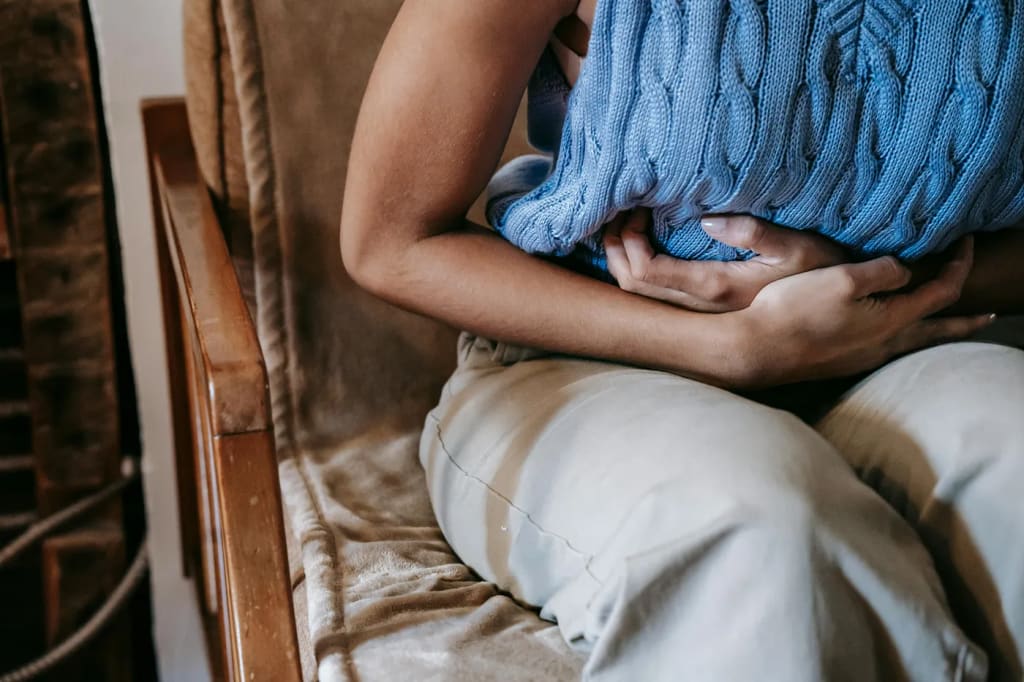
“I am afraid there is nothing we can do.” That was the third specialist in three weeks that had said the same words to me. There were those around me who thought I should be grateful. Only three weeks ago, I had thought I had cancer, but at least that was negative. The problem was that I had the worst endometriosis the Kent doctors had seen, and no one knew what to do.
When did this all start, I suppose seventeen years ago. As a woman in my 30s, I came off contraception to start a family; two years in and despite a lot of practice, nothing had happened, so I went to a specialist. There, I was told that my husband of the time was infertile, and I had a cyst on my ovary the size of a melon. When they removed it along with my left ovary, they told me they had also removed a large amount of endometrial scar tissue. I healed, they said goodbye, and that was over.
My periods have always been heavy, but I thought it was something all women went through. We women are good at fooling ourselves and everyone around us. Just before lockdown, I had a bad back, so I went to my local G.P. He told me that I was overweight and getting old, and the only solution he suggested was a slimming club. Humiliated, I left and carried on, struggling through the pain. Had he read my notes or ordered a scan, I might not have faced the problem I now face. I might have been well today if I had gotten over my shame and asked for a second opinion.
This specific problem started a year ago. One morning, I woke up with kidney pain, which slowly got worse; I diagnosed myself with a kidney stone. When it didn’t get better, I went to my doctor. I am not sure whether she guessed something was wrong or she was just really good at her job, but she ordered an emergency scan of my kidney. It was the first of numerous scans.
The initial scan showed that there was no stone, but my right kidney was not draining correctly; to investigate further, I would need a nuclear scan. They flood your body with an isotope and chase it around your urinary system to see where the blockage is. It was discovered in my urethra near my pelvis. I would need a CT scan to investigate further.
Two weeks after the CT scan, a secretary rang me to say that I had cancer; a lump was blocking my urethra. That is precisely what a secretary told me without any warning. I asked if it could be anything else and got the reply, no, they were sure it was cancer. I needed a blood test to identify how high my tumour markers were and, to complete my set, an MRI scan to see how widespread the cancer was.
In this instance, Google was my friend because after researching myself, I discovered that endometriosis looks like cancer on CT scans. Also, it elevates your tumour markers, something no one had told me while I waited for the results.
The day the man rang me to say my MRI showed extensive endometriosis, his words, ‘I was riddled with it;’ I broke down and thanked him a hundred times. I think he thought I was mad. No one thanked him for devastating news like this, but I was so relieved I didn’t have cancer. I feel guilty, but I sometimes wonder now whether I would have been better off, least research has been done, and treatments are available, which is more than I can say for endometriosis. But, then, cancer affects both genders.
The initial solution to save my kidney was to put a urinary stent in to help it drain past the stricture, as it now had a technical name. For those that don’t know, a stent is a plastic tube the size of an iPhone charger that sits in your kidney and runs down to your bladder. It is also a unique thing in medicine, a cure that is worse than the initial problem. If you are ever offered one of these, research it carefully. You may have a different experience for me; mine was hell.
I knew I was in trouble as soon as I had it fitted. They are commonly used on men who hold them in place better than women. The end that sits in your bladder rubs on your insides, causing you to have the urge for the toilet constantly. The easiest way to describe what I went through was to say I had crippling cystitis for three months with no relief. I could also feel the tube inside me every time I moved or sat down. Actually, I couldn’t sit down.
Before I tell you about the parade of specialists without a clue, it is worth mentioning that before the stent was fitted, I felt well. The pain in my kidney had lasted a week and never returned, and apart from a bit of discomfort once a month, I had no problems. I was also going through menopause, so it was all going to stop soon, something I celebrated like I had won the lottery.
Every specialist I went to see after the stent was fitted told me they could not help. The urologist told me that the operation to fix my urethra had a 50% survival rate and could cause other issues with my bowel. When I asked if it would be better to remove my kidney as I could live with one, I was met with scorn and smirks. The specialist for endometriosis said that he could not remove the scar tissue, which would give my urethra a chance to open again. He told me the operation was too complex and my endometriosis was too impacted.
At the end of my sanity with the urinary stent, I went to the emergency centre to beg them to remove it. My fourth scan proved what I had been saying for three months, and no one had listened to it; the stent was not in the right place and was blocking my kidney. This is where the level of coercion took a worrying direction. I was told there was no operating room to have the stent removed despite begging, literally, for it, but if I agreed to have a new one fitted, they could do it that day.
We all know our bodies best; sometimes, you must stand firm even though professionals suggest other ways. No medical degree can teach a doctor to know how the patient feels, something they frequently forget.
Remember the story of Elle McPhearson taking her health into her own hands and going rogue? I did when I told them in no uncertain terms I refused to have another stent fitted. They sent me home in agonising pain with the promise of an appointment at some point to have the stent removed.
Where this ends, I do not know. Luckily, I have now had the stent removed. Despite every professional trying to tell me I would be in agonising pain in three days and begging them to put another one in, I am six weeks past the removal, and apart from the odd twinge, I have been pain-free. I can now go to work without wetting myself and sit down again, two things I will never take for granted.
The local NHS department has finally agreed that they do not know what to do with my situation, so they have referred me to the specialist London hospital to see if they can offer me a solution. I am not hopeful. I firmly believe my only long-term solution may be to have my kidney removed and survive with one. Sadly, my kidney is fine, but the plumbing isn’t.
I have no doubt in my mind that had the doctor five years ago caught what was giving me a bad back rather than telling me I was fat, I could have had the endometriosis treated and would not be in this situation. He was a man who thought I was a woman moaning about my periods and doing a little too much. Though I have to take some of the blame as a woman, I never pursued it. Despite the odds, I had three beautiful children. I was a busy mum, and like so many of us, I pushed my health aside to concentrate on them.
The amount of money and research that is put into women’s health is not enough; I can’t help thinking if endometriosis affected men, we would already have a cure. As women, we should prioritise our health, and I beg you, if you are experiencing heavy periods and pain that need days of medication to be able to function, go and get checked out.
For me, I will wait to see what the London specialist says and then make my choice as to whether it is something I live with, a ticking time bomb waiting for my kidney to die, or whether I have an operation to unblock my urethra. This presumes that there is anything they can do or I may meet another professional who tells me they can’t do anything.
If there is one thing I’ve learned through this journey, it is that we must become our advocates. My story is not unique; it is shared in whispers between women who have been dismissed, overlooked, and underestimated. Listen to your body, demand answers, and refuse to be silenced. The cost of staying silent isn’t just the pain; it is worse than that.
About the Creator
Sam H Arnold
Fiction and parenting writer exploring the dynamics of family life, supporting children with additional needs. I also delve into the darker narratives that shape our world, specialising in history and crime.
Keep reading
More stories from Sam H Arnold and writers in Viva and other communities.
Why Langkawi Is One of Malaysia's Most Peaceful Island Escapes
An idyllic destination off the west coast of Malaysia, Langkawi is an archipelago of 99 islands. Its pristine beaches, lush rainforests, and captivating landscapes are a balm to visitors who seek serenity, tranquillity, and a relaxing stay. Discover why it is such a sought-after and peaceful island escape in Malaysia.
By ameliarosanna5 days ago in Viva
The Renaissance of Romance: Why the 1ct Oval Engagement Ring is Every Modern Bride’s Dream
Finding the "perfect" ring is often more stressful than the proposal itself. We spend hours scrolling through Pinterest boards, visiting high-end boutiques, and whispering to friends, all in search of a symbol that says "forever" without looking like it belongs in a museum. In the middle of this search, one specific style has risen above the rest, capturing the hearts of minimalist brides and luxury seekers alike: the 1ct oval engagement ring.
By Mohd Kaish6 days ago in Viva
A Failed Artist, A Disillusioned Poet, An Underpaid Game Show Host
I took my son and niece to Gori, a small town in Georgia where Joseph Stalin was born. They talked me into visiting the Stalin's Museum, the largest in the post-Soviet space. I had resisted going there because I just can't stand the monster and know enough about him, or so I thought.
By Lana V Lynx6 days ago in FYI


Comments
There are no comments for this story
Be the first to respond and start the conversation.