
Judy Reed the first black woman to receive a US patent
Her invention was the dough kneader and roller

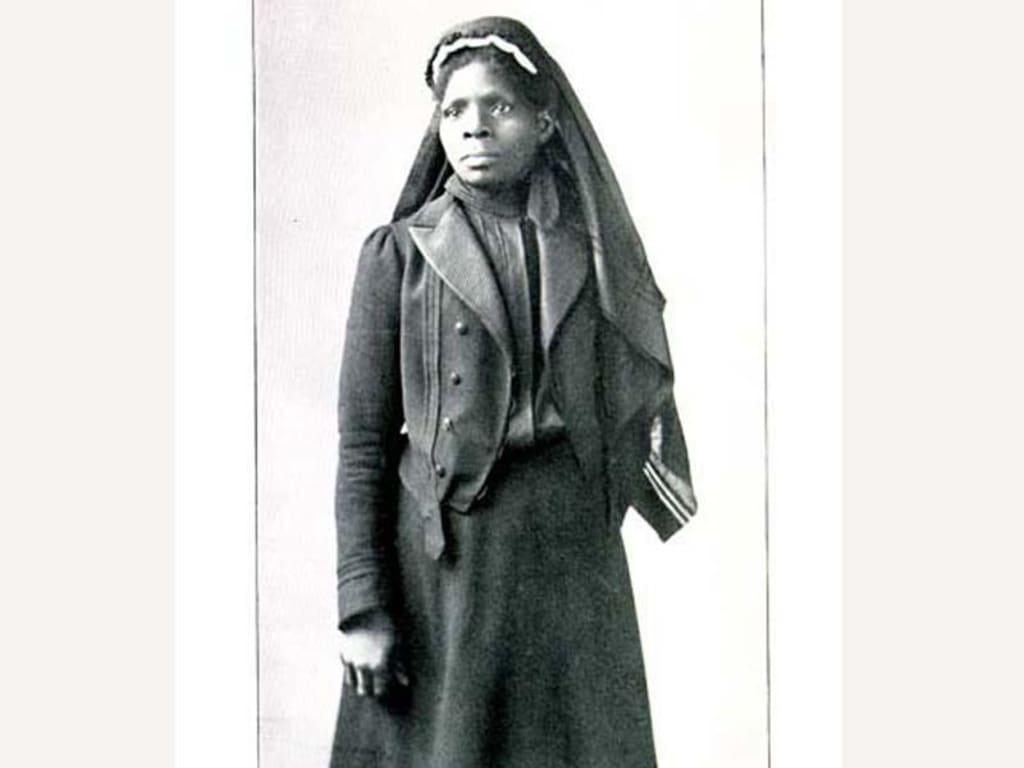
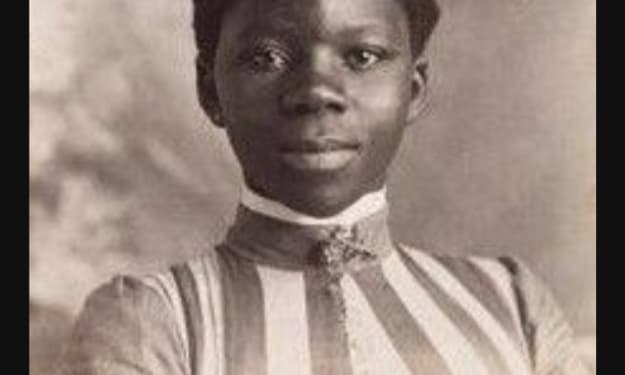
You probably never heard of Judy Reed but she left a mark on society as the first African American female on record to ever receive a US patent. American society loves to announce when someone has been the first in a category. Specifically, since Joe Biden has become president we have been introduced to members of his cabinet who are the first African American, black woman, Native American, Hindu, Catholic, and LBGT to hold their respective offices. Their names will go down in history just like Judy Reed, although there actually is not much that is known about this black female innovator.
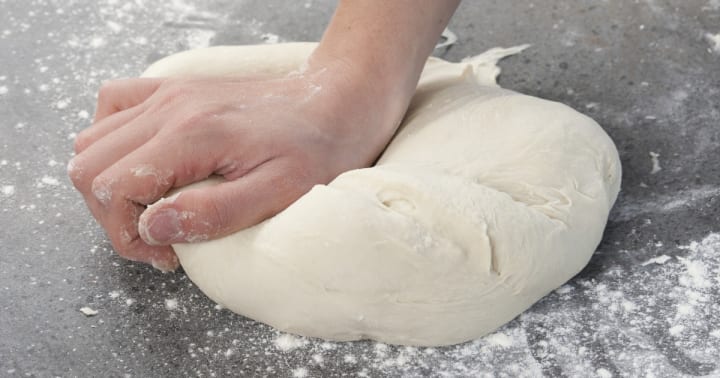
Ms. Reed was born in 1826 and died in 1905 and there is no record of whether she married or had children. What is known is that she was an African American female from Washington, D.C., and her claim to fame is that she is the first black woman on record to receive a US patent. This was Patent No. 305,474 and her invention was the "Dough Kneader and Roller". The patent was for an improved design of rollers that helped the dough to mix more evenly while it was kept covered and protected. The patent was granted to Reed on September 23, 1884, and was signed with an X.
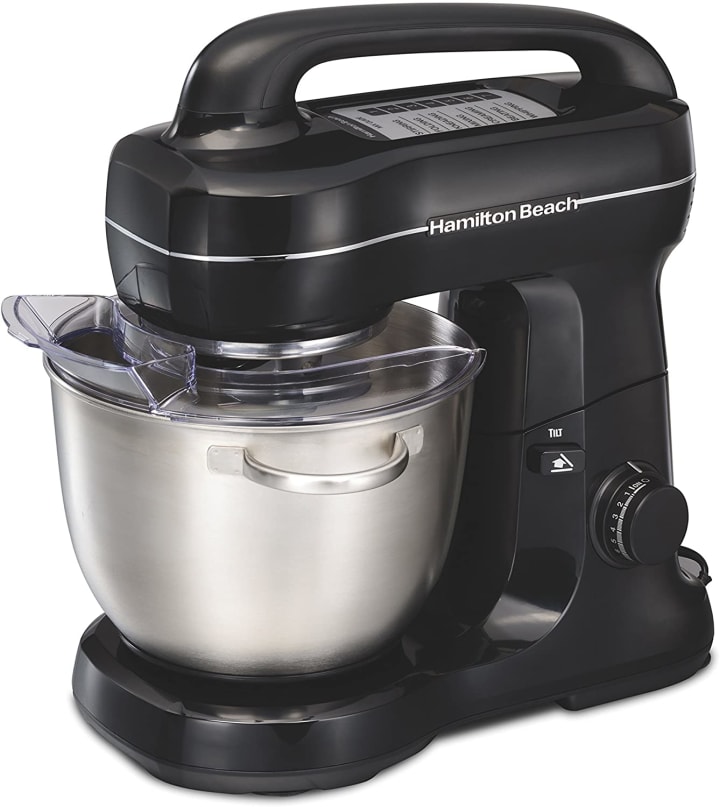
I have been unable to find an image of the actual product that Judy Reed invented but I would love to see it. When I was growing up my great-grandma, grandmother, great-aunt, and every female in the neighborhood kneaded the dough by hand and then used a rolling pin to smooth it. I actually do not know anyone who does it any other way. I found pictures of many modern devices but none of the specific item that sprang from the imagination of Judy Reed. It's difficult from the image of the patent to tell what her invention really looked like.
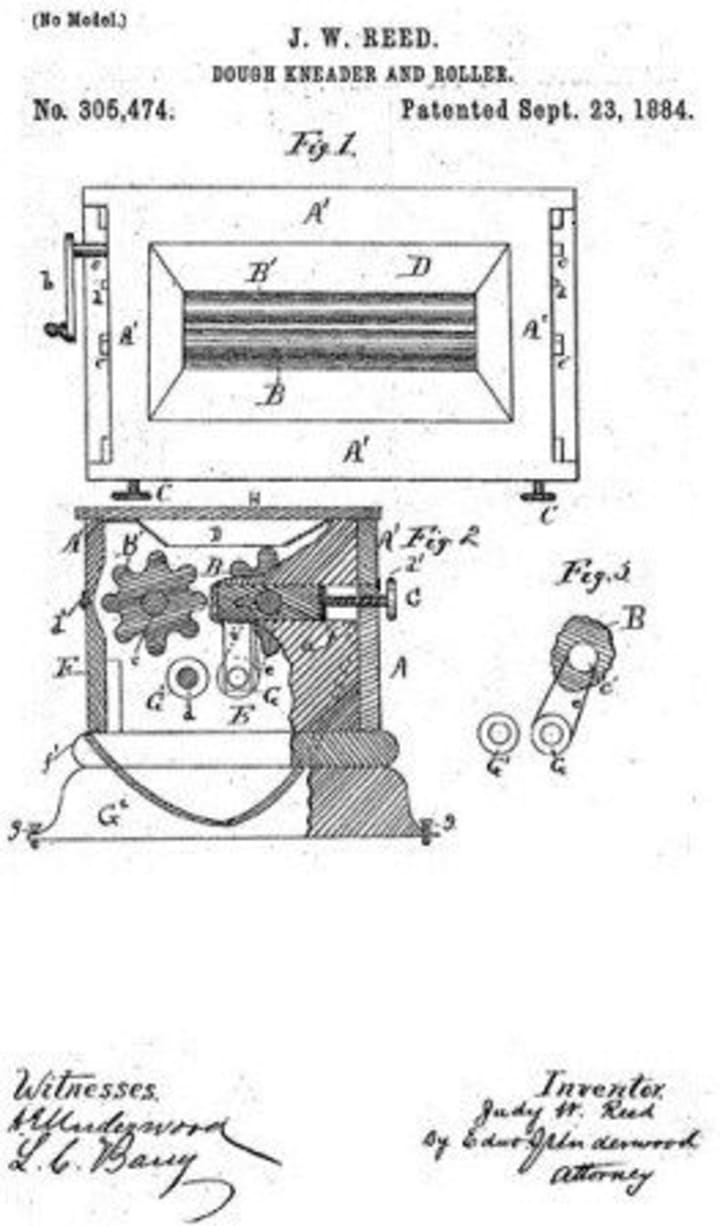
When you look at the patent and the name J W Reed it would be easy to assume the inventor was a man and not give it another thought. The attorney's signature, however, attests to the inventor's full name. It's not clear from this image but the signatures may have been from a second document and not attached to the actual document based on what is known from history. Slaves were taught to make an X as their signature because of being illiterate. It was not known, however, whether or not Judy Reed was able to read or write.
Reed using the X as a signature could have been for one of two reasons. During slavery, black people could be beaten or even lose their lives if it was found out that they could read or write. The enslavement of Africans in America was officially ended on January 1st. 1865, so there is a strong possibility that 19 years later, Judy Reed was actually literate. When she received her patent, she may have truly been illiterate or have pretended she could neither read nor write, in order to prevent controversy. She may have made things easier for herself by pretending she was just a "dumb nigra".
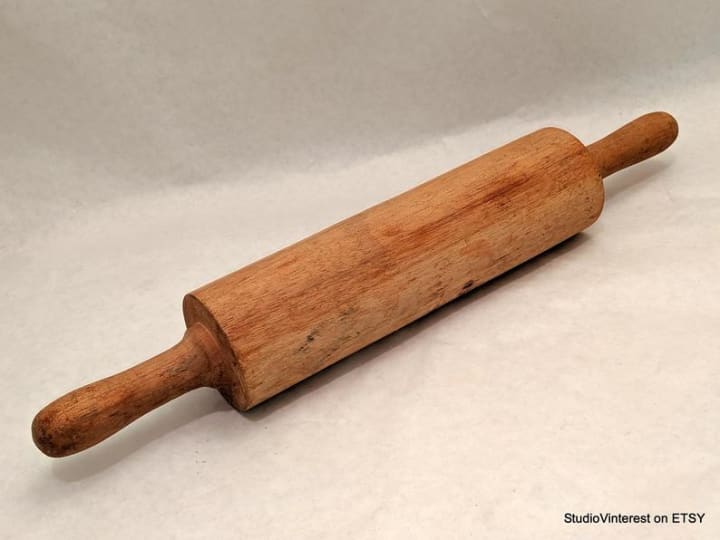
Two decades away from slavery there were still those who did not desire to see African Americans progress. Whatever was the truth her X marked the spot and gave Ms. Reed a place in United States history. The next time you knead some dough, pop open a can of biscuits, or eat a hot buttered roll, think of Judy W Reed and her invention that made it a little bit easier for your being able to enjoy bread item of choice. Keep in mind that the patent registration is the only record of this innovative woman's life.
I admire Judy Reed and other black females who used their ingenuity to invent products that changed the way things were being done in their world. At a time when there were not equal rights for African Americans, it would have been easy for someone to steal Reed's idea and take credit for it themselves. Please keep in mind that an earlier African-American woman could have received the first US patent right but there is no way to find out at this point. Judy Reed is the first on record and we celebrate her for her accomplishment.
During that time there was no requirement that anyone had to reveal their race when applying for a patent. Women often used only their initials in order to hide their gender. This is most likely why Reed's patent was signed J W Reed and she was probably assumed to be a man. This would also explain why in 1956, Mary Kenner was refused a patent for the sanitary belt when she was found to be a black female, By this time race and gender were probably required before a patent could be issued.
This is why I am writing about Judy Reed because the silence in her story speaks volumes. She was black and female during a time when both left her with few rights. Based on her birth year, Ms. Reed would have been 38 and turning 39 in 1865 when slaves were freed. This indicates that she probably working in the fields or perhaps as a cook for close to 30 years of her life. Reed may have been tired of slaving away in the big house kitchen from sun up until sundown.
By the time she was a free woman, Reed may have suffered arthritis and other pains in her hands, arms, neck, and back because of her long years of hard labor in the fields and or kitchen. Her invention may have come about as a way to ease her suffering and make life easier for other women. This African American female endured slavery where she may have been beaten or raped by her master which was common.
In spite of whatever hardships came her way Reed saw a problem and 19 years out of slavery, she invented a way to solve it. Judy W Reed is an unsung hero and her invention paved the way for improvement over the years that got us to where we are with the devices we use today. I am elated to enter her story into the Vocal Challenge and introduce her to the readers. Judy W Reed paved the way for the black businesswoman and innovators who continue to create for the world today.
About the Creator
Cheryl E Preston
Cheryl enjoys writing about current events, soap spoilers and baby boomer nostalgia. Tips are greatly appreciated.
Keep reading
More stories from Cheryl E Preston and writers in Viva and other communities.
Anna M Mangin invented the pastry fork
If Anna M Mangin's name and photo are foreign to you then I am very happy to introduce this innovative young woman to you. She invented the pastry fork and the pastry fork spatula in 1891, and they continue to be widely utilized today. (The actual first spatula was invented one year earlier by John Spaduala, in 1890.) When it comes to Black History, I am different from most and search for the unsung heroes. When my children were in school, I advised them to not write about Dr. King and Rosa Parks whose works are already well known.
By Cheryl E Preston5 years ago in Viva
The 1ct Engagement Ring: Why This "Sweet Spot" is the Biggest Wedding Trend of 2026
Choosing an engagement ring is perhaps the most high-pressure purchase a person can make. You want it to be breathtaking, timeless, and—let’s be honest—impressive. While the trend of "bigger is better" dominated the early 2020s, 2026 has brought us back to a more refined realization: the 1ct engagement ring is the absolute "Goldilocks" of the jewelry world.
By Mohd Kaish5 days ago in Viva
The Soul of the Stone: Why I’m Betting on Oval Diamonds This Valentine’s Day
Valentine’s Day has a funny way of making us overthink everything. We obsess over the reservation, the flowers, and—most nerve-wracking of all—the ring. For years, I’ve watched friends and colleagues agonize over finding a diamond that isn't just a status symbol, but a reflection of their partner's personality. In my time exploring the nuances of jewelry and the emotions behind proposals, I’ve realized that we often overlook the most important factor: the "vibe" of the stone itself.
By Mohd Kaish7 days ago in Viva


Comments
There are no comments for this story
Be the first to respond and start the conversation.