
How Does Birth Control Work?
A quick and easy guide to your options!

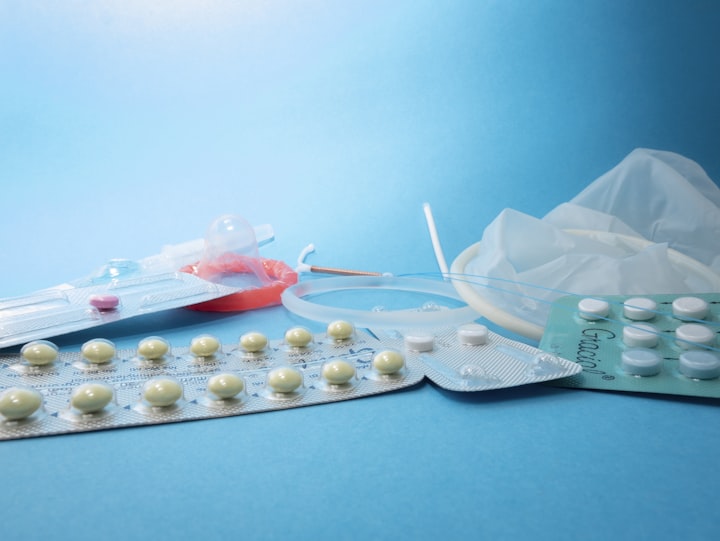
Birth control is an interesting topic – I am all for the individualized approach when it comes to contraception and hormonal health.
Some individuals significantly benefit from its use! Folks with endometriosis may rely on hormonal contraceptives to reduce bleeding, pain symptoms and even prevent a period entirely. Others who use medications such as Accutane use birth control to prevent a pregnancy that may result in birth defects. There are very real and valid benefits that occur for these individuals, and we can’t discount that!
However, there are other folks who use birth control as a method to balance their hormones and reduce period symptoms (which is where I like to do a significant amount of work, helping these people break out of their PMS symptom cycle and improve their health outside of just relying on birth control).
For either group, birth control has similar functions in the body with the main goal being pregnancy prevention. It’s worth noting that hormonal contraceptives and some non-hormonal options do NOT reduce the risk of STIs, so it’s important to consider your risk and your options.
With that being said, how does birth control actually work? Let’s break down the options:
Combined oral contraceptives. These are medications taken by mouth and are a combination of both estrogen and progestin (a synthetic progesterone that has androgen-like actions). They mimic ovarian hormones to inhibit the release of gonadotropin-releasing hormone (GnRH) in the hypothalamus and therefore prevent the release of hormones in the pituitary gland that normally stimulate ovulation. In shorter words, it “tricks” the feedback loop between the brain and the ovaries into thinking there are already hormones produced for ovulation and they aren’t needed! These hormones also cause cervical mucus to thicken and increase in volume, and change the lining of the uterus so sperm can’t get through. This sometimes means more cervical mucus noticed on a pad or in underwear.
These particular kinds of contraceptives may be taken in a rotation of 21 to 24 days with a sugar or placebo pill for the next 4 to 7 days – causing a “withdrawal” of hormones that leads to bleeding. Some types of combined pills are taken for a longer cycle or continuously without stopping to prevent a bleed or reduce its frequency.
Mini-pill. This is a progestin-only medication and is often used if contraception is desired but the use of estrogen is contraindicated. Its primary function is to thicken cervical mucus and prevent sperm from passing through to the uterus. It can suppress ovulation however this isn’t typically its primary mode of action.
Injectables. These are hormonal contraceptives that are injected into the muscle tissue and may be a combination of estrogen and progestin or progestin-only. Combined injectables are typically administered on a monthly basis whereas progestin-only options are administered every 2 to 3 months. They are similar in functions as oral contraceptives with cervical mucus changes, ovulation suppression and endometrial changes. This particular type of birth control may be helpful for folks who struggle with taking a pill every day or are unable to access oral contraceptives for long periods of time.
Implants. These are small rods inserted under the skin of the upper arm (typically the non-dominant arm) and release a continuous dose of a progestin. This medication works to increase the secretions of very thick cervical mucus, preventing sperm entry to the uterus. It also inhibits ovulation and thins the lining of the endometrium, which may provide pain relief benefits to those with very heavy periods. This type of birth control can be inserted at any point during the menstrual cycle and must be removed and replaced after 5 years. It’s an additional choice for long-acting birth control outside of injectables, especially if you are needle-phobic.
Patches. This type of birth control is a combined hormonal contraceptive in the form of a skin patch, replaced on a weekly basis. It can be placed on the upper outer arm, bum, abdomen or thigh on the first day of the menstrual cycle (first day of a period or withdrawal bleed). In order for a withdrawal bleed to occur, users do not replace their patch and wait approximately 7 days before adding a new patch. This may be another option for folks who struggle to remember daily pill use, but may be tricky if skin is sensitive and becomes irritated easily with adhesives.
Insertable rings. These are flexible circular devices that are inserted into the vagina. They slowly release hormones that are absorbed through the vaginal wall into the bloodstream. It is a combined hormonal contraceptive, releasing both estrogen and progestin to prevent pregnancy. It is worn for 3 weeks then taken out for a withdrawal bleed to occur; a new ring is inserted 1 week later to repeat the process. Yet another option for folks who struggle with daily pill use!
IUDs. These are small devices inserted into the uterus to prevent pregnancy, and there are both hormonal and non-hormonal options. They are long-term (3 to 12 years depending on the types) and easily reversible with removal. The hormonal IUD slowly releases progestin to prevent pregnancy (via ovulation suppression and cervical changes) and may reduce bleeding from heavy periods – some stop bleeding entirely which can be an advantage for someone with endometriosis or adenomyosis.
Non-hormonal IUDs use copper to change how sperm move, preventing access to an egg and therefore preventing pregnancy. These types of IUDs can sometimes make periods heavier and more uncomfortable but this may improve after a few months. The non-hormonal IUD does not reduce the risk of STIs, just like hormonal contraceptives.
IUDs are an option for those who want long-term birth control; it’s important to chat with your provider about IUD insertion as some individuals experience a significant amount of pain. Asking for anesthetic and/or numbing agents is well within your rights, even if you are recommended to take a pain medication in advance of the procedure. They can be removed very easily if and when you decide to stop using them – they can be pulled during a pap smear!
Condoms. These are either worn internally or externally to prevent sperm from making contact with an egg – some brands offer latex-free options for those who are allergic. These do not contain hormones impacting ovulation. These can assist in reducing risk of STIs but need to be used appropriately. Don’t wear more than one at a time as this increases friction and risk of breakage. Be sure to check which types of lubricant are appropriate to use with them, as well as their expiry date (they DO expire!).
Always change condoms when switching between vaginal and anal sex, and never use the same condom with different partners. Dental dams have a similar function to condoms in that they provide a physical barrier and can reduce the risk of STIs but they are not used internally.
"Symptothermal" method. This is a natural form of birth control that uses basal body temperature readings and physical symptoms over a cycle to determine when a person is fertile and not fertile. There are no hormones involved in this method aside from those that already exist in the body. Working with an experienced provider can help you learn this method and practice it appropriately whether you are trying to conceive or not.
Abstinence. While it doesn’t seem like it, this is technically a form of birth control. Not having sex definitely reduces chances of pregnancy and STIs. However, the definition of abstinence may vary – some individuals only engage in oral sex, others practice no physical intimacy whatsoever. Some situations may still require a form of contraception to prevent pregnancy and STI transmission. We know that abstinence-only education does not successfully reduce pregnancy or abortion rates. Choosing whether or not you have sex is up to you, and doesn’t make you more or less of a good person. In all sexual situations, consent is the priority!
Talk to your health care provider to learn more about your individual birth control options, or visit a local sexual health clinic to access birth control options for free or lower costs!
About the Creator
Emily the Period RD
Canadian Registered Dietitian with a special focus in reproductive medicine & gynecology. I write about nutrition for periods, hormones and everything in between!
Keep reading
More stories from Emily the Period RD and writers in Viva and other communities.
Pros & Cons of Period Products
Welcome to 2022, another year of Period Power (or at least if I have anything to say about it)! If you’re new here, my name is Emily and I’m the Period Power Dietitian behind Say Yes to Nourish, where my passion is the intersection between nutrition and menstrual health. We talk periods on the regular, and I invite you to stick around even if you don’t have periods or think periods are gross – someone you know and love has a period (and periods are a normal human body function)!
By Emily the Period RD4 years ago in Viva
Why Every Woman Should Buy Her Own Diamond: The New Era of Independent Sparkle
For a long time, the narrative surrounding diamond rings for women was strictly linear. It began with a romantic proposal, followed by a wedding, and perhaps an anniversary a few years down the line. The diamond was always a gift—a token of someone else’s affection, a symbol of a promise made by another. But as we navigate 2026, that old-fashioned script is being rewritten.
By Mohd Kaish3 days ago in Viva
The BAFTA Awards
By now, in a stunning departure from recent years, most of the world is aware of what happened at the BAFTA film awards. Social Media Headlines will tell you the bare bones: that John Davidson, a Tourette's Syndrome advocate, shouted a racial slur at two Actors of Colour, Michael B Jordan and Delroy Lindo.
By Natasja Rose6 days ago in Psyche


Comments
There are no comments for this story
Be the first to respond and start the conversation.