
Zohran Mamdani Is Now Mayor of New York City
Here’s what he campaigned on—and why his victory marks a political shift

Zohran Mamdani’s rise to the mayor’s office of New York City represents more than just a personal political milestone—it signals a potential turning point in how the city approaches housing, public safety, economic inequality, and democratic participation. Long known as a progressive voice in New York politics, Mamdani built his campaign on bold promises and grassroots energy, positioning himself as a champion for working-class New Yorkers in a city increasingly defined by affordability crises and political fatigue.
His victory has sparked celebration among supporters and intense debate among critics, with many asking the same question: what exactly did Mamdani campaign on, and what does his leadership mean for the future of America’s largest city?
From Organizer to City Hall
Before becoming mayor, Zohran Mamdani was widely recognized as a democratic socialist lawmaker and community organizer. His political identity has always been closely tied to grassroots activism, tenant advocacy, and anti-corruption efforts. Rather than running a traditional top-down campaign, Mamdani emphasized door-to-door organizing, community forums, and small-donor fundraising, framing his candidacy as a movement rather than a career step.
His message resonated particularly with younger voters, renters, immigrants, and communities frustrated by rising living costs and what they viewed as political complacency at City Hall.
Housing at the Center of His Platform
Housing was the cornerstone of Mamdani’s campaign. With rents soaring and homelessness remaining a persistent crisis, he argued that market-driven solutions alone had failed New York City.
Key housing proposals included:
Expanding rent stabilization and tenant protections
Increasing public and social housing investment
Preventing displacement through anti-eviction measures
Reining in real estate speculation
Mamdani framed housing not as a commodity, but as a human right, a message that gained traction among voters feeling squeezed out of their own neighborhoods.
Economic Justice and Cost of Living
Another central theme of Mamdani’s campaign was economic justice. He frequently highlighted the contrast between New York’s immense wealth and the financial struggles of everyday residents.
His platform focused on:
Raising wages for city workers and contractors
Expanding free public services, including transit and childcare
Supporting small businesses over corporate interests
Implementing progressive taxation policies at the city level
Mamdani argued that a city as wealthy as New York should not leave millions struggling to survive paycheck to paycheck.
Public Safety Through a Different Lens
Public safety proved to be one of the most contentious aspects of the campaign. Rather than centering his platform on aggressive policing, Mamdani emphasized community-based safety strategies.
His proposals included:
Investing in mental health responders
Expanding violence interruption programs
Reducing reliance on punitive policing
Increasing accountability and transparency within law enforcement
Supporters praised this approach as forward-thinking, while critics warned it could risk public safety. Mamdani countered that safety and justice are not opposites, but deeply connected.
Climate Action and Urban Sustainability
Climate resilience also featured prominently in Mamdani’s campaign. With New York increasingly vulnerable to flooding, heatwaves, and infrastructure strain, he argued that climate action must be urgent and equitable.
His environmental commitments included:
Accelerating green infrastructure projects
Transitioning city operations toward renewable energy
Creating green jobs for local residents
Prioritizing climate protections in low-income neighborhoods
Mamdani framed climate policy not only as environmental responsibility, but as an opportunity to reshape the city’s economy.
A Campaign Fueled by Grassroots Energy
Unlike many traditional mayoral campaigns, Mamdani rejected large corporate donations, instead relying on small-dollar contributions and volunteer-driven outreach. His rallies often doubled as community assemblies, with supporters encouraged to speak about their own experiences with housing insecurity, debt, and public services.
This grassroots approach helped him overcome skepticism about whether a progressive candidate could win citywide office. His victory suggests a growing appetite among voters for policy-driven, values-based leadership.
Criticism and Challenges Ahead
Despite his win, Mamdani enters office facing significant challenges. Critics argue that some of his proposals may face legal, budgetary, or political obstacles. Others worry about tensions with state and federal authorities, particularly when it comes to funding and regulatory power.
Business groups have expressed concern about his economic policies, warning they could discourage investment. Mamdani has responded by emphasizing collaboration, stating that economic growth and social justice do not have to be mutually exclusive.
What His Victory Represents
Mamdani’s election reflects broader shifts in urban politics, where voters are increasingly questioning traditional power structures and demanding bold solutions to systemic problems. His campaign echoed similar movements in other global cities, where progressive candidates have gained traction by centering affordability, equity, and transparency.
For supporters, his victory is proof that grassroots politics can still succeed in a major metropolitan arena. For critics, it is a test case—one that will be closely watched across the country.
Conclusion
Zohran Mamdani’s ascent to the mayoralty of New York City marks a defining moment in the city’s political landscape. Built on promises of housing justice, economic equity, and community-centered governance, his campaign challenged conventional assumptions about what it takes to win in America’s largest city.
Whether his administration can translate ambitious ideals into lasting policy remains to be seen. What is clear, however, is that Mamdani’s victory has reshaped the conversation about leadership, power, and possibility in New York City—and potentially beyond.
About the Creator
Keep reading
More stories from Aarif Lashari and writers in Unbalanced and other communities.
Bangladesh’s Big Question: Will Khaleda Zia’s Son Build on Her Legacy?
Bangladesh’s political landscape has long been shaped by two dominant figures: Sheikh Hasina of the Awami League and Khaleda Zia, former Prime Minister and leader of the Bangladesh Nationalist Party (BNP). As the country looks toward the future, a pressing question emerges: can Khaleda Zia’s son, Tarique Rahman, carry forward his mother’s political legacy and restore the BNP’s influence in Bangladesh?
By Aarif Lashari2 months ago in Unbalanced
Super Bowl LX Recap: A Team Called Hawks
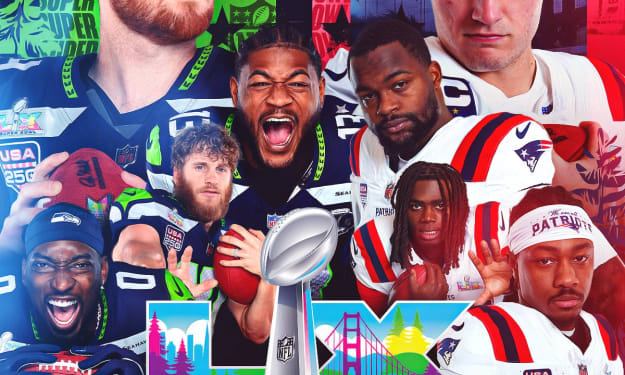
Sixty. The Super Bowl turned 60! Still amazes me that this was the sixtieth Super Bowl played in NFL history. It seems like yesterday that I watched Super Bowl XXVII, the first SB I ever watched. The QB who won Super Bowl XXVII has since called a few SBs, and will call next year's game, but that's another story. Super Bowl LX took place at Levi's Stadium in Santa Clara, California, the home stadium of the San Francisco 49ers. However, it was one of their division foes who represented the NFC, as the Seattle Seahawks faced off against the New England Patriots.
By Clyde E. Dawkins19 days ago in Unbalanced
The US Moved Away From Its Heartland to Set a Winter Olympics High in Italy
The 2026 Winter Olympics in Italy will be remembered as a turning point for Team USA — a Games where American athletes delivered historic performances far from home, in a mountains‑and‑city setting unlike anything seen in previous Winter Games. At Milano‑Cortina 2026, the United States not only matched its best achievements on snow and ice, but also showcased an evolution in winter sports that goes beyond traditional strongholds and star names. For decades, the U.S. ski and snowboarding community were at the core of American winter success stories, largely rooted in the Rocky Mountains and the country’s colder heartlands. But this year’s Olympic medal haul — a record 12 gold medals, the most ever for the U.S. at a Winter Olympics and the first time the country exceeded 30 total medals outside North America — came from a blend of expected champions and rising talents competing across a spectrum of winter disciplines. Historic Medal Count and Diverse Talent In 2002, when the U.S. hosted the Games in Salt Lake City, Team USA set national records with 10 golds and 34 total medals. Twenty‑four years later, American athletes in Italy surpassed that gold medal count and demonstrated depth beyond traditional podium favorites. While elite stars like Mikaela Shiffrin, Alysa Liu, and Jordan Stolz performed admirably, a significant part of the victory came from lesser‑known athletes and disciplines — a shift that signalled a broadening of the U.S. winter sport ecosystem. In a surprising twist, the U.S. won more medals in cross‑country skiing than in snowboarding, an indicator of growing investment and interest in Nordic disciplines. Ben Ogden, for example, earned silver in the men’s sprint and added another together with teammate Gus Schumacher, while Jessie Diggins returned to the podium and reinforced her status as one of America’s greatest skiers. Heart‑Stopping Victories and Breaking Droughts One of the most emotional moments of the Games came in men’s ice hockey, where the U.S. team defeated Canada men's national ice hockey team 2‑1 in overtime, winning gold for the first time since the iconic “Miracle on Ice” of 1980 — a full 46 years earlier. Jack Hughes scored the decisive goal, etching his name into Olympic lore and providing American fans with one of the memorable highlights of Milano‑Cortina 2026. Other standout achievements included an Olympic gold for freeskiing legend Alex Ferreira, plus strong performances from the U.S. women’s hockey team and mixed‑team events in figure skating, where Ilia Malinin played a key role. Beyond the Heartland: A Strategic Shift The U.S. performance in Italy reflected a strategic shift: success is no longer just about mountains, snow belts, and heartland winter traditions. It is now also rooted in year‑round training facilities, a growing cadre of coaches and youth programs, and a willingness to innovate across disciplines. American skiing, skating, and winter team programs are benefiting from broader recruitment and development pipelines, and Italy’s varied venues — from the urban ice rinks of Milan to the alpine slopes of Cortina d’Ampezzo — provided a diverse Olympic landscape that rewarded versatility and depth. This broader base of talent also meant the U.S. could compete at high levels in events that once belonged almost exclusively to European powerhouses. The result was not just a medal count to be proud of, but a statement about the resilience and adaptability of American winter sport programs. Looking Ahead While Norway topped the overall medal table with 18 golds, the U.S. second‑place finish — especially with a record number of gold medals — will be viewed as a major achievement and a stepping stone toward future Olympic success. With new talents emerging and veteran champions still performing, the American winter sport landscape looks brighter and more competitive than ever. As the Milano‑Cortina Games close and the torch passes to the French Alps for 2030, the U.S. experience in Italy demonstrates that winter glory can come from unexpected places, fueled by a new generation of athletes who are redefining what American success looks like on the international stage.
By Fiaz Ahmed 4 days ago in Unbalanced



Comments
There are no comments for this story
Be the first to respond and start the conversation.