
Bangladesh’s Big Question: Will Khaleda Zia’s Son Build on Her Legacy?
Political Succession and the Future of the BNP in Bangladesh
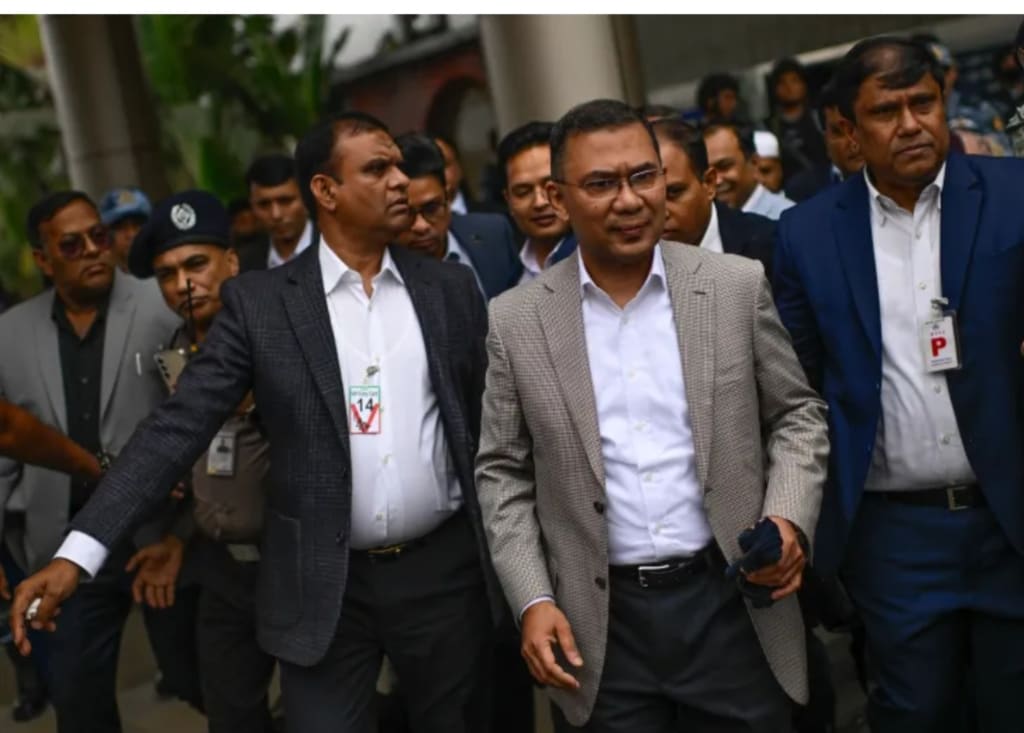
Bangladesh’s political landscape has long been shaped by two dominant figures: Sheikh Hasina of the Awami League and Khaleda Zia, former Prime Minister and leader of the Bangladesh Nationalist Party (BNP). As the country looks toward the future, a pressing question emerges: can Khaleda Zia’s son, Tarique Rahman, carry forward his mother’s political legacy and restore the BNP’s influence in Bangladesh?
With Khaleda Zia’s health issues, ongoing legal challenges, and declining political influence, the BNP faces an existential crisis. Tarique Rahman, who has been living in London for many years, has long been positioned as the party’s potential successor. However, whether he can successfully lead the BNP back to prominence remains uncertain.
A Party in Transition
The BNP, founded in 1978 by Ziaur Rahman, Khaleda Zia’s late husband, has historically been one of Bangladesh’s two dominant political forces. Under Khaleda Zia, the BNP alternated in power with the Awami League, overseeing periods of both economic growth and political turmoil.
However, recent years have been difficult for the BNP. In the 2018 general elections, the party suffered a crushing defeat, winning only seven seats out of 300. Allegations of voter suppression, arrests of opposition leaders, and internal fragmentation further weakened the party. Today, the BNP is struggling to remain relevant in a political landscape dominated by Sheikh Hasina’s Awami League.
This decline has intensified debates about leadership succession, particularly regarding Tarique Rahman. Seen by many as the heir apparent, Tarique’s return to Bangladesh and active political leadership could either rejuvenate the party or deepen its divisions.
Tarique Rahman: Controversy and Opportunity
Tarique Rahman is a polarizing figure in Bangladeshi politics. He has faced multiple corruption and graft allegations, resulting in a prison sentence in absentia. Critics argue that his prolonged exile and legal troubles make him a risky figure for the BNP, while supporters maintain that his leadership could unify the party and challenge Sheikh Hasina’s dominance.
Despite living in London for years, Tarique has remained active in BNP politics through virtual meetings, public statements, and party endorsements. Loyalists view him as a symbol of continuity, someone who embodies the values and ideology of Khaleda Zia. Yet, detractors suggest that his prolonged absence has left him disconnected from the realities of grassroots politics in Bangladesh.
Whether Tarique Rahman can overcome these challenges and rebuild the BNP’s electoral strength remains a question central to Bangladesh’s political future.
The Shadow of Khaleda Zia
Khaleda Zia’s influence on Bangladeshi politics cannot be overstated. She became the first female Prime Minister of Bangladesh, serving three terms between 1991 and 2006. Her leadership saw both economic reforms and accusations of political suppression, reflecting the polarized nature of Bangladeshi politics.
As she ages and faces health issues, her political presence has waned. Her absence from active politics has created a vacuum within the BNP. Tarique Rahman, in this context, is expected not only to carry forward his mother’s legacy but also to modernize the party to appeal to a younger electorate.
However, replicating Khaleda Zia’s political success is no easy task. The political environment has changed dramatically, with social media, youth movements, and civil society activism playing a much larger role than during Khaleda’s early years in power.
Challenges Ahead
Tarique Rahman faces several challenges in consolidating leadership and reviving the BNP:
Legal and Political Obstacles: His convictions in Bangladesh complicate any attempt to return and lead the party openly. Legal reforms or pardons may be necessary for him to participate fully in elections.
Public Perception: Long-standing corruption allegations and his absence from the country could erode public trust, especially among younger voters seeking reform and accountability.
Internal Party Dynamics: The BNP has experienced internal factionalism, with some leaders resisting Tarique’s leadership while others remain loyal. Uniting these factions will be critical for electoral success.
Competition from the Awami League: Sheikh Hasina’s long tenure has solidified the Awami League’s control over government institutions and rural constituencies. Tarique must craft a strategy that addresses both governance failures and public expectations to compete effectively.
Opportunities for Revival
Despite these challenges, Tarique Rahman has potential pathways to rejuvenate the BNP:
Youth Engagement: By appealing to younger voters disillusioned with current governance, he could create a new political base.
Modernization: Introducing digital campaigns, modern political strategies, and transparent governance proposals could revitalize the BNP’s image.
Coalition Building: Tarique could strengthen alliances with smaller opposition parties, enhancing his capacity to challenge the Awami League’s dominance.
Symbol of Continuity: His connection to Khaleda Zia and her supporters gives him a historical legitimacy that could rally the party’s core base.
The Road Ahead for Bangladesh
Bangladesh stands at a critical juncture. With Sheikh Hasina’s Awami League firmly entrenched in power, the opposition faces an uphill battle. Tarique Rahman’s leadership could either rescue the BNP from political irrelevance or reinforce its marginalization if he fails to connect with voters.
Political analysts argue that the BNP’s revival will depend not just on leadership but also on structural reforms, clear policy proposals, and credible engagement with citizens’ concerns. If Tarique Rahman can successfully navigate legal obstacles, unite the party, and connect with a new generation of voters, he may yet build on Khaleda Zia’s legacy. Otherwise, Bangladesh could see a prolonged period of single-party dominance, with limited room for meaningful opposition.
Conclusion
The question of whether Khaleda Zia’s son can build on her legacy is more than just a personal matter — it is a question about the future of democracy and political plurality in Bangladesh. Tarique Rahman faces a unique combination of opportunity and risk: the chance to revive a historically dominant party, and the challenge of doing so in a dramatically changed political landscape.
Bangladeshis will be watching closely, assessing whether Tarique Rahman can honor his mother’s legacy while adapting to contemporary political realities, or whether the BNP will continue its decline in the shadow of the Awami League.
About the Creator
Keep reading
More stories from Aarif Lashari and writers in Unbalanced and other communities.
Sherrone Moore: The Rise, Recognition, and Rapid Fall of Michigan’s Former Head Coach
Sherrone Moore: Rise, Recognition, and a Rapid Fall — The Full Story Behind Michigan’s Former Head Coach College football is full of dramatic storylines, but few have been as eventful and emotionally charged as the rise and fall of Sherrone Moore. Once celebrated as a groundbreaking leader and an inspiring figure on the sidelines, Moore’s career has seen remarkable highs — and a sudden, shocking end. His journey from a small Midwest town to national headlines is a story worth examining, not only for sports fans, but for anyone interested in leadership, pressure, and accountability.
By Aarif Lashari3 months ago in Unbalanced
Super Bowl LX Recap: A Team Called Hawks
Sixty. The Super Bowl turned 60! Still amazes me that this was the sixtieth Super Bowl played in NFL history. It seems like yesterday that I watched Super Bowl XXVII, the first SB I ever watched. The QB who won Super Bowl XXVII has since called a few SBs, and will call next year's game, but that's another story. Super Bowl LX took place at Levi's Stadium in Santa Clara, California, the home stadium of the San Francisco 49ers. However, it was one of their division foes who represented the NFC, as the Seattle Seahawks faced off against the New England Patriots.
By Clyde E. Dawkins20 days ago in Unbalanced
PSG vs Metz: More Than Just Another Ligue 1 Night
Some football matches feel routine. Others carry quiet tension long before kickoff. PSG vs Metz may not always dominate global headlines like a European final, yet it holds its own emotional weight. For Paris Saint-Germain supporters, every match is about defending status and chasing perfection. For Metz fans, facing a giant like PSG brings a mix of fear, pride, and belief. On paper, the gap between the two clubs looks wide. In reality, football rarely follows paper logic. A single counterattack, a missed penalty, or a red card can rewrite expectations in seconds. That unpredictability is what makes PSG vs Metz more than just another Ligue 1 fixture. It is a reminder that in football, history matters, but the present moment decides everything.
By Muqadas khan7 days ago in Unbalanced




Comments
There are no comments for this story
Be the first to respond and start the conversation.