
The Smashing Machine and the Cost of Becoming Superhuman
Exploring the blurred line between strength and self-destruction through the story of Mark Kerr and what it reveals about our hunger for transcendence.

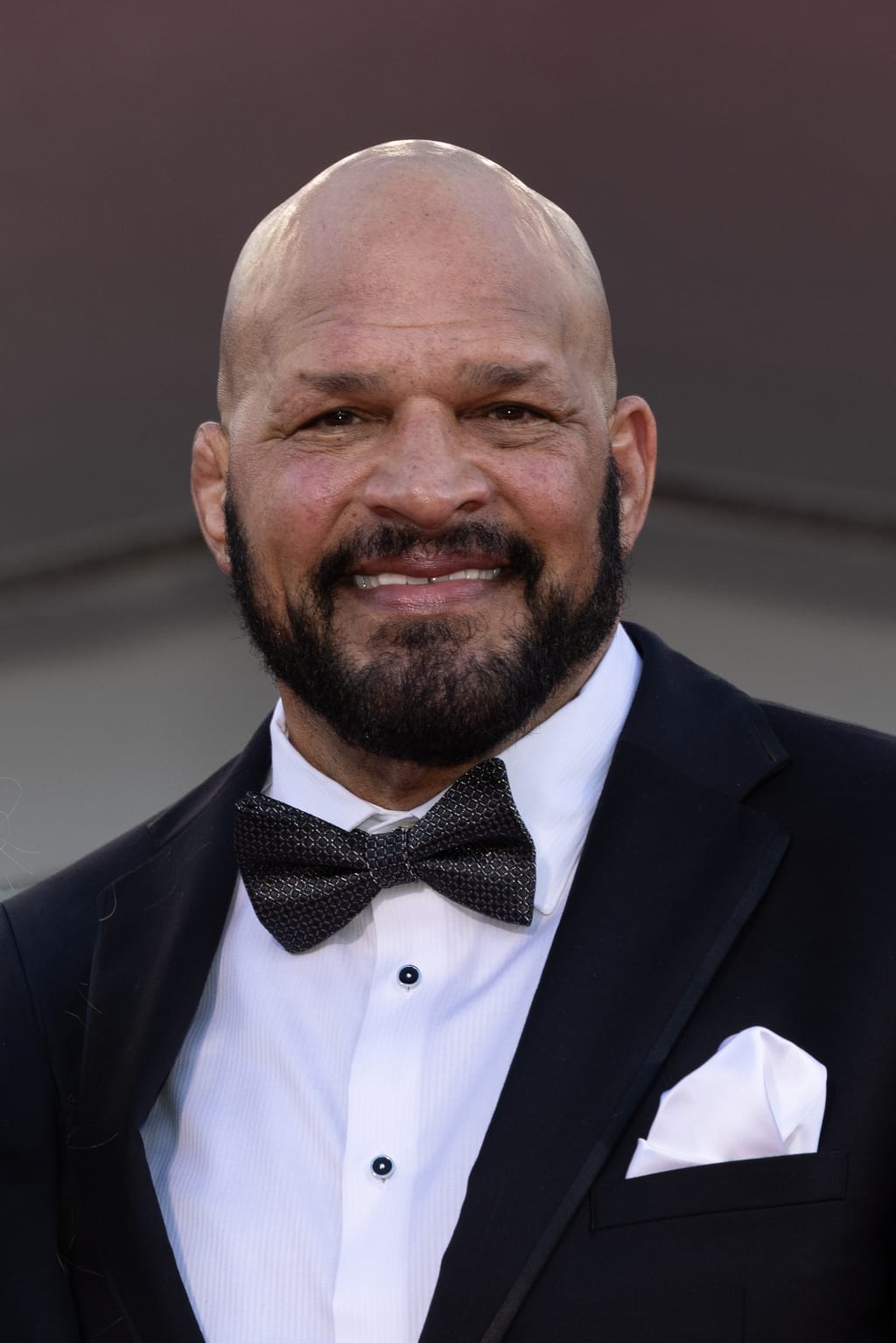
When I first watched The Smashing Machine, I expected a documentary about fighting — sweat, blood, and the genetic lottery of men earning money by breaking each other down. What I didn’t expect was a meditation on human identity, on how the pursuit of greatness often corrodes the very self that fuels it. Mark Kerr, the mixed martial artist at the heart of the film, isn’t merely a fighter. He’s a man who tried to outmuscle his own humanity, and like all of us who mistake performance for purpose, he eventually met the limits of that illusion.
The film captures him at the peak of his powers: a world champion, body like an industrial sculpture, reputation as one of the most feared men alive. Yet behind the applause is dependency, loneliness, a slow unraveling of the mind under the rituals of pain. Watching him shoot painkillers in a dim apartment after mauling another human being in the ring feels almost surreal. It’s not the violence that shocks — it’s the emptiness afterward. The silence that rushes in when the cheering stops.
For me, Kerr’s story is a mirror of the modern obsession with power and transformation. We’ve built entire cultural mythologies around transcendence — athletes training until their bodies break, entrepreneurs sleeping three hours a night, influencers living in a near-constant performance of self-optimization. The instinct is the same: to smash through mortal boundaries until something divine, or at least profitable, emerges on the other side. But Kerr shows us what happens when that transformation turns parasitic. When perfection stops being a goal and becomes an addiction.
I’ve always found it compelling that Kerr’s nickname, “The Smashing Machine,” feels less like an honor and more like an autopsy report. Machines don’t love, hesitate, or heal; they process, repeat, and eventually burn out. Watching Kerr’s eyes during interviews — soft, confused, almost apologetic — you realize he never wanted to be a machine. He wanted the control machines seemed to possess, the immunity to doubt, to fatigue, to heartbreak. But in chasing that, he lost his humanity piece by piece. The tragedy isn’t that he failed to be superhuman. It’s that he succeeded briefly, and the success unmade him.
What lingers from The Smashing Machine isn’t the spectacle of dominance but the portrait of dependency — not just on substances, but on validation. The fights, the victories, the muscles — all shaped around external confirmation. It’s the same loop that drives countless people far from the cage: approval at work, social media feedback, whatever small doses of applause we collect to manage the fear that maybe we’re not enough. Kerr’s addiction to painkillers reads as an extension of this hunger. One numbed the body; the other numbed the doubt.
There’s a scene I can’t forget where Kerr’s girlfriend talks about his inability to turn it off — the training, the anxiety, the need to be more than he is. I felt a sting of recognition. That’s the unspoken cost of ambition: once you start climbing, you stop noticing whether the ladder is leaning against anything worth scaling. The system rewards obsession until that obsession becomes a liability, and then it quietly discards you. Kerr’s downfall wasn’t unique. It was existentially American.
What fascinates me most is how Kerr’s story predates the social media era yet feels predictive of it. Today, we see thousands of digital “smashing machines” — people grinding themselves down in public, performing brilliance at unsustainable speeds, treating exhaustion as a moral credential. Kerr’s cage just happened to have ropes and referees. Ours glows in our palms. In both worlds, the metric of worth is measurable impact: likes, wins, output. Humanity doesn’t count unless quantified.
When I think of Kerr now — older, reflective, sober — I realize he embodies something more than fallen heroism. He represents recovery as an act of rebellion. In a culture that celebrates invincibility, admitting fragility becomes radical. Choosing rest becomes profound. Kerr’s survival, though quieter than his rise, speaks to the possibility of reclaiming humanity after performance. That’s where I see the film’s quiet power: it doesn’t offer redemption so much as exposure. It forces us to confront what we worship, and whether those idols deserve our faith.
I can’t watch The Smashing Machine without thinking about my own thresholds — the times I pushed too far out of fear of being ordinary. I’ve never fought in a cage, but I’ve inhabited that mental space: driven by the compulsion to control, to prove, to perfect. The human body and psyche can only absorb so much punishment before something fractures. The lucky ones realize it soon enough to step away. The unlucky ones, like Kerr for a time, have to be broken open to remember what being human feels like.
The brilliance of The Smashing Machine lies in its refusal to judge. It neither glorifies nor damns its subject. It simply observes — the conditioning, the chaos, the collapse — and trusts us to draw our own conclusions. For me, that conclusion is hauntingly simple: every smashing machine eventually meets the thing it can’t destroy. And that thing, inevitably, is itself.
About the Creator
Trend Vantage
Covering the latest trends across business, tech, and culture. From finance to futuristic innovations, delivering insights that keep you ahead of the curve. Stay tuned for what’s next!
Keep reading
More stories from Trend Vantage and writers in Unbalanced and other communities.
What Darrell Taylor’s Journey Says About Resilience in the NFL
I often think about how we measure success in sports. It’s always the stats first—the sacks, the tackles, the highlight reels that make a Sunday afternoon feel cinematic. But when I watch Darrell Taylor play, I don’t just see numbers or technique. I see a kind of restlessness that mirrors real life—the tension between ambition and fragility, confidence and doubt.
By Trend Vantageabout 9 hours ago in Unbalanced
Wild Card Weekend Recap: What Happens Now?
I think I figured out why I love Wild Card Weekend so much. It's because it's the first playoff anything of the calendar year. The NFL season starts in the fall, and once upon a time, the champion was crowned either on or slightly before New Year's. The evolution of the NFL schedule has resulted in the playoffs starting just into the New Year, and currently, the final week of the season falls on the first weekend of the New Year, with Wild Card Weekend coming a week after that. So yes, chronologically, the NFL's Wild Card Weekend serves as the first playoff anything of the calendar year.
By Clyde E. Dawkins11 days ago in Unbalanced
Lamar Odom DUI Arrest Article – Complete
Sober driving is the only rational way to drive on the roadways. NBA two-time champion Lamar Odom was picked up for driving under the influence, violating lane changing protocol, and for not maintaining his vehicle in his own lane.
By Skyler Saunders6 days ago in Unbalanced
The CEO of Everything
They say "jack of all trades, master of none," but they forgot to mention the part where the jack of all trades is also the camera woman, the makeup artist, and the person currently yelling at a tangled Wii microphone cable in a her own bathroom while recording herself singing and trying to make it look realistic and professional. (As professional as you can make it with nothing but a cell phone camera and a mic that doesn't work)
By Sara Wilson6 days ago in Humans



Comments
There are no comments for this story
Be the first to respond and start the conversation.