
The most difficult way of life in the world
We have been to many extreme places in the world: ice fields, volcanoes, highlands, oceans...

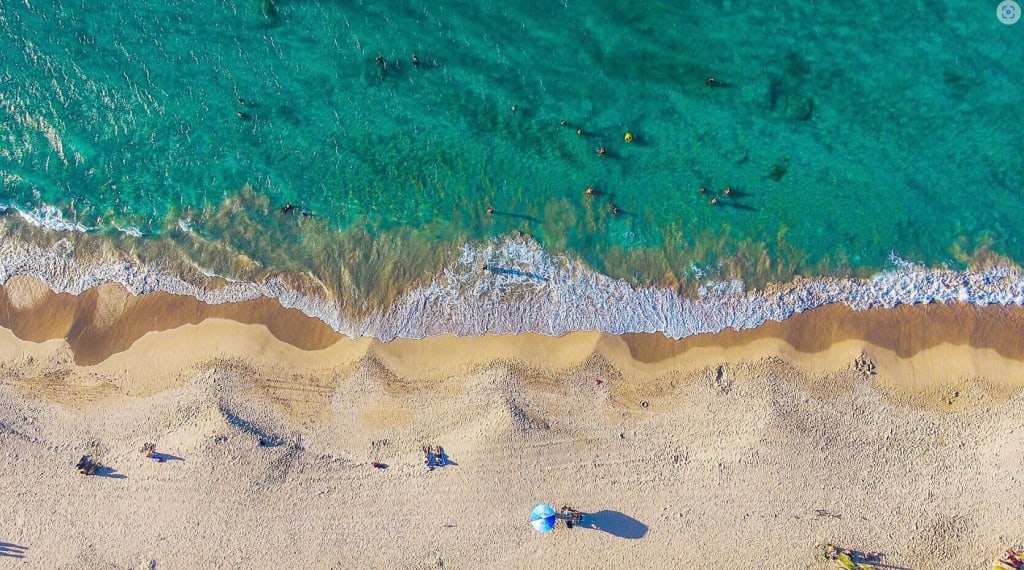
However, I discovered that wherever I look, there are people congregating, working hard to make a livelihood, cultivating crops, or mining.
In Russia's Kamchatka Peninsula, where the temperature is minus 30 degrees Celsius, there is a group of reindeer men who cook snow for tea, and stay with the wilderness day and night.
In the Ijen volcano in Indonesia, the sulfur workers there are walking on the brink of death in the blue fire of hell every day.
La Rinconada in Peru is the highest town in the world. The gold diggers living at an altitude of 5,100 meters exhausted their hardships in the extreme cold and lack of oxygen.
In South Korea's Jeju Island, the haenyeo who collect sea urchins for a living spend their whole lives in the cold sea water, supporting each family's lifeline.
This summer, we went to the Danakil Depression in Ethiopia for the filming of "Couple Walking: Rolling Africa", which is also one of the places with the most extreme climate and the harshest environment on earth.
The annual average temperature here is as high as 34.4 degrees Celsius, and it often reaches more than 60 degrees Celsius by accident. It is known as the hottest place in the world.
However, it is also here that we see the most difficult way of life for human beings: a group of salt diggers, driving camels, enter this daunting large furnace year after year, looking for precious salt.
Not far from their workplace is the Dallol Volcano. The ground is covered with a sulfuric acid solution with a temperature as high as 100 degrees Celsius and a foul-smelling sulfur.
For hundreds of miles, there are only strange and beautiful scenery, no drinking water, and no signs of life. This makes this place called "the cruelest place in the world" by National Geographic.
And this group of salt diggers is also known as "the closest to the gates of hell".
We arrived in the Danakil Depression in September this year. Although it is already autumn in Beijing, the temperature here is still 42 degrees Celsius.
Locals said that at the highest point, the temperature here reached more than 60 degrees Celsius. So, it's pretty cool now...
It's not only hot here, but also desolate. There are hundreds of miles around, but there are no hotels.
The locals build a few beds in the open space in the wilderness, which is the best hospitality for tourists.
At night, this place becomes the beautiful "Starry Sky Hotel".
In addition to the high temperature, it is also very inconvenient to get water here.
There is only a well far away from the village. The villagers have to drive donkeys across the desert to transport a few buckets of water.
Here, the temperature in the morning will be much cooler, the temperature can reach 18 degrees Celsius, and at noon, the temperature will soar to 40 to 50 degrees Celsius.
But the local Alpha people are used to this kind of temperature.
Continue to drive, and you can't see any rivers or green along the way. It's really the cruelest living environment in the world.
A long time ago, the Danakil Depression was part of the ocean. After a long time, the seawater here evaporates continuously, forming a saltwater lake.
Under the action of extreme high temperature, the salt separated out from the lake water, forming a salt flat nearly 1,000 meters thick.
Most of the Afar people living near here dig salt for a living.
In many countries, salt has always been a resource monopolized by the government. Private individuals cannot mine salt without permission.
The same is true for the Danakil Depression, a kilometer-thick rich salt mine, but only seven or eight hundred miners allowed by the government can mine here.
We came to the home of Ahmed, one of the salt workers. It is said to be "home", but it is actually very simple.
A few wooden sticks support a few mats, which are the four walls of the room.
The temperature difference between day and night in the Danakil Depression is large, and the nearby salt and sand are not insulated, so these simple shacks are also a rare habitat for people.
The houses in these deserts were all built for mining salt. And the many families here can only be maintained because of salt mining.
The average salary in Ethiopia is about US$90 per month, while salt diggers can earn US$300 to US$400, which is not bad.
This may be one of the reasons why these salt diggers can work in such a cruel environment all year round.
Ahmed took us to see the place where he dug salt, which was an endless salt lake.
They dug salt here under the temperature difference of tens of degrees Celsius every day, and then transported it to the town by camel for sale.
The piles of salt bricks excavated are still very spectacular.
These salt bricks were once the official currency of Ethiopia for nearly a thousand years.
And until today, the method of mining salt here has hardly changed: first use tools to break open the salt blocks on the ground, and then use wooden sticks to pry them off one by one. All by manpower, without any mechanical component.
Liang Hong and I also tried the process of mining salt.
This kind of work is already extremely exhausting, and it is even more tiring under the high temperature. If we can't dig a few pieces, the two of us will be exhausted.
With such great efforts, we finally dug up salt blocks worth 3 yuan.
In addition to this desert, in Ethiopia, there is also a volcanic salt lake that can produce salt.
The salt miners there usually only wear a pair of underwear when they go to the lake to catch salt. Because they are poor, they can't buy protective gear. Workers can only use dirt bags to block their nostrils to prevent the highly corrosive salt from entering their noses.
But their eyes did not have any protection, so their red eyes became an important symbol to identify them.
Unprocessed salt is extremely corrosive, and even corrodes dark skin into white.
For them, salt is sweet and salt is bitter. Salt is hope, and salt is also a curse.
Day after day, year after year, they worked desperately in the desert and in the salt lake.
The local people told us that they do not want their children to stay in this salt lake in the future. Everyone knows this job sucks.
However, like Sisyphus constantly pushing the boulder, this group of people in the desert, generation after generation, repeats their ancient destiny
About the Creator
jay bob
Follow me for more stories
Keep reading
More stories from jay bob and writers in Unbalanced and other communities.
Wild Card Weekend Recap: What Happens Now?
I think I figured out why I love Wild Card Weekend so much. It's because it's the first playoff anything of the calendar year. The NFL season starts in the fall, and once upon a time, the champion was crowned either on or slightly before New Year's. The evolution of the NFL schedule has resulted in the playoffs starting just into the New Year, and currently, the final week of the season falls on the first weekend of the New Year, with Wild Card Weekend coming a week after that. So yes, chronologically, the NFL's Wild Card Weekend serves as the first playoff anything of the calendar year.
By Clyde E. Dawkins10 days ago in Unbalanced
Lamar Odom DUI Arrest Article – Complete
Sober driving is the only rational way to drive on the roadways. NBA two-time champion Lamar Odom was picked up for driving under the influence, violating lane changing protocol, and for not maintaining his vehicle in his own lane.
By Skyler Saunders5 days ago in Unbalanced




Comments
There are no comments for this story
Be the first to respond and start the conversation.