
The Modern Era of Football
Redefining the Game: Innovations and Legends in Modern Football


The Evolution of the Game In recent decades, football, also known as "the beautiful game," has undergone significant change. Modern football is undergoing a dynamic evolution, from tactical revolutions and technological advancements to talent globalization and sport commercialization. Although the fundamentals of the game remain the same—eleven players on each side, one ball, and the objective of scoring more goals than your opponent—the game's play, management, and consumption have all undergone significant transformation. The multifaceted development of modern football is the subject of this article, which focuses on tactical innovations, the impact of data and technology, the role of commercial interests, shifts in player development, and the cultural significance of the game in a world that is rapidly changing.
The Chessboard on the Grass

Tactical Evolution The tactical sophistication that now defines elite-level competition is one of the most fascinating developments in contemporary football. In earlier decades, the landscape was dominated by formations like 4-4-2 or 3-5-2, which took a relatively straightforward approach to both attacking and defending. Complex, fluid, and heavily data-informed systems are used by managers today. Teams' approaches to ball recovery and space control have been reimagined as a result of the rise of pressing football, which was popularized by managers like Jürgen Klopp and Pep Guardiola. Counter-pressing and high pressing, also known as "gegenpressing," aim to win the ball high up the field and take advantage of unorganized defenses. At the same time, possession-based football has evolved from the short-passing dominance of tiki-taka to ball progression that is more vertical and incisive. In addition, the use of "box midfielders," "false nines," and "inverted fullbacks" exemplifies the tactical experimentation that is central to the modern game. Players are no longer constrained by predetermined positional roles; rather, they operate within dynamic structures that call for creativity, adaptability, and tactical discipline.
The Heart of the Boots
Data and Analytics It is impossible to overstate the significance of data analytics in modern football. Data has emerged as a crucial component of success in a variety of areas, including player acquisition, match preparation, and game-day decision-making. Using cutting-edge software and algorithms, clubs now have entire departments devoted to analytics, which glean insights from vast amounts of data. A few examples of the metrics that serve as a guide for tactical decisions and performance evaluations include expected goals (xG), pass completion rates, pressing intensity, and player heat maps. Brentford FC and Brighton & Hove Albion have earned a reputation for using statistical modeling to find undervalued talent in recruitment. Data reigns supreme even on the training ground. Heart rate monitors assess fitness, GPS vests monitor players' physical output, and video analysis tools enable coaches to break down performance at the micro level. Every aspect of player performance, from workload management to tactical adjustments, is improved by this scientific approach.
The Digital Revolution
Innovation and Technology The influence of technology extends beyond data. Football officiating has been fundamentally altered by goal-line technology, semi-automated offside detection, and video assistant referees (VAR). These technologies, while occasionally controversial, aim to improve fairness and reduce human error in crucial decisions. Virtual reality (VR), AI-driven coaching platforms, and wearable technology are also becoming commonplace. In a simulated setting, virtual reality (VR) allows players to practice their decision-making and experience match scenarios. Companies like StatsBomb and Hudl have developed AI tools that can identify patterns and weaknesses in opponents, giving teams a competitive advantage. In addition, fan engagement has moved online. The intersection of football fandom and technology is rapidly expanding, including fan tokens and non-fungible tokens (NFTs) and augmented reality (AR) matchday experiences.
The Internationalization of Talent
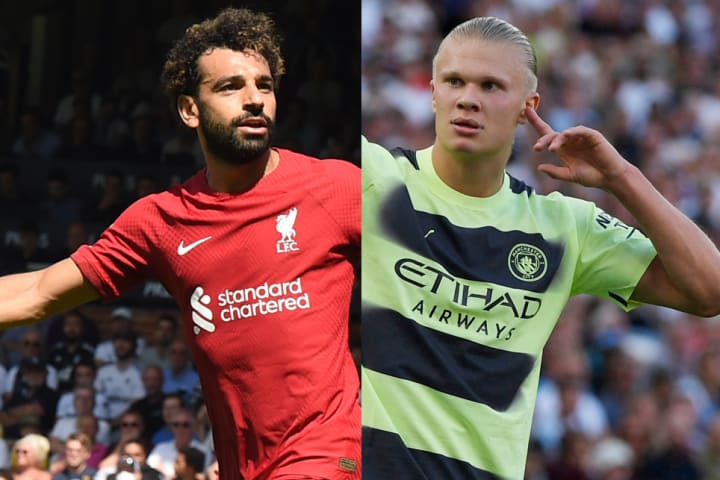
Football today has never been more international. Scouts and academies look for talent all over the world, frequently recruiting younger players from Asia, Africa, and South America. The development of global scouting networks has led to more diverse playing styles and cultural exchanges among teams, as well as increased competition in youth development. The English Premier League and other European leagues, in particular, have evolved into talent melting pots. As the game's popularity and reach expand, players like Erling Haaland, Son Heung-min, Mohamed Salah, and Vincius Junior have emerged as global icons. To catch up to traditional football powerhouses, previously underrepresented nations are simultaneously investing in infrastructure, academies, and coaching. This shift was made clear at the 2022 FIFA World Cup in Qatar, when teams like Japan and Morocco surprised everyone by winning.
Education for Youth and Academies
Elite academies are adopting holistic approaches to player education, putting an increased emphasis on youth development. To shape the next generation of stars, clubs spend millions on cutting-edge training facilities, nutrition programs, psychological support, and academic education. There have long been pioneering organizations like La Masia (Barcelona), Clairefontaine (France), and Ajax's youth academy; however, new players like RB Leipzig's youth system and Manchester City's City Football Academy are furthering the boundaries. In addition, the emergence of "multi-club ownership" models, in which conglomerates own multiple clubs in various nations, has made it possible for emerging talents to gain experience in local leagues before making the leap to the international stage.
Football's Commercialization and Business
Football today is more than just a sport; it is also a global business. Clubs are now commercial juggernauts thanks to sponsorships, merchandise sales, broadcasting rights, and matchday sales. For instance, clubs benefit from a global audience and billions of dollars in annual television rights revenue from the Premier League. Players have also developed into brands. Athletes have become entrepreneurs and influencers thanks to the unprecedented reach provided by social media. With endorsement deals and business ventures expanding their wealth beyond the pitch, Cristiano Ronaldo, Lionel Messi, and Kylian Mbappé have global followings that rival Hollywood celebrities. Concerns, however, are also raised by this commercial boom. The price of tickets has skyrocketed in some leagues, and the gap between grassroots and elite football is still growing. The conflict between the values of competition and inclusivity that underpin the sport and profit motives was exemplified by the European Super League project's failure in 2021.
Impact on Society and Cultural Relevance

The cultural significance of football has never been greater. Social justice, mental health awareness, and environmental sustainability are increasingly being promoted through players' and clubs' platforms. Strong examples of footballers bringing about real-world change include Megan Rapinoe's activism in the United States and Marcus Rashford's campaign against child hunger in the United Kingdom. Particularly, women's football has grown at an exponential rate. The Women's World Cup and UEFA Women's Champions League are attracting sponsorship, media attention, and record viewership. The game is becoming more representative of the global community it serves as barriers continue to fall.
The Next Steps in Football
The development of football in the future does not appear to be slowing down. The sport will continue to be reshaped by innovations like AI-based coaching, biometric performance monitoring, and immersive fan experiences. Clubs are also looking into carbon-neutral operations, community-based initiatives, green stadiums, and other sustainable options. It is anticipated that the future of football will also be shaped by more gender parity, stricter concussion protocols, and the incorporation of mental health resources into player development. However, despite all the changes, the game's core remains unchanged. Football remains a universal language that continues to inspire, unite, and evolve, whether it is a child kicking a ball on a dusty street or a packed stadium roaring in unison.
Conclusion
Football as it is played today reflects the changing world around us. It combines community with commerce, passion with professionalism, and tradition with innovation. Despite the fact that the rate of change can be baffling, it also presents opportunities to enhance the game's inclusiveness, intelligence, and impact. The love of the game, which is at the heart of football's evolution, remains its greatest strength. Even though football is more complex, commercial, and calculated in the modern era, its magic still lies in its capacity to unite people, ignite dreams, and bring joy.
About the Creator
Asif Al Latif
Hey there, Seeker of stories and ideas!
I'm Asif. Nothing complex, some simple writing you will enjoy...
Keep reading
More stories from Asif Al Latif and writers in Unbalanced and other communities.
Barcelona’s Epic El Clásico Triumph: A Night for the Ages
On a night where the weight of history hung in the air and every touch of the ball seemed to carry extra meaning, FC Barcelona pulled off a stunning 3-2 victory over Real Madrid in the Copa del Rey final, held on April 26, 2025, at the electric Estadio La Cartuja in Seville.
By Asif Al Latif9 months ago in Unbalanced
Wild Card Weekend Recap: What Happens Now?
I think I figured out why I love Wild Card Weekend so much. It's because it's the first playoff anything of the calendar year. The NFL season starts in the fall, and once upon a time, the champion was crowned either on or slightly before New Year's. The evolution of the NFL schedule has resulted in the playoffs starting just into the New Year, and currently, the final week of the season falls on the first weekend of the New Year, with Wild Card Weekend coming a week after that. So yes, chronologically, the NFL's Wild Card Weekend serves as the first playoff anything of the calendar year.
By Clyde E. Dawkins6 days ago in Unbalanced
China Asks Companies to Stop Using US and Israeli Cybersecurity Software
China has told many of its companies to stop using cybersecurity software made by firms from the United States and Israel, according to people familiar with the matter. This move shows how serious China is about protecting its data and reducing its reliance on foreign technology. It also highlights the growing technology and political tensions between China and Western countries.
By sehzeen fatima5 days ago in Unbalanced



Comments
There are no comments for this story
Be the first to respond and start the conversation.