
THE CASE OF LANCE ARMSTRONG AND HIS STRIPPED OLYMPIC MEDAL
Doping Scandal,Fall from Grace,and the Loss of a Legacy.

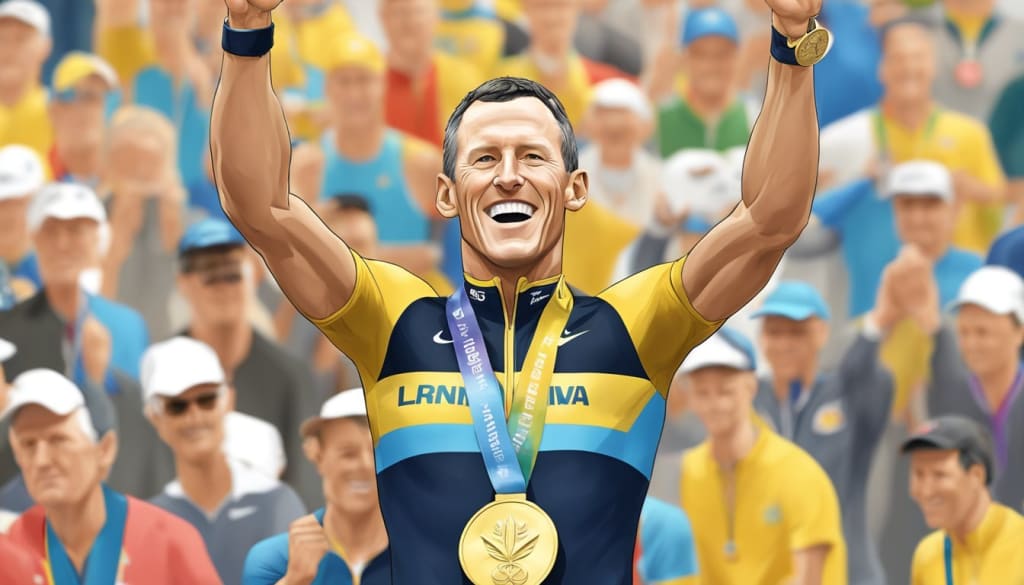
Lance Armstrong, once revered as one of the greatest professional cyclists in history, is now notorious for his involvement in one of the most significant doping scandals in sports history. Armstrong’s story is one of triumph, scandal, and redemption, which has left a lasting impact on the world of cycling and the public's perception of athletes and doping.
Lance Armstrong’s Rise to Fame
Lance Armstrong’s career began with remarkable success. In 1999, he won the Tour de France, a prestigious cycling event, and went on to dominate the race for seven consecutive years, from 1999 to 2005. Armstrong’s achievements were particularly inspiring given his personal battle with testicular cancer, which he was diagnosed with in 1996. He survived the disease after aggressive treatment and returned to competitive cycling, a feat that earned him admiration and the status of a national hero. Armstrong’s story of overcoming cancer and winning the Tour de France became a symbol of perseverance and hope, inspiring millions around the world.
His popularity surged even further when he founded the Lance Armstrong Foundation, later known as LiveStrong, which focused on cancer awareness and support for cancer survivors. Armstrong’s influence extended beyond sports, making him a cultural icon and a symbol of strength, especially for those battling cancer.
The Doping Scandal Unfolds
Despite Armstrong’s rise to fame, rumors about his use of performance-enhancing drugs (PEDs) had circulated for years. However, it wasn’t until 2012 that the full extent of his doping came to light. In that year, the United States Anti-Doping Agency (USADA) conducted an extensive investigation into Armstrong’s career, interviewing former teammates, staff, and coaches. The investigation uncovered a systematic and organized doping program that Armstrong had been a part of during his Tour de France victories.
Armstrong was accused of using substances such as EPO (erythropoietin), testosterone, corticosteroids, and blood transfusions to enhance his performance and win races. It was alleged that Armstrong not only used these substances himself but also encouraged and facilitated doping for his teammates. As a result, Armstrong was stripped of his seven Tour de France titles and banned from competitive cycling for life by USADA.
The Olympic Medal Controversy
While Armstrong’s most famous achievements were in the Tour de France, his career also included a notable performance at the 2000 Sydney Olympics. In that event, he competed in the Men's Time Trial and won a bronze medal. However, Armstrong’s Olympic medal was not initially under scrutiny.
In 2012, the International Olympic Committee (IOC) announced that they would investigate Armstrong’s bronze medal from the Sydney Olympics. The decision was part of a broader effort to uphold the integrity of Olympic competition and ensure that athletes who were found guilty of doping were not allowed to keep their medals. Given the overwhelming evidence of Armstrong’s doping practices, the IOC confirmed in 2013 that Armstrong’s Olympic bronze medal would be stripped from him, making him the first cyclist in history to lose an Olympic medal due to doping violations.
The stripping of Armstrong's Olympic medal was a significant moment in the wider scandal. While Armstrong’s Tour de France victories were tarnished by his doping admissions, the removal of his Olympic medal brought the issue into the realm of the international sporting community, reinforcing the commitment to clean competition at the Olympic level.
The Aftermath and Public Perception
Armstrong’s confession to doping came in 2013 during an interview with Oprah Winfrey, where he admitted to using performance-enhancing drugs during all of his seven Tour de France victories, as well as during his Olympic performance. His admission shocked the public, and his once-untouchable image as a cancer survivor and sports hero was shattered.
In the aftermath, Armstrong faced widespread criticism and lost numerous sponsorships, including lucrative deals with major companies like Nike, Anheuser-Busch, and Oakley. He was also sued by various parties, including the U.S. government, which claimed that Armstrong defrauded the U.S. Postal Service, one of his major sponsors, by using government funds for his doping program. Armstrong eventually settled the lawsuit for $5 million.
Despite the scandal, Armstrong has maintained that his cancer survival story remains true and that his philanthropic work with the LiveStrong Foundation continues to have a positive impact. However, his reputation in the world of sports has been irreparably damaged.
Legacy and Lessons Learned
The Lance Armstrong doping scandal serves as a cautionary tale for athletes and sports organizations alike. Armstrong’s story highlights the intense pressure athletes face to perform at the highest levels, often leading them to make unethical choices. It also underscores the importance of anti-doping measures and the role of governing bodies like USADA and the IOC in maintaining the integrity of sports.
For Armstrong, the loss of his Olympic medal is a symbol of the broader consequences of his actions. While his achievements in cycling remain part of the history of the sport, they are forever tainted by his doping violations. The stripping of his Olympic medal was just one of the many consequences of his actions, but it reinforced the message that integrity and fairness are essential in the world of sports. Armstrong’s case serves as a reminder that no athlete, no matter how successful, is above the rules of clean competition.
About the Creator
Badhan Sen
Myself Badhan, I am a professional writer.I like to share some stories with my friends.
Keep reading
More stories from Badhan Sen and writers in Unbalanced and other communities.
LANCE ARMSTRONG'S LEGACY AND THE OLYMPIC CONNECTION
Lance Armstrong’s name is synonymous with both the pinnacle of cycling success and one of the most infamous doping scandals in sports history. While his career brought immense achievements, his legacy has been marred by controversy, particularly after his admission to using performance-enhancing drugs (PEDs). However, beyond the scandal, Armstrong’s connection to the Olympic Games, both in terms of his athleticism and the impact on cycling as a sport, remains significant.
By Badhan Senabout a year ago in Unbalanced
Wild Card Weekend Recap: What Happens Now?
I think I figured out why I love Wild Card Weekend so much. It's because it's the first playoff anything of the calendar year. The NFL season starts in the fall, and once upon a time, the champion was crowned either on or slightly before New Year's. The evolution of the NFL schedule has resulted in the playoffs starting just into the New Year, and currently, the final week of the season falls on the first weekend of the New Year, with Wild Card Weekend coming a week after that. So yes, chronologically, the NFL's Wild Card Weekend serves as the first playoff anything of the calendar year.
By Clyde E. Dawkins6 days ago in Unbalanced
Homestand Part II: Not-So-Usual Suspects
On Thursday, the Colorado Avalanche's long homestand began against the Ottawa Senators, and it was a slaughter. An 8-2 victory that saw the Avs put six pucks in the net during the middle period. Martin Necas and Brock Nelson each reached the 20-goal mark during that game, and the highlight was Josh Manson's Gordie Howe Hat Trick--two goals, two assists, and a fight, with his dad, legendary player Dave Manson, in attendance.
By Clyde E. Dawkins7 days ago in Unbalanced



Comments (1)
Good article. Doping is cheating in all ways. He got what he deserved even though his LiveStrong is doing fine I guess.