
THE 2008 BEIJING OLYMPICS AND CHINA'S GLOBAL RISE
Showcasing China's Economic Power and Political Ambition on the Global Stage.

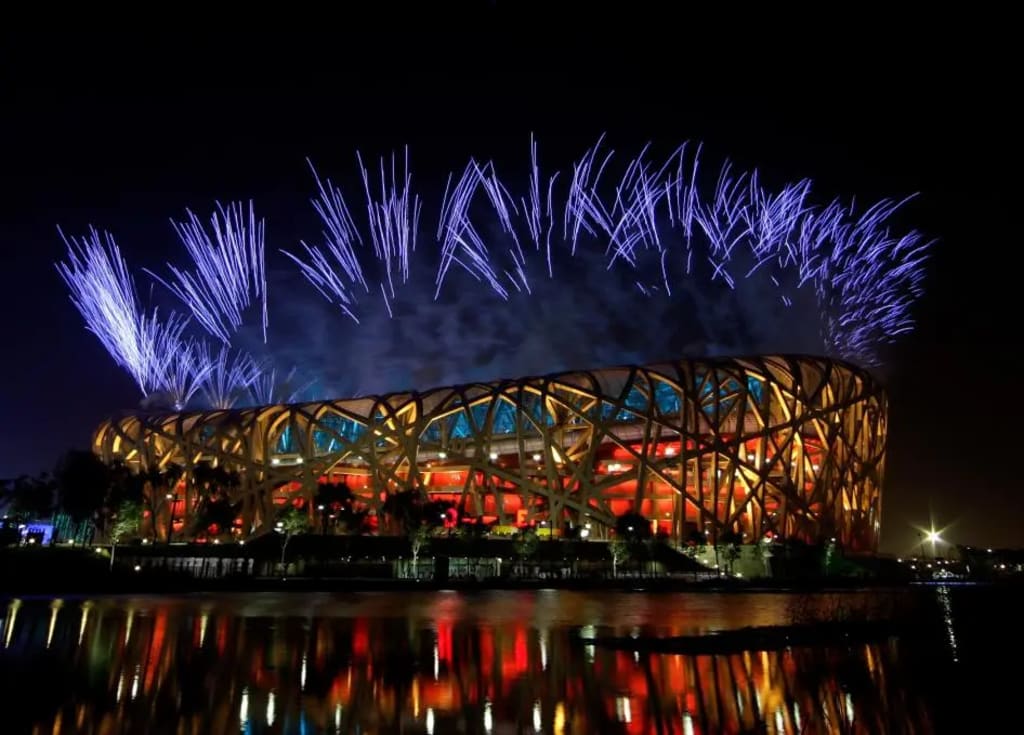
The 2008 Beijing Olympics marked a pivotal moment in both the history of the Olympic Games and in China's ascension as a global power. Held from August 8 to August 24, 2008, the Games were more than just an international sporting event—they were a statement of China’s growing influence on the world stage. For the Chinese government, the Olympics provided an opportunity to showcase the country’s economic and political achievements, its rich cultural heritage, and its increasing role in global affairs. However, the Games were also a focal point for criticism and protests, as various groups raised concerns about human rights, political freedoms, and China's global image.
Background: China’s Economic and Political Transformation
By the time of the 2008 Olympics, China had undergone a dramatic transformation. Since the late 1970s, under the leadership of Deng Xiaoping, China had embraced economic reforms that shifted the country from a closed, centrally planned economy to a more market-oriented system. These reforms led to rapid industrialization, economic growth, and a burgeoning middle class, while also elevating China to the second-largest economy in the world by the early 21st century.
China’s rise was accompanied by significant improvements in infrastructure, technology, and its global economic footprint. This newfound economic prowess allowed China to present itself as a modern, dynamic, and powerful nation—capable of competing with the West on the global stage. The Beijing Olympics were seen as the perfect opportunity to display this transformation, both to domestic audiences and to the international community.
At the same time, China’s political system remained tightly controlled by the Communist Party. The government’s heavy censorship, limited political freedoms, and strict control over civil society became a source of international concern. These issues would eventually come to the forefront during the 2008 Olympics, especially as the event was marketed as a showcase of China’s modernity, progress, and openness to the world.
The Beijing Olympics as a Symbol of China’s Global Rise
The Chinese government strategically used the 2008 Olympics to communicate the narrative of China’s rapid rise and its emergence as a global power. The choice of Beijing as the host city itself was a deliberate decision, representing not just the capital city but also the country’s historical and cultural significance. The city had undergone a dramatic transformation in preparation for the Games, with new infrastructure projects, including the iconic Bird’s Nest Stadium designed by Herzog & de Meuron and the Water Cube Aquatic Center designed by PTW Architects. These architectural marvels symbolized China’s modernity and technological advancement.
The opening ceremony, directed by film director Zhang Yimou, was a spectacular display of China’s history, culture, and ambition. The ceremony, watched by billions around the world, featured thousands of performers, intricate choreography, and breathtaking visuals that showcased China's imperial past, revolutionary achievements, and technological future. The event was carefully curated to present a narrative of China’s greatness, pride, and unity under the leadership of the Communist Party.
The Games themselves were a testament to China’s growing prowess in international sports. The country won a total of 51 gold medals, the most of any nation at the time, and finished first in the overall medal count. This performance symbolized China’s increasing dominance not just in the political and economic arenas but also in global athletics, further reinforcing the narrative of the country’s global ascent.
International Reactions: Criticism and Protest
While the 2008 Beijing Olympics were seen as a major triumph for China, they were also a source of controversy and criticism. Leading up to the Games, several human rights organizations, Western governments, and activists raised concerns about China’s record on human rights, particularly in relation to Tibet, the persecution of political dissidents, and the lack of freedom of expression. The timing of the Olympics coincided with heightened international awareness of China’s political practices, especially after the violent crackdown on Tibetan protests earlier that year.
Protests against China’s human rights record took place in various parts of the world, with demonstrators urging countries to boycott the Games or to use the event to raise awareness of issues like Tibet and the suppression of free speech. Some groups criticized the Chinese government for using the Olympics as a “whitewashing” tool to deflect attention from its authoritarian policies. The most prominent of these protests occurred during the Olympic torch relay, which was disrupted in cities like London, Paris, and San Francisco by Tibetans and pro-democracy activists.
In response to these protests, the Chinese government defended the legitimacy of the Games and its right to host them, while emphasizing the idea that the Olympics were about promoting peace, unity, and international cooperation. Chinese officials claimed that the event was an opportunity for the world to experience China’s progress and that the country had made significant strides in improving the lives of its people, despite the political challenges that remained.
The Legacy of the 2008 Olympics
The legacy of the 2008 Beijing Olympics is multifaceted. On the one hand, the Games were a resounding success in terms of their organization, the impressive performances of athletes, and the global media coverage that showcased China’s growing influence. The event helped solidify China’s position as a rising global power and demonstrated its ability to host large-scale international events.
However, the Games also had a lasting impact on the political and social landscape of China. Domestically, the Olympics were a moment of national pride, and the success of the Games further entrenched the Communist Party’s legitimacy as the rightful leader of China. The country’s growing middle class, along with the global spotlight on China’s achievements, contributed to a renewed sense of optimism and national identity among the Chinese people.
On the international stage, the Olympics marked China’s emergence as a major player in global affairs, both economically and politically. However, the criticisms surrounding human rights and China’s political system persisted, and the Games exposed the tension between China’s aspirations for global recognition and the persistent challenges posed by its domestic policies.
The Beijing Olympics also had a significant impact on the Olympics as a global institution. The success of the Games, coupled with the high levels of government investment and sponsorship, helped to ensure China’s continued involvement in international sporting events. The Games also spurred a renewed focus on the role of sport in international diplomacy, with China positioning itself as both a leader in global sports and a key player in shaping international policy.
Conclusion
The 2008 Beijing Olympics were a defining moment in the history of both the Olympic Games and China’s rise on the world stage. While the event was a remarkable display of China’s economic and technological progress, it also highlighted the ongoing tensions between China’s global aspirations and its political realities. The Games symbolized the country’s transition from a regional power to a global superpower, and they set the stage for China’s continued influence in global affairs in the years to come. However, the international protests and criticisms surrounding the Games also demonstrated the complex relationship between China’s rise and its political system, a dynamic that continues to shape the country’s role in the world today.
About the Creator
Badhan Sen
Myself Badhan, I am a professional writer.I like to share some stories with my friends.
Keep reading
More stories from Badhan Sen and writers in Unbalanced and other communities.
THE INTRODUCTION OF WOMEN'S EVENTS IN THE OLYMPICS
The Introduction of Women’s Events in the Olympics The history of women’s participation in the Olympic Games has been a long journey, marked by gradual progress and significant milestones. Since its inception in 1896, the Olympic Games were initially an all-male domain, with women’s inclusion in the Games only coming several decades later. Over the years, the presence of female athletes in the Olympics has expanded, reflecting broader social changes, evolving views on gender equality, and the determination of women to break through barriers in sports.
By Badhan Senabout a year ago in Unbalanced
Wild Card Weekend Recap: What Happens Now?
I think I figured out why I love Wild Card Weekend so much. It's because it's the first playoff anything of the calendar year. The NFL season starts in the fall, and once upon a time, the champion was crowned either on or slightly before New Year's. The evolution of the NFL schedule has resulted in the playoffs starting just into the New Year, and currently, the final week of the season falls on the first weekend of the New Year, with Wild Card Weekend coming a week after that. So yes, chronologically, the NFL's Wild Card Weekend serves as the first playoff anything of the calendar year.
By Clyde E. Dawkins4 days ago in Unbalanced
Homestand Part II: Not-So-Usual Suspects
On Thursday, the Colorado Avalanche's long homestand began against the Ottawa Senators, and it was a slaughter. An 8-2 victory that saw the Avs put six pucks in the net during the middle period. Martin Necas and Brock Nelson each reached the 20-goal mark during that game, and the highlight was Josh Manson's Gordie Howe Hat Trick--two goals, two assists, and a fight, with his dad, legendary player Dave Manson, in attendance.
By Clyde E. Dawkins5 days ago in Unbalanced



Comments (1)
Another great article about a past Olympics. I remember watching these as well I just wish the commentators would show the events not so much about the back stories of the athletes. They are interesting, but I like the events better.