
THE INTRODUCTION OF WOMEN'S EVENTS IN THE OLYMPICS
Breaking Barriers:The Rise of Women in the Olympics.

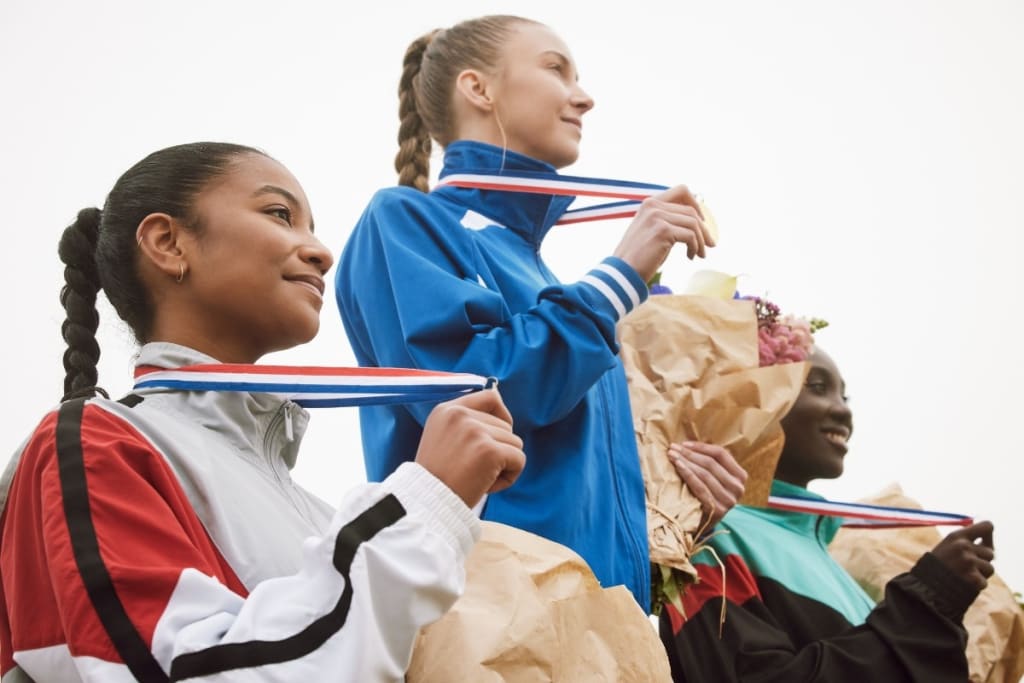
The Introduction of Women’s Events in the Olympics
The history of women’s participation in the Olympic Games has been a long journey, marked by gradual progress and significant milestones. Since its inception in 1896, the Olympic Games were initially an all-male domain, with women’s inclusion in the Games only coming several decades later. Over the years, the presence of female athletes in the Olympics has expanded, reflecting broader social changes, evolving views on gender equality, and the determination of women to break through barriers in sports.
Early Exclusion of Women from the Olympics
The first modern Olympic Games, held in Athens in 1896, excluded women from participating. Pierre de Coubertin, the founder of the modern Olympic Games, believed that women were not suited for competitive sports. This view was widespread during the late 19th and early 20th centuries, when sports were largely seen as a male activity, with women relegated to domestic roles. As a result, the first few Olympic Games were exclusively for men.
Despite this exclusion, there were notable figures advocating for women’s participation in sports. Some early feminists and advocates for women’s rights argued that sports were essential for women’s health, empowerment, and equality. However, it wasn’t until 1900 that women were first allowed to compete in the Olympics.
The 1900 Paris Olympics: The First Olympics for Women
The 1900 Summer Olympics, held in Paris, marked a pivotal moment in the history of the Games. For the first time in Olympic history, women were allowed to compete. While the event was still in its infancy, the inclusion of women was a significant step forward. However, the number of women participating was small, with only 22 women competing in five sports: tennis, golf, sailing, croquet, and equestrian events. These events, however, were mostly for men, and the inclusion of women was still very much a novelty.
The 1900 Paris Olympics, however, were not entirely free from discrimination. Women were not allowed to participate in track and field events, which were the core of the Olympic Games. Additionally, many of the women who competed did so in events that were considered more appropriate for women at the time, such as tennis and croquet.
Gradual Inclusion and Expanded Participation
The inclusion of women in the Olympics remained limited for many years. It wasn’t until 1928 that women were allowed to compete in athletics events, such as the 800 meters race, at the Amsterdam Games. This event was a landmark achievement, but it came with its own challenges. The 800 meters race was initially introduced only as a demonstration event for women, and it was later discontinued due to concerns over women’s physical stamina. It wasn’t until the 1960 Rome Olympics that the 800-meter race was reinstated for women.
While women continued to compete in certain sports, their participation remained sporadic. It wasn’t until the 1960s and 1970s that significant progress was made in the inclusion of women. The 1960 Rome Olympics saw the introduction of women’s gymnastics, which became one of the most popular Olympic sports for women. The 1960 Games also saw the first Olympic women’s swimming competition, a breakthrough in a sport that would go on to become one of the most successful for female athletes.
Title IX and the Rise of Women’s Participation
The 1970s were a transformative time for women’s participation in sports, particularly in the United States. Title IX, a landmark piece of legislation passed in 1972, prohibited discrimination on the basis of sex in educational programs and activities, including sports. This had a profound impact on the development of women’s sports in the United States, as it led to increased funding and opportunities for female athletes. The result was a dramatic rise in the number of women participating in Olympic sports, and by the 1980s, women’s events had been expanded to include a variety of disciplines.
Modern-Day Women in the Olympics
Today, women’s events are a fundamental part of the Olympic Games, with women now competing in almost all Olympic sports. From athletics and swimming to football, basketball, and even boxing, women’s sports have grown in prestige and recognition. The 2012 London Olympics marked a historic moment when women competed in every sport on the Olympic program, including the previously male-dominated boxing.
Moreover, female athletes are now achieving the same level of success and recognition as their male counterparts. Athletes like Serena Williams in tennis, Simone Biles in gymnastics, and Allyson Felix in track and field have become household names, and their accomplishments have furthered the fight for gender equality in sports. Women’s sports, including the Olympics, are now recognized as integral parts of the global sports landscape.
The Future of Women’s Events in the Olympics
While significant progress has been made, there is still room for improvement in terms of gender equality in the Olympics. Although women now participate in nearly every sport, there are still areas where women’s representation is lacking. For example, some sports, like ski jumping, only introduced women’s competitions in recent years. Additionally, there continues to be a gender disparity in prize money, sponsorships, and media coverage for female athletes.
Nevertheless, the future looks promising for women’s participation in the Olympic Games. The continued growth of women’s sports, the rise of female role models, and ongoing efforts toward gender equality will likely lead to more opportunities for women in the Olympics, ensuring that future generations of female athletes have the same chances for success as their male counterparts.
Conclusion
The introduction of women’s events in the Olympic Games has been a long and arduous journey, but it has also been one of empowerment, progress, and determination. From the limited participation in the 1900 Paris Olympics to the full inclusion of women in every sport today, female athletes have fought for their place on the world’s biggest sporting stage. Their achievements continue to inspire millions of women and girls around the world to pursue their athletic dreams, proving that the Olympic Games are truly a platform for all athletes, regardless of gender.
About the Creator
Badhan Sen
Myself Badhan, I am a professional writer.I like to share some stories with my friends.
Keep reading
More stories from Badhan Sen and writers in Unbalanced and other communities.
THE UNFORGETTABLE OLYMPIC MOMENTS OF NADIA COMANECI
The name Nadia Comăneci is forever etched in Olympic history, synonymous with perfection, grace, and achievement. At the tender age of 14, she achieved what many believed was impossible—scoring the first-ever "Perfect 10" in Olympic gymnastics. Her performances captivated the world and redefined excellence in sports. Nadia’s unforgettable journey at the 1976 Montreal Olympics made her an enduring icon in gymnastics and beyond.
By Badhan Senabout a year ago in Unbalanced
Wild Card Weekend Recap: What Happens Now?
I think I figured out why I love Wild Card Weekend so much. It's because it's the first playoff anything of the calendar year. The NFL season starts in the fall, and once upon a time, the champion was crowned either on or slightly before New Year's. The evolution of the NFL schedule has resulted in the playoffs starting just into the New Year, and currently, the final week of the season falls on the first weekend of the New Year, with Wild Card Weekend coming a week after that. So yes, chronologically, the NFL's Wild Card Weekend serves as the first playoff anything of the calendar year.
By Clyde E. Dawkins6 days ago in Unbalanced
Somers Dominates at John Jay
Scroll down for freshman basketball pics and varsity vs John Jay, Panas and Put Valley After beating Croton-Harmon to open the season, Somers traveled to John Jay on Saturday, December 6 with a long memory. “They beat us up pretty bad last year,” said Leo Keimig. But going up 18 half way through the third certainly seemed to alleviate old wounds. That is until John Jay cut the lead to ten. So an answer was needed, and Keimig made the grade, according to Coach Loughlan.
By Rich Monettia day ago in Unbalanced
The Devil's Cut
“Comrade, finally you’re awake.” The voice was smooth, sensual. A flickering incandescent bar was all that lit the white, sterile room. All Vladimir remembered was everything going black. He tried to move his arms and found them strapped to the gurney.
By Matthew J. Fromm5 days ago in Fiction




Comments (1)
Women athletes are more fun to watch as in gymnastics for they are more fluid where men are mechanical it seems. In other sports they seem to be more genial than the men. I am probably wrong though. Great article.