
"Shadows of Conflict: Iran and Israel’s Enduring Struggle for Power in the Middle East"
"Shadows of Conflict: Iran and Israel’s Enduring Struggle for Power in the Middle East"
Introduction
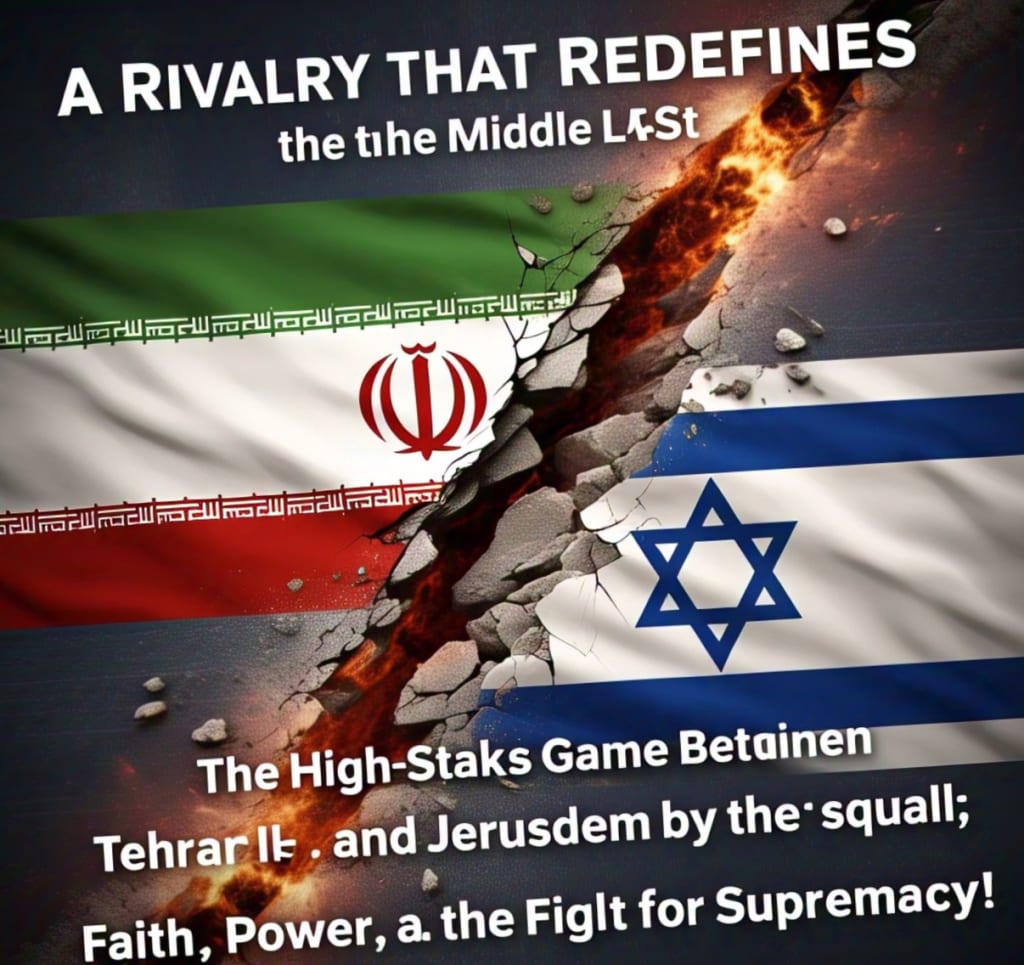
The relationship between Iran and Israel is one of the most volatile and strategically significant rivalries in the Middle East. Once covert allies under the Shah, the two nations are now locked in a bitter confrontation fueled by ideological differences, proxy wars, and nuclear ambitions. This article explores the evolution of Iran-Israel relations, the key flashpoints in their conflict, and the broader implications for regional and global security.
1. Historical Background: From Cooperation to Confrontation
The Shah’s Era: An Unlikely Alliance
Before the 1979 Islamic Revolution, Iran under Mohammad Reza Pahlavi maintained secret but strategic ties with Israel. Both nations saw a common enemy in Arab nationalism, particularly Egypt’s Gamal Abdel Nasser and Iraq’s Ba’athist regime. Israel supplied Iran with weapons, intelligence, and agricultural technology, while Iran provided Israel with oil—a relationship that thrived despite public denials.
The 1979 Revolution: A Turning Point
The overthrow of the Shah and the rise of Ayatollah Khomeini marked a dramatic shift. The new Islamic Republic adopted a fiercely anti-Israel stance, framing the Jewish state as an illegitimate occupier of Palestinian lands and a tool of Western imperialism. Iran cut all diplomatic ties and began supporting anti-Israel militant groups, including Hezbollah in Lebanon.
2. Ideological and Religious Divides
Iran’s Anti-Zionist Doctrine
The Iranian regime’s rhetoric often portrays Israel as a "Little Satan" (with the U.S. as the "Great Satan"). Supreme Leader Ali Khamenei has repeatedly called for Israel’s destruction, framing it as a religious duty under Shia Islamic principles. This stance is reinforced through state media, military parades featuring anti-Israel slogans, and support for Palestinian resistance movements.
Israel’s Perception of Iran as an Existential Threat
Israel views Iran’s nuclear program and its regional proxies as direct threats to its survival. Israeli leaders, from Benjamin Netanyahu to current Prime Minister Benjamin Netanyahu (in his various terms), have consistently warned that a nuclear-armed Iran would be intolerable. This fear has driven Israel’s covert operations (such as assassinations of Iranian nuclear scientists) and overt military strikes against Iranian assets in Syria.
3. Proxy Wars and Regional Conflicts
Hezbollah: Iran’s Arm in Lebanon
Since the 1980s, Iran has heavily armed and funded Hezbollah, turning it into a formidable force on Israel’s northern border. The 2006 Lebanon War between Israel and Hezbollah showcased Iran’s proxy warfare strategy, with thousands of rockets fired into Israel. Today, Hezbollah possesses an estimated 150,000 missiles, creating a persistent threat.
Hamas and Palestinian Islamic Jihad
While Sunni Hamas has had a complicated relationship with Shia Iran, Tehran has still provided weapons, training, and financial aid to Palestinian militant groups. During the 2023-2024 Gaza conflict, Iran-backed factions launched attacks in solidarity with Hamas, further escalating tensions.
The Syrian Battleground
Iran’s military presence in Syria—through the IRGC (Islamic Revolutionary Guard Corps) and Shiite militias—has turned the country into another flashpoint. Israel has conducted hundreds of airstrikes to prevent Iranian entrenchment near its border, leading to a dangerous game of brinkmanship.
4. The Nuclear Standoff: A Ticking Time Bomb
Iran’s Nuclear Program
Despite international agreements like the 2015 JCPOA (Joint Comprehensive Plan of Action), Iran has continued enriching uranium, now at near-weapons-grade levels (60% purity). Israel and the U.S. fear a potential breakout to a nuclear bomb, which would dramatically shift the regional balance of power.
Israel’s Sabotage and Assassination Campaign
Israel has allegedly been behind:
Cyberattacks (Stuxnet virus, 2010) – Disrupted Iranian centrifuges.
Assassinations of nuclear scientists (e.g., Mohsen Fakhrizadeh, 2020) – Set back Iran’s program.
Airstrikes on nuclear facilities – Such as the alleged 2021 Natanz attack.
The Risk of Open War
If Iran moves closer to a bomb, Israel has threatened preemptive military action—a scenario that could trigger a wider Middle Eastern war, drawing in the U.S. and Gulf states.
5. The Future of Iran-Israel Relations: Can Escalation Be Contained?
Diplomatic Efforts vs. Military Posturing
While some advocate for renewed negotiations, hardliners in both nations resist compromise. Israel’s government opposes any deal that leaves Iran with nuclear capabilities, while Iran’s leadership refuses to recognize Israel’s right to exist.
The Role of the U.S. and Regional Players
U.S. Policy: Washington has alternated between diplomacy (Obama’s JCPOA) and maximum pressure (Trump’s sanctions).
Gulf States: Saudi Arabia and the UAE, once hostile to Israel, have normalized relations (Abraham Accords) partly due to shared fear of Iran.
Possible Scenarios
Continued Shadow War – More covert ops, cyber warfare, and proxy clashes.
Direct Military Confrontation – If Iran crosses Israel’s red lines (e.g., nuclear weapons).
Regime Change in Iran – If internal protests weaken the Islamic Republic, dynamics could shift.
Conclusion: A Conflict with No Easy End
The Iran-Israel rivalry is more than just a regional dispute—it’s a clash of ideologies, religions, and survival instincts. With both nations unwilling to back down, the risk of a catastrophic war looms large. Whether through diplomacy, deterrence, or disaster, the future of this feud will shape the Middle East for decades to come.
About the Creator
Umar zeb
Hi, I'm U zeb, a passionate writer and lifelong learner with a love for exploring new topics and sharing knowledge. On Vocal Media, I write about [topics you're interested in, e.g., personal development, technology, etc
Keep reading
More stories from Umar zeb and writers in Unbalanced and other communities.
Wild Card Weekend Recap: What Happens Now?
I think I figured out why I love Wild Card Weekend so much. It's because it's the first playoff anything of the calendar year. The NFL season starts in the fall, and once upon a time, the champion was crowned either on or slightly before New Year's. The evolution of the NFL schedule has resulted in the playoffs starting just into the New Year, and currently, the final week of the season falls on the first weekend of the New Year, with Wild Card Weekend coming a week after that. So yes, chronologically, the NFL's Wild Card Weekend serves as the first playoff anything of the calendar year.
By Clyde E. Dawkins8 days ago in Unbalanced
Homestand Part III: Close Call
So far, the Colorado Avalanche are two-for-two in this long homestand that will dominate the month of January. A blowout win over the Ottawa Senators, and then, a shutout win over the Columbus Blue Jackets. On Monday, we played host to the Toronto Maple Leafs, who desperately needed something. It had been a long season for the team, who find themselves in danger of their long playoff streak coming to an abrupt end.
By Clyde E. Dawkins5 days ago in Unbalanced




Comments
There are no comments for this story
Be the first to respond and start the conversation.