
Rivalry Reloaded: How the Knicks and Nets Reflect Two Competing Futures for New York
The Knicks’ revival and the Nets’ identity crisis are more than basketball—they’re symbols of diverging urban philosophies in a post-pandemic New York.


In the city that never sleeps, basketball has long functioned as a mirror for identity. The Knicks and Nets rivalry, once an afterthought, now feels like a referendum on what kind of New York the next decade will belong to: one rooted in legacy and loyalty, or one powered by reinvention and disruption.
For years, the Brooklyn Nets represented tech-age ambition—a franchise that saw basketball as a platform for brand architecture. They attracted superstar talent through algorithmic precision rather than organic development, courting Kevin Durant and Kyrie Irving in a bid to design instant dominance. In theory, the Nets embodied the logic of the modern metropolis: agile, data-driven, globally distributed. But that era collapsed under its own volatility. The lesson was larger than a basketball. New York’s experiment with frictionless success reminded everyone that scale without soul can’t sustain culture.
Meanwhile, across the East River, the Knicks did something deeply contrarian—they slowed down. Under Leon Rose, the franchise abandoned headline-chasing and instead leaned into cohesion, stability, and player development. It was a move that echoed a broader cultural mood. After years of disruption, both companies and communities have begun to prize resilience over speed. The Knicks didn’t just rebuild a roster; they rebuilt a relationship—with fans, with the Garden, and with a city whose patience had worn thin. Their recent resurgence captures a shift toward long-term strategy, a fundamentally slower kind of success that feels less like a sprint and more like a reclamation.
This divergence between Knicks and Nets reflects deeper economic and demographic tensions shaping post-pandemic New York. The Nets were supposed to represent the “new Brooklyn”: sleek, creative, cosmopolitan, built on transience and aspiration. But as the pandemic redefined proximity and authenticity, this image began to feel brittle. Neighborhoods across the borough re-centered around local identity, community-driven businesses, and cultural heritage. The Nets’ abstract branding and superstar volatility felt increasingly detached from that rediscovered locality.
In contrast, the Knicks benefited from being stubbornly analog. Madison Square Garden doesn’t algorithmically optimize; it vibrates. It anchors people to place, to memory. In 2025, when Jalen Brunson helped fuel the Knicks’ playoff run, it wasn’t just about wins—it was about the validation of something traditional in a city obsessed with reinvention. The Knicks’ story resonates with a wider trend in urban culture: the revaluation of legacy institutions. Just as diners, landmarks, and street-level art scenes are being preserved or revived, the Knicks embody what happens when a brand leans into its imperfections rather than rejecting them.
From a business perspective, the Knicks’ resurgence coincides with a broader trend in sports markets: the return of locality as a premium value. National fandom driven by player personalities has flattened markets, but regional identity is reemerging as a differentiator. The Garden sells out not just because of basketball but because attending a Knicks game feels like participating in continuity. That’s an asset few globalized franchises can replicate.
The Nets, on the other hand, face a brand rebuild eerily similar to post-hype startups. Their superteam failure mirrored the kind of tech reckoning happening across industries—where valuation once based on promise is re-centered on fundamentals. In 2026, their pivot under new management feels more like a rebrand in search of a core audience. Barclays Center remains a marvel, but the challenge ahead isn’t infrastructure—it’s identity.
The rivalry’s next chapter will depend on how each organization interprets New York’s evolving psyche. If the Knicks continue their methodical evolution and the Nets recommit to authenticity, they might both become stronger for it. But the more interesting question is cultural: will the future of New York belong to institutions that endure, or to systems that adapt?
The Knicks’ ascendance suggests that endurance itself is becoming the new form of innovation. In an age of volatility, their appeal rests in consistency. That signals a shift across urban economies—where the premium is no longer on speed, but on trust; not on invention, but on belonging. The Nets once symbolized the future because they represented change. The Knicks symbolize the future now because they embody continuity.
New York, as it always has, contains both. Its dynamism comes from tension—the same tension that will define how this rivalry unfolds. One team built its identity on the illusion of control and the promise of optimization. The other rediscovered the power of imperfection. What’s clear is that these aren’t just two teams anymore. There are two theses about how to rebuild meaning in an era obsessed with momentum.
And just like the city itself, the question isn’t who wins—it’s which version of the future we’ll root for.
About the Creator
Trend Vantage
Covering the latest trends across business, tech, and culture. From finance to futuristic innovations, delivering insights that keep you ahead of the curve. Stay tuned for what’s next!
Keep reading
More stories from Trend Vantage and writers in Unbalanced and other communities.
The Thunder-Bucks Rivalry and the Analytics Revolution in the NBA
The NBA has long been defined by its superstars—the magnetic pull of players who bend franchises, fan bases, and media coverage to their will. For much of the league’s history, this gravitational logic has held: championships usually crown those with one or two transcendent talents. But when the Oklahoma City Thunder face off against the Milwaukee Bucks, the matchup symbolizes something more than a contest between contenders. It reveals a fundamental tension between two models of basketball’s future.
By Trend Vantageabout 16 hours ago in Unbalanced
Wild Card Weekend Recap: What Happens Now?
I think I figured out why I love Wild Card Weekend so much. It's because it's the first playoff anything of the calendar year. The NFL season starts in the fall, and once upon a time, the champion was crowned either on or slightly before New Year's. The evolution of the NFL schedule has resulted in the playoffs starting just into the New Year, and currently, the final week of the season falls on the first weekend of the New Year, with Wild Card Weekend coming a week after that. So yes, chronologically, the NFL's Wild Card Weekend serves as the first playoff anything of the calendar year.
By Clyde E. Dawkins10 days ago in Unbalanced
Homestand Part IV: Crushed
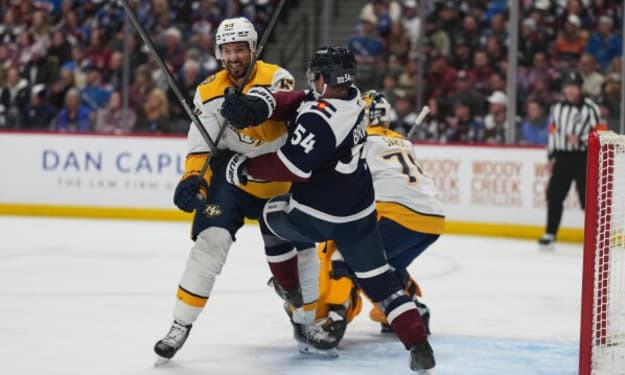
Well... that happened. The Colorado Avalanche had a long layoff after the overtime loss to the Toronto Maple Leafs. That loss snapped a 17-game home winning streak, but the points streak remained. 22 home games, lost three--all past regulation. After three days off, the Avs were back in action against the Nashville Predators, and I always get nostalgic when the Avs and Preds get together. The teams met twice in the playoffs, in 2018 and 2022, and because of those meetings, I've always said that it's fun when these teams get together.
By Clyde E. Dawkins4 days ago in Unbalanced


Comments
There are no comments for this story
Be the first to respond and start the conversation.