
The Thunder-Bucks Rivalry and the Analytics Revolution in the NBA
Oklahoma City and Milwaukee reflect basketball’s next great divide—data-driven identity versus superstar-centric dominance.


The NBA has long been defined by its superstars—the magnetic pull of players who bend franchises, fan bases, and media coverage to their will. For much of the league’s history, this gravitational logic has held: championships usually crown those with one or two transcendent talents. But when the Oklahoma City Thunder face off against the Milwaukee Bucks, the matchup symbolizes something more than a contest between contenders. It reveals a fundamental tension between two models of basketball’s future.
Milwaukee represents the enduring power of the individual. Giannis Antetokounmpo, one of the most dominant physical forces ever to step on a court, anchors a system built around his singular brilliance. His presence dictates not only schemes and lineups but the entire design of the roster. It’s a structure optimized to maximize one man’s impact—where the pieces orbit around a central star and the strategy bends toward his strengths. The Bucks typify the legacy model: build everything around the MVP, adapt to the supporting cast, but never stray from the gravitational center.
Oklahoma City, by contrast, is emerging as the face of a new movement—one fueled by algorithmic insight, data-informed decision making, and organizational patience. The Thunder’s rebuild, which many analysts initially saw as excessive hoarding of draft capital, now looks prescient in the context of an analytics-driven era. Their success doesn’t rely on a singular superstar dictating pace and style. Instead, they thrive on versatility, spacing, and role interchangeability—a reflection of how data reshapes not only who wins but how winning happens.
What’s striking about the Thunder isn’t just their youth or flexibility. It’s how the franchise treats players as modular assets within a broader ecosystem of development, efficiency, and culture. Rather than invest identity solely in Shai Gilgeous-Alexander’s ascendance, Oklahoma City has embedded its strategy in depth, data integration, and player archetypes that fit a larger model. The result is a squad that can scale its performance regardless of opponent, a kind of basketball software that constantly updates its code.
This Thunder-Bucks contrast spotlights an emerging divide across the league: “player-first” versus “system-first” construction. It echoes a broader societal theme visible in both technology and business—the tension between centralized dominance and distributed adaptability. In tech, we might call it the shift from platform monopolies to decentralized networks; in basketball, it’s the difference between structural fluidity and the orbit of a superstar.
From an organizational perspective, the Thunder’s success suggests a shift in how franchises value control. Rather than betting on the volatility of transcendent individuals, teams are beginning to understand that optimization at scale—powered by data, player development, and adaptable systems—produces resilience over time. The Bucks, for all their success, are susceptible to the narrow margin of dependency that every superstar system faces: when one player falters, so does the entire machine.
This isn’t an argument against the Giannis model—it remains electrifying and deeply human—but it signals an evolution in how teams craft their identities. The next decade of the NBA might not be dominated by dynasties centered on singular talents, but by organizations that operate more like dynamic platforms than traditional teams. The Thunder’s strategy represents a frontier where culture meets code.
Even the aesthetics of their play—the unselfish movement, positional fluidity, and pace control—mirror how modern teams embody data logic without looking robotic. The flow of basketball has become algorithmic in the best way: the code invisible, the execution seamless. Every drive, rotation, and kick-out hides a thousand small calculations made by coaches, analysts, and software suites that parse synergy and spacing into competitive advantage.
Meanwhile, Milwaukee’s model honors something more primal. It’s the appeal of the protagonist-driven story: one hero lifting a team through dominance, charisma, and willpower. The contrast isn’t just tactical; it’s narrative. The Thunder’s story feels like systems design—programmed patience rewarded. The Bucks’ story feels human—imperfection, pressure, and transcendence concentrated in one player’s shoulders. In this matchup, we’re watching two versions of modern identity collide: optimized collectives versus singular excellence.
As analytics deepen their influence on roster construction and player monitoring, the philosophical questions grow more pronounced. How much of sport is art, and how much can—or should—be engineered? The Thunder seem to blur that line more with each passing season, proving that culture itself can become a programmable feature without stripping the humanity from the game. The Bucks, in clinging to a superstar system, test the limits of that model’s sustainability in an environment increasingly shaped by real-time data and evolving player roles.
By the end of any Thunder-Bucks game, the score might tell you who won, but the subtext hints at something else entirely: the competition between intuition and optimization. It is, in many ways, the league’s most consequential rivalry—not because it decides titles, but because it previews basketball’s next paradigm shift.
About the Creator
Trend Vantage
Covering the latest trends across business, tech, and culture. From finance to futuristic innovations, delivering insights that keep you ahead of the curve. Stay tuned for what’s next!
Keep reading
More stories from Trend Vantage and writers in Unbalanced and other communities.
From Rivalry to Relevance: What Hawks vs. Grizzlies Reveals About the NBA’s Next Era
The Atlanta Hawks and Memphis Grizzlies have rarely been cast as headline-makers in the NBA’s grand narrative. Neither carries the historical weight of the Lakers nor the dynasty allure of the Warriors. But as the league braces for its next cyclical reshuffling, the Hawks vs. Grizzlies rivalry tells a story that’s quietly redefining what it means to “win” in modern basketball.
By Trend Vantageabout 7 hours ago in Unbalanced
Wild Card Weekend Recap: What Happens Now?
I think I figured out why I love Wild Card Weekend so much. It's because it's the first playoff anything of the calendar year. The NFL season starts in the fall, and once upon a time, the champion was crowned either on or slightly before New Year's. The evolution of the NFL schedule has resulted in the playoffs starting just into the New Year, and currently, the final week of the season falls on the first weekend of the New Year, with Wild Card Weekend coming a week after that. So yes, chronologically, the NFL's Wild Card Weekend serves as the first playoff anything of the calendar year.
By Clyde E. Dawkins9 days ago in Unbalanced
Homestand Part IV: Crushed
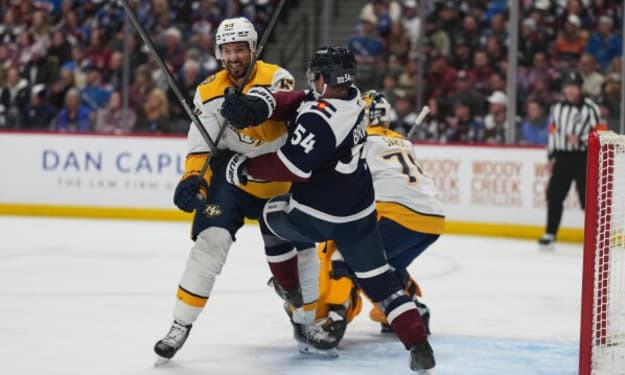
Well... that happened. The Colorado Avalanche had a long layoff after the overtime loss to the Toronto Maple Leafs. That loss snapped a 17-game home winning streak, but the points streak remained. 22 home games, lost three--all past regulation. After three days off, the Avs were back in action against the Nashville Predators, and I always get nostalgic when the Avs and Preds get together. The teams met twice in the playoffs, in 2018 and 2022, and because of those meetings, I've always said that it's fun when these teams get together.
By Clyde E. Dawkins3 days ago in Unbalanced



Comments
There are no comments for this story
Be the first to respond and start the conversation.