
Clippers vs. Lakers: A Structured Examination of a Contemporary Intra-City Rivalry
Assessing competitive dynamics, organizational development, and the evolving significance of Los Angeles basketball

Introduction
The rivalry between the Los Angeles Clippers and the Los Angeles Lakers has developed into a significant case study in contemporary professional basketball dynamics. While the two teams share a home market and arena history, their organizational trajectories, roster strategies, and public identities reflect contrasting philosophies. The Clippers–Lakers relationship extends beyond game-day competition; it encompasses questions of team building, regional identity, and the evolving structure of the NBA’s Western Conference. This article provides a formal and neutral analysis of this rivalry and its broader implications for league competitiveness and market representation.
Historical Context
The Lakers have maintained a long-standing presence in the NBA, supported by a record of championships, high-profile athletes, and an established global brand. Their history frames them as a traditional powerhouse with a legacy that continues to influence public expectations.
The Clippers, in contrast, have spent much of their existence reconstructing organizational identity. Their rise in the past decade—driven by changes in ownership, player acquisitions, and competitive consistency—has altered the perception of the franchise. As a result, the rivalry between the two teams has gained structural relevance, shifting from a primarily symbolic comparison to a substantive competitive relationship.
Organizational Identity and Strategy
The Lakers’ organizational approach has frequently centered on acquiring star players, managing public expectations, and leveraging brand influence to secure long-term relevance. Their strategy is often defined by a willingness to pursue high-impact transactions aimed at maintaining championship aspirations.
The Clippers have developed an alternative model that emphasizes structural depth, operational reform, and long-term roster stability. While the franchise has also pursued high-profile talent, its recent development has relied on measured decision-making, infrastructure investment, and an effort to establish independence from the Lakers’ legacy.
The contrasting models illustrate two distinct approaches to sustaining excellence within a major market. Their coexistence within Los Angeles adds a layer of complexity to competitive evaluation, as each organization adapts to internal and external pressures.
Competitive Dynamics on the Court
Games between the Clippers and Lakers often attract heightened attention due to the intersection of team identity, roster narrative, and public expectation. While the rivalry does not carry the historical weight of long-standing intercity competitions, it has evolved into a reliable focal point of the NBA regular season.
These matchups frequently showcase differences in tactical design. The Lakers often rely on inside-out offense, star-driven playmaking, and defensive structure anchored by key personnel. The Clippers tend to emphasize spacing, perimeter efficiency, and roster versatility, shaped around their available rotations.
The outcome of these contests varies with roster health, strategic adjustment, and mid-season form. Regardless of competitive balance, the games contribute to ongoing public dialogue concerning which franchise currently represents Los Angeles basketball more effectively.
Market Influence and Fan Engagement
One defining element of this rivalry is the shared regional market. The Lakers have long held a substantial local and global following, benefiting from championship history and extensive media representation. The Clippers, while emerging from years of lesser visibility, have cultivated a growing base that values the team’s redefined culture and competitive ambition.
This dual presence within a major sports market has produced an environment where fan engagement becomes a measure of identity formation. Supporters often adopt perspectives tied to organizational philosophy, competitive expectation, and cultural representation. The market, therefore, becomes an active participant in shaping the rivalry’s ongoing significance.
Structural and Economic Considerations
The Clippers’ move into a dedicated home arena marks a critical transition in the rivalry’s evolution. The establishment of separate facilities represents not only a logistical shift but also a symbolic step toward organizational independence. It signals the Clippers' intent to define their long-term identity without direct comparison to the Lakers’ historical context.
For the Lakers, the continuation of competition within a shared metropolitan area reinforces their position while prompting internal evaluation of how to maintain brand strength amid changing market dynamics. Both teams contribute to the broader economic landscape of Los Angeles sports, influencing revenue patterns, media contracts, and regional visibility.
Broader NBA Implications
The Clippers–Lakers rivalry offers insights into how modern NBA franchises operate within shared markets and competitive structures. It illustrates the importance of organizational adaptation, strategic planning, and long-term resource allocation. Moreover, it reflects how rivalries in the contemporary NBA are increasingly shaped by factors beyond wins and losses—such as market identity, ownership models, and infrastructure development.
The rivalry also contributes to Western Conference discourse, influencing playoff narratives, media coverage, and perceptions of competitive stability. As both teams navigate future roster decisions and structural challenges, their trajectory will continue to shape discussions about the balance of power in the conference.
Conclusion
The Clippers vs. Lakers rivalry has progressed from a symbolic comparison to an analytical focal point within professional basketball studies. Its significance derives from differences in organizational direction, competitive approach, and market representation. Beyond individual games, the rivalry reflects broader themes in modern sports management and urban identity.
As both franchises continue to evolve, their interaction will remain an essential component of Los Angeles basketball and an instructive example of intra-city competition within the NBA.
About the Creator
Saad
I’m Saad. I’m a passionate writer who loves exploring trending news topics, sharing insights, and keeping readers updated on what’s happening around the world.
Keep reading
More stories from Saad and writers in Unbalanced and other communities.
Rising Star on the Field: A.J. Brown’s Journey
Early Life and College A.J. Brown grew up in Starkville, Mississippi. He attended college at University of Mississippi (often called “Ole Miss”), where he played for the Rebels. At Ole Miss, Brown showed great potential. He caught many passes and made big plays. His college performance set the stage for his professional career.
By Saad 4 months ago in Unbalanced
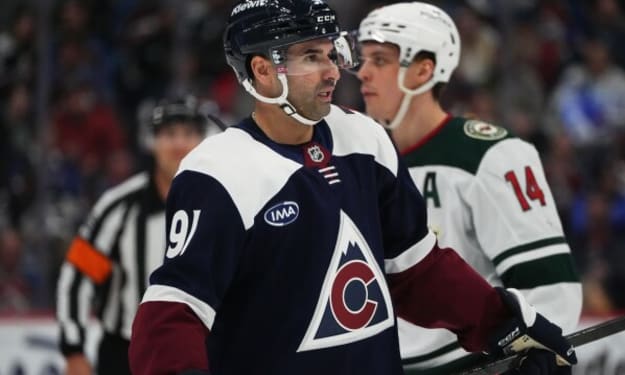
Welcome Back, Nazem Kadri
Some things just feel right, but more on that later. Coming off a big road win in Dallas, the Colorado Avalanche returned home and faced off against the other thorn in the division: the Minnesota Wild. This was big day game for the Avs, not just because of the division rivalry, but the fact that the Avs' deadline acquisitions would be playing at Ball Arena. Scott Wedgewood was in net against Jesper Wallstedt, and the game was off to an amazing start. Avs were shooting at will, bringing some early pressure towards Wallstedt.
By Clyde E. Dawkins7 days ago in Unbalanced
The Forsyth House Fire
Since 1851, Forsyth House has stood on the corner of Union Street and Gordon Street in the heart of Glasgow. Its iconic, or was... because on Sunday 8th of March, 2026, a fire broke out in a small, seemingly un-named shop in the building and tore all that history down. As I write, the rubble is still unsettled and the street is still blocked off. Central Station is quiet on the upper level, and around 30 small businesses have quite literally gone up in smoke.
By S. A. Crawford3 days ago in The Swamp



Comments
There are no comments for this story
Be the first to respond and start the conversation.