
BOB BEAMON'S LONG JUMP RECORD AT THE 1968 OLYMPICS
Breaking Boundaries:The Extraordinary Feat That Shattered the Long Jump World Record.

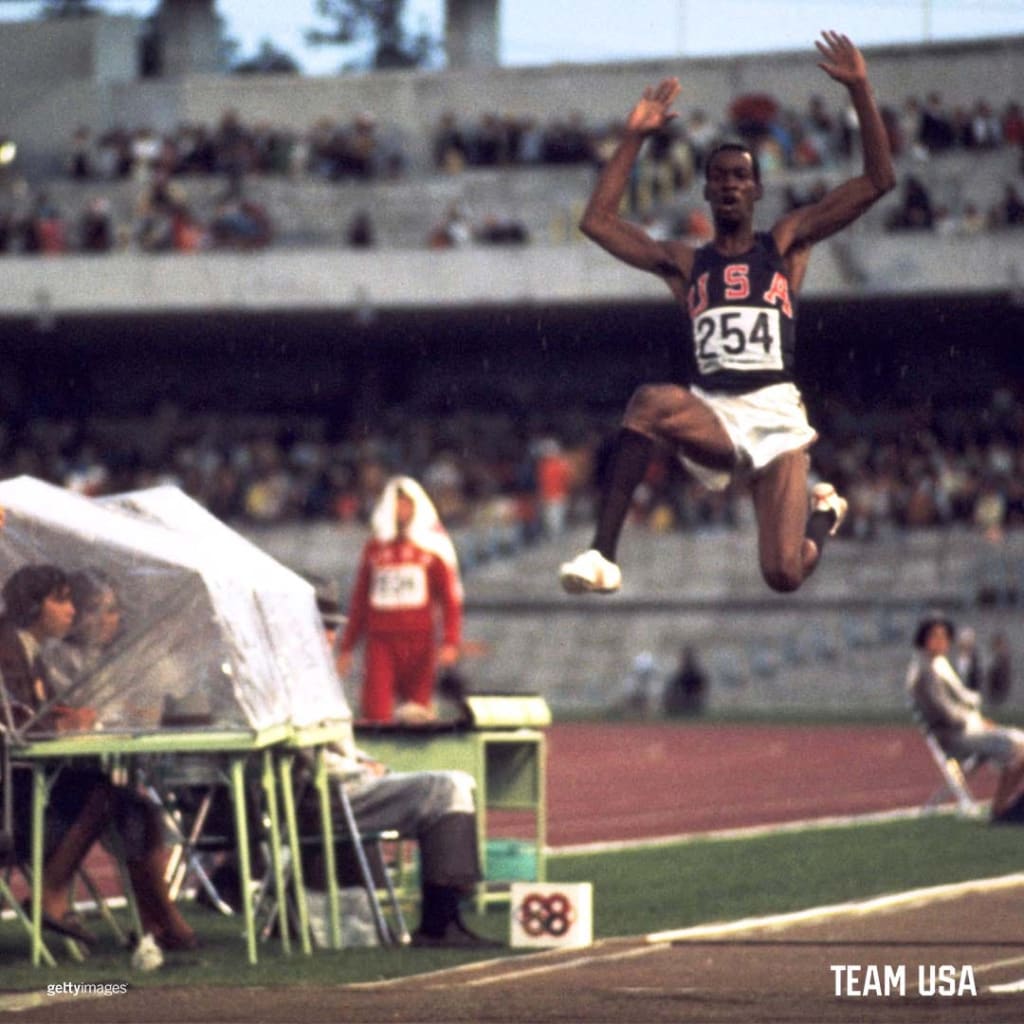
Bob Beamon's Long Jump Record at the 1968 Olympics
At the 1968 Summer Olympics in Mexico City, Bob Beamon made history with one of the most extraordinary athletic feats the world had ever seen. His performance in the long jump not only earned him a gold medal but also set a world record that stood for nearly 23 years, solidifying his place as one of the greatest athletes in Olympic history.
The Stage: The 1968 Summer Olympics
The 1968 Olympics were held in Mexico City, Mexico, and it was a Games that captured the attention of the world for several reasons. The event was marked by political protests, the Black Power salute by Tommie Smith and John Carlos on the podium, and a highly charged atmosphere of social change. Mexico City also provided a unique challenge for athletes due to its high altitude (7,350 feet above sea level), which affected oxygen levels and had an impact on performances across many events.
But for Bob Beamon, it was an opportunity to make history. Coming into the competition, he was a relatively unknown athlete compared to some of the big names in track and field at the time. However, Beamon was known for his potential and his incredible athleticism. He was a talented long jumper, but no one could have predicted just how much he was about to achieve on that fateful day.
The Record-Breaking Jump
Beamon’s long jump attempt took place on October 18, 1968, and he was up against some of the best long jumpers in the world, including the defending Olympic champion, Ralph Boston, and the world-record holder, Lynn Davies. But it was Beamon who would dominate the event.
On his first jump in the final, Beamon launched himself into the air, and as he sailed through the air, it was clear that this was no ordinary jump. When his feet finally touched the sand, the measurement was revealed: 8.90 meters (29 feet, 2½ inches). This was an astonishing 55 centimeters (almost 2 feet) beyond the previous world record of 8.35 meters, set by Ralph Boston in 1965.
The crowd erupted in disbelief. Beamon had shattered the world record by an incredible margin, and it was a performance that would go down in history as one of the greatest individual athletic achievements of all time.
What made Beamon’s jump so remarkable wasn’t just the distance—it was the manner in which he did it. The jump was not only a significant leap beyond the existing record but also so far beyond anything anyone had ever imagined. For many, it seemed like an almost otherworldly feat, and it left everyone wondering: How did Beamon manage to achieve such an extraordinary jump?
The Impact of the Jump
Beamon’s jump had a profound impact on the sport of long jumping and track and field as a whole. For starters, it was a massive psychological breakthrough. In the years before the Olympics, many athletes believed that the 8.4-meter barrier was the limit of human performance. Beamon proved that it was not just a limit—it was a barrier that could be shattered, and the possibilities were endless.
Moreover, Beamon’s record was so far beyond the next best jump that it left the entire field in awe. His competitors, including Ralph Boston, who had been the world record holder, expressed amazement at the accomplishment. For the rest of the competition, Beamon’s jump was clearly untouchable—no one else came close to his mark.
Beamon’s jump also had a lasting impact on the sport itself. It helped to push the boundaries of what athletes believed was possible in track and field. The incredible feat challenged coaches to rethink training regimens, biomechanics, and mental approaches to the sport. It inspired generations of athletes to aim higher and dream bigger.
The Legacy
Beamon’s world record stood for 23 years, a testament to the sheer magnitude of his achievement. His jump remained unchallenged until 1991, when it was finally surpassed by fellow American Mike Powell, who leapt 8.95 meters (29 feet, 4¼ inches) at the World Championships in Tokyo. Despite the eventual breaking of his record, Beamon’s 8.90-meter jump remains one of the most iconic moments in Olympic history.
Beamon’s legacy goes beyond just the distance he jumped. It serves as a symbol of excellence, perseverance, and the boundless potential of human achievement. His victory at the 1968 Olympics remains one of the most remarkable moments in Olympic history, and he is regarded as one of the greatest long jumpers of all time.
Conclusion
Bob Beamon's long jump at the 1968 Mexico City Olympics was a historic moment that captured the essence of the Olympic Games—excellence, perseverance, and the breaking of boundaries. His achievement remains a powerful reminder that in sports, as in life, the impossible is often within reach for those willing to push the limits. Beamon not only set a world record; he set a new standard for what it meant to achieve greatness in track and field.
About the Creator
Badhan Sen
Myself Badhan, I am a professional writer.I like to share some stories with my friends.
Keep reading
More stories from Badhan Sen and writers in Unbalanced and other communities.
SERENA WILLIAMS AND HER IMPACT ON OLYMPIC TENNIS
Serena Williams and Her Impact on Olympic Tennis Serena Williams, one of the greatest tennis players of all time, has left an indelible mark not only on the sport of tennis but also on the Olympic Games. Throughout her career, she has transcended the boundaries of the sport, becoming an icon for women’s athletics and a powerful advocate for equality and social justice. Her achievements on the Olympic stage have added another layer to her legendary status.
By Badhan Senabout a year ago in Unbalanced
Wild Card Weekend Recap: What Happens Now?
I think I figured out why I love Wild Card Weekend so much. It's because it's the first playoff anything of the calendar year. The NFL season starts in the fall, and once upon a time, the champion was crowned either on or slightly before New Year's. The evolution of the NFL schedule has resulted in the playoffs starting just into the New Year, and currently, the final week of the season falls on the first weekend of the New Year, with Wild Card Weekend coming a week after that. So yes, chronologically, the NFL's Wild Card Weekend serves as the first playoff anything of the calendar year.
By Clyde E. Dawkins5 days ago in Unbalanced
Homestand Part II: Not-So-Usual Suspects
On Thursday, the Colorado Avalanche's long homestand began against the Ottawa Senators, and it was a slaughter. An 8-2 victory that saw the Avs put six pucks in the net during the middle period. Martin Necas and Brock Nelson each reached the 20-goal mark during that game, and the highlight was Josh Manson's Gordie Howe Hat Trick--two goals, two assists, and a fight, with his dad, legendary player Dave Manson, in attendance.
By Clyde E. Dawkins6 days ago in Unbalanced




Comments (1)
The Summer Olympics of '68 I was only four years old, but he did sound like a great athlete. Thanks for the history lesson.