
You Will Destroy Yourself Financially If You Save
How Saving Money the Wrong Way Can Ruin Your Financial Future

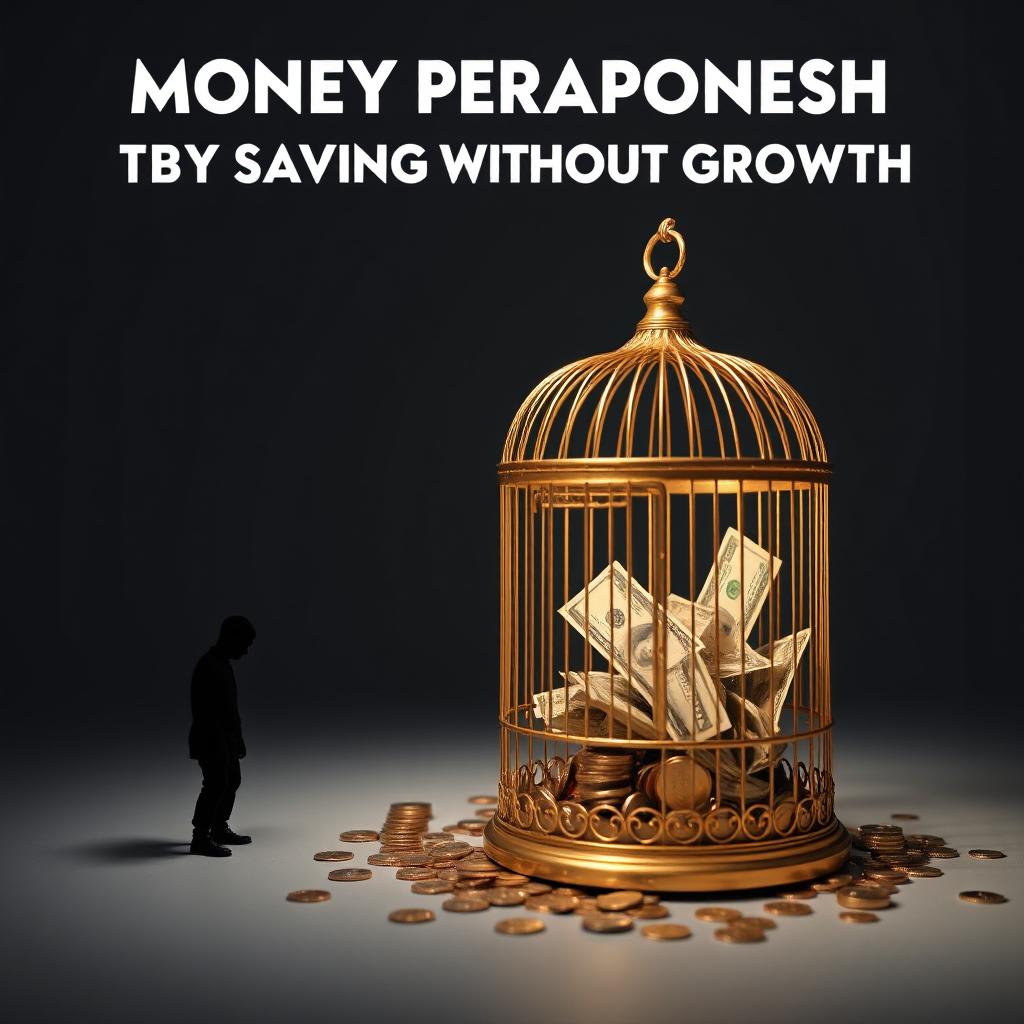
The Tale of Two Friends: Arman and Bilal
In the heart of Lahore, two best friends, Arman and Bilal, grew up together in a modest neighborhood. They went to the same school, played cricket on the same dusty streets, and dreamed of a better life—one with financial freedom, comfort, and dignity.
By the time they reached their late twenties, both had decent jobs. Arman worked in a bank, while Bilal had started a small digital marketing business. They still met every Saturday evening at their favorite tea stall, sipping chai and talking about life.
One day, while chatting, Bilal said, “I just bought a course on how to scale my business. It cost me 30,000 rupees.”
Arman nearly spilled his tea. “You spent 30,000 on an online course? Are you crazy? I would never waste my savings like that.”
Bilal smiled, “It’s not a waste, Arman. It’s an investment.”
Arman shook his head. “I prefer to save. I’ve already saved 10 lakhs in my account. I don’t touch it. One day it will make me rich.”
Bilal respected his friend’s discipline but said nothing more. He believed in something different.
The Diverging Paths
Over the next five years, their lives took completely different directions.
Arman, the disciplined saver, continued depositing a fixed amount in his savings account every month. He avoided risks, rejected every opportunity that involved investing, and prided himself on his growing balance. By year five, he had saved nearly 25 lakhs.
Bilal, on the other hand, reinvested every rupee he earned. He took courses, hired a mentor, invested in ads, and even launched an online course of his own. His business didn’t grow smoothly—there were failures, stress, even months when he couldn’t pay himself. But he learned fast.
By year five, Bilal’s business was generating over 5 lakhs a month in profit. He had a team, a presence in international markets, and owned a new car and a rented office in a commercial plaza.
The Wake-Up Call
One evening, they met again at the tea stall. Arman looked worried.
“Bilal,” he said, “I think I made a mistake.”
Bilal raised an eyebrow. “What happened?”
“My bank savings… they’re not worth much anymore. Inflation’s been eating it up. I calculated it today. With the price of everything going up—petrol, groceries, bills—my money saved from five years ago can barely buy the same things today.”
Bilal nodded slowly.
“And when I looked at your success,” Arman continued, “I realized something. You didn’t save like me, but you grew. Your money worked for you. Mine just sat there… dying.”
Bilal put a hand on his friend’s shoulder. “Saving isn’t bad, Arman. But only saving without growth is like storing seeds and never planting them. They never turn into trees.”
The Lesson
That night, Arman went home and couldn’t sleep. He thought of all the promotions he avoided because he feared risk. All the opportunities he rejected because he believed saving was the only path to wealth.
In the months that followed, Arman changed. He took online courses, joined investment groups, and started a side hustle. He finally understood what Bilal meant by investing in yourself—and letting your money grow.
Moral of the Story
Saving money, by itself, will not make you rich. In fact, if you save without investing, learning, or growing, you’re slowly destroying your financial future. Inflation erodes value. Time slips by. And opportunities wait for no one.
The world doesn’t reward those who only save. It rewards those who plant, nurture, and grow.
So don’t just save. Invest wisely. Learn aggressively. Take calculated risks. That’s the path to true financial freedom.
About the Creator
Syed Umar
"Author | Creative Writer
I craft heartfelt stories and thought-provoking articles from emotional romance and real-life reflections to fiction that lingers in the soul. Writing isn’t just my passion it’s how I connect, heal, and inspire.
United States Procurement Software Market Size and Forecast 2026–2034
United States Procurement Software Market Overview The United States Procurement Software Market is entering a decisive growth phase as enterprises accelerate their shift toward digital, data-driven purchasing operations. The market is expected to reach US$ 6.22 billion by 2034, up from US$ 2.9 billion in 2025, expanding at a compound annual growth rate (CAGR) of 8.82% from 2026 to 2034. This strong upward trajectory reflects how procurement is no longer viewed as a purely administrative function, but as a strategic lever for cost optimization, risk management, compliance, and long-term value creation.
By shibansh kumar5 days ago in Trader
Australia Online Grocery Market: Convenience and Digital Growth Driving Retail Transformation
The Australia Online Grocery Market is among the fastest-growing segments in the country’s retail landscape. According to the latest IMARC Group analysis, the market reached USD 17,215.1 million in 2025 and is projected to reach USD 89,865.4 million by 2034, registering a compound annual growth rate (CAGR) of 19.55% during 2026–2034.
By Rashi Sharma2 days ago in Trader




Comments (1)
This story is really interesting. It shows two different approaches to money and success. I can see the logic in both Arman's saving and Bilal's investing. But it makes me wonder, at what point should someone like Arman consider taking a riskier path like Bilal did? And how do you know when an investment in something like a course will really pay off?