
Why Netflix Should Swallow Warner Bros. Discovery — And Why D.C. Is Dead Wrong to Stop It
I spent forty minutes scrolling through the Max app last night. It wasn’t exactly “prestige TV” time; it was a lesson in frustration.


The interface felt like it was fighting me. Shows I’d bookmarked months ago had vanished in the latest round of “cost-cutting purges.” I couldn’t shake the feeling that I was browsing the digital equivalent of a foreclosure sale — picking through the remains of a once-great empire.
We’re all feeling the rot in the streaming world. Prices are climbing, beloved series are being axed for tax write-offs, and the “Golden Age of Television” has devolved into a persistent, rusty hangover.
Yet, whenever the inevitable whispers of consolidation start — specifically, the idea of Netflix acquiring the struggling Warner Bros. Discovery (WBD) — the response from Washington and Hollywood unions is immediate, reflexive outrage.
They scream “Monopoly!” They vow to block it to “protect jobs.”
As a market analyst, I’m here to tell you: they’re not just wrong; they’re fighting the last war. Their interference isn’t saving Hollywood — it’s performing CPR on a ghost.
This Isn’t a Rivalry; It’s a Hospice Case
Let’s look at the cold, hard math of Warner Bros. Discovery. Politicians and union leaders talk about WBD as if it’s a thriving heavyweight that needs protection from the “Big Bad Netflix.”
That’s a total fantasy.
WBD is a distressed asset drowning in $45 billion of gross debt. That isn’t just a line item on a balance sheet; it’s an anchor around the neck of every creative project they touch.
This debt is exactly why we’re seeing “completed” movies like Batgirl and Coyote vs. Acme stuffed into a vault and lit on fire for tax credits. It’s why they’re licensing their “crown jewel” HBO content, like Band of Brothers, to Netflix just to keep the lights on.
Does that sound like a healthy competitor to you? While Netflix’s business model actually spits out free cash flow, WBD is selling the family silver just to pay the interest.

The Job-Protection Paradox
When unions oppose a merger, their hearts are in the right place. They want to protect their members. They fear that consolidation means “redundancy” — that one accounting department is smaller than two.
But you cannot legislate jobs into existence if the underlying business is hemorrhaging.
If WBD continues its current trajectory, crushed by debt and bleeding cash, we aren’t looking at “redundancies.” We’re looking at bankruptcy. In a Chapter 11 scenario, you don’t just lose the back-office staff; you lose the studio.
A merger with a financially robust titan like Netflix is often the only way to salvage the creative DNA of a dying company. Yes, there would be painful cuts. But a leaner, combined entity can actually afford to greenlight a new series. A bankrupt WBD greenlights nothing.
By trying to freeze this moment in amber, unions are effectively demanding that a zombie company keep shambling forward until it finally collapses. That’s not a jobs program; it’s a stay of execution.

The “Bigness is Bad” Trap
Then we have the regulators. The current FTC seems to operate on a single, simplistic mantra: “Bigness is inherently evil.”
They see Netflix potentially absorbing HBO, Warner Bros., and DC Comics, and their instinct is to sue. But this is a fundamental misunderstanding of what a monopoly looks like in 2024.
A harmful monopoly is a company that uses government-backed power to lock you in, jack up prices, and offer garbage service because you have no other choice. Netflix has none of that power.
If a “Mega-Netflix” raises its price to $50 a month, you won’t be trapped. You will cancel. You’ll go to YouTube, TikTok, or Disney+, or you’ll finally read that book on your nightstand. The consumer has never had more leverage or more choices than right now.
Regulators are trying to apply 1990s cable-era logic to a digital world where the barrier to exit is a single click.

The Bottom Line for Your Wallet
This political meddling renders investing a game of regulatory whims rather than a business-driven approach. When D.C. blocks market-driven consolidation, it traps capital in inefficient, dying models.
If Netflix buys WBD, we likely get a single, superior app with an unparalleled library. We get a company with the financial firepower to take real creative risks without panicking over every quarterly interest payment.
The irony is thick: The very people claiming they want to “save art” from corporate greed are the ones ensuring that tax accountants and bankruptcy lawyers make the final creative decisions.

If you want to save the legacy of Warner Bros. and HBO, stop rooting for the FTC to block the deal. Root for someone with a healthy balance sheet to rescue them before the silver is all gone. Let the market work, and the stories might actually survive.
About the Creator
Cher Che
New media writer with 10 years in advertising, exploring how we see and make sense of the world. What we look at matters, but how we look matters more.
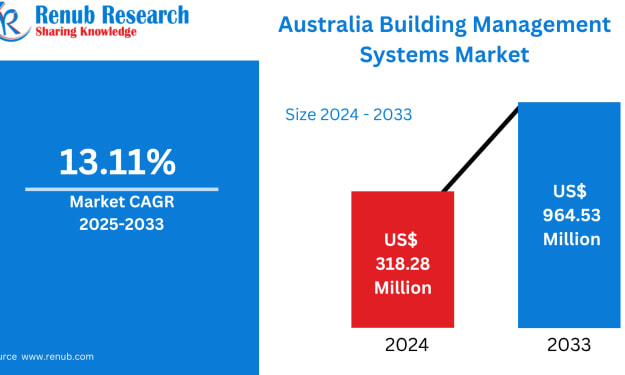
Australia Building Management Systems Market Size and Forecast 2025–2033
Introduction: Smart Buildings Power Australia’s Sustainable Future Australia’s buildings are undergoing a quiet but powerful transformation. As urban centers expand and sustainability goals tighten, the need for intelligent infrastructure has never been greater. At the heart of this transformation lies Building Management Systems (BMS)—digital platforms that automate, monitor, and optimize essential building functions such as energy use, climate control, lighting, and security.
By Marthan Sir7 days ago in Trader
Particle Board Market Outlook: Growth Drivers and Industry Trends
Overview — Particle Board Market The global particle board market has been experiencing steady growth as engineered wood products become essential in furniture manufacturing, residential and commercial construction, and interior design projects. Particle board — made from wood residues like sawdust, wood chips, and resin — offers a cost-effective, lightweight, and eco-friendly alternative to solid wood and plywood, making it especially popular in modular and ready-to-assemble furniture as well as in interior paneling and cabinetry. Market growth is underpinned by rising urbanization, expanding housing initiatives, and advancements in manufacturing technologies that improve product performance and sustainability.
By James Smithabout 23 hours ago in Trader
Affection and Healing for Yourself
During the night of the last quarter moon, I gathered my ritual supplies. I carefully handled the chunk of black tourmaline that would protect me from your overall negative and narcissistic energy. I carefully walked the house with my stick of selenite in hand, asking the universe to cleanse our working space.
By Alisha Wilkins ✒️🦋🖋️3 days ago in Fiction



Comments
There are no comments for this story
Be the first to respond and start the conversation.