
Why Funded Trading Programs Are Not Worth It
For the most part, you're usually better off trading your own money, even if it's little.

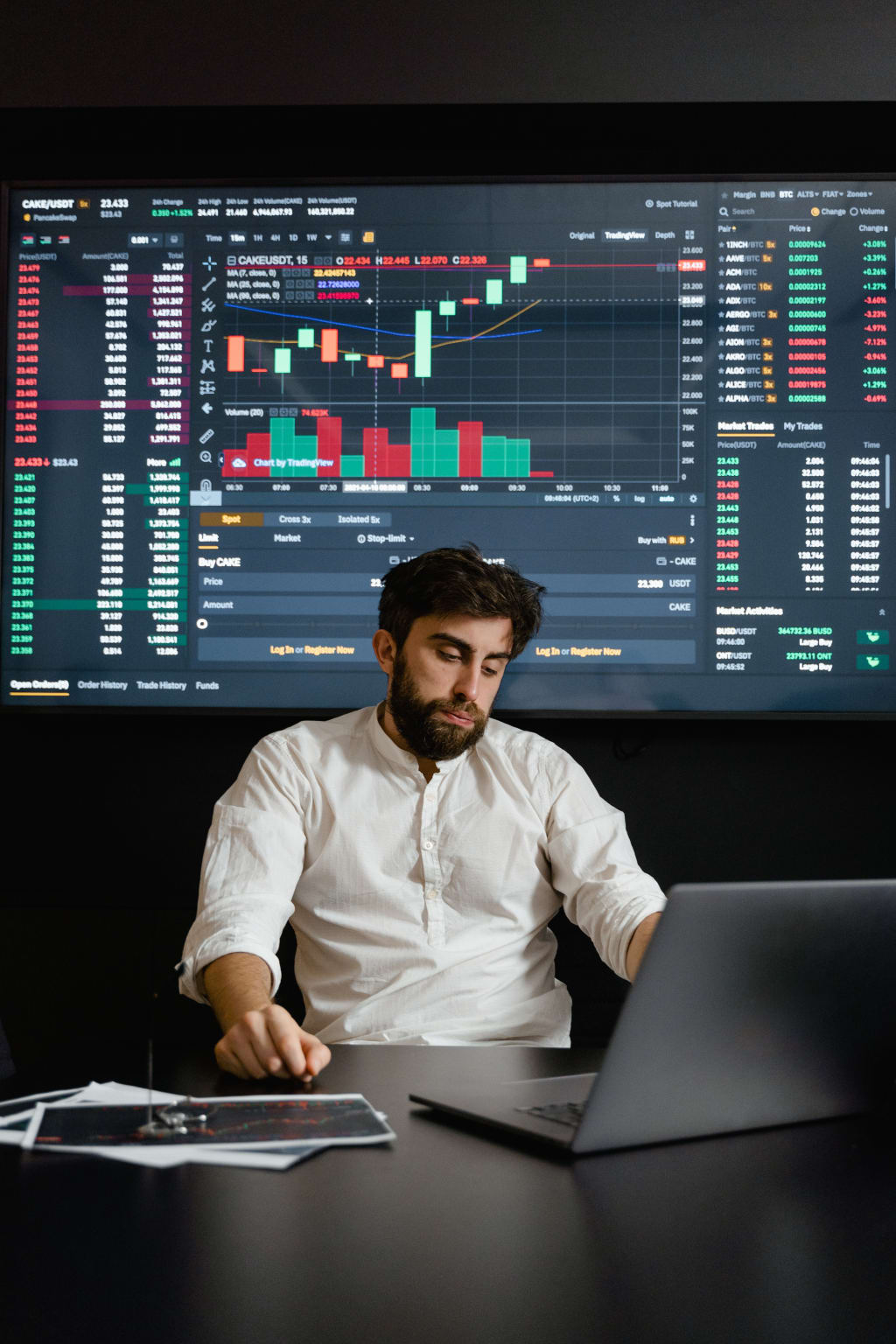
The reality of funded trading programs or 'prop firms' is that they dangle a carrot to the under-funded trader.
These have become pretty popular in the last decade, particularly in forex (but also for other markets like futures, metals, stocks, etc.).
Such companies are technically not prop firms in the truest definition. However, the main concept is to fund 'nobodies' with a six-figure account without needing to have crazy qualifications and trading history.
Prop firms manage the risks by having evaluation (or sometimes monthly) fees, which is understandable.
If you pass their strict tests, voila, they fund you with a much bigger account. But, even before you reach this stage, you'll realise several flaws with these firms.
The biggest problems with prop firms
The common denominator of prop firms is that they supposedly offer you greater buying power. As a self-funded trader, you must grind it out to build a six-figure (or greater) account. It's a super-slow process. But a prop firm fast-tracks the process, with you only needing to pay a one-time fee.
Yet, you'll see how the conditions are not so favourable to the trader due to the buying power. Here's why.
Pretty much all prop firms use a ridiculously low drawdown, often 5% (some 10%, but they often ask for a monthly fee). Being conservative in an industry with a low success rate is commendable, but this is too conservative.
Let's make a simple example with a $100k account. Of course, traders can only dream of such an enormous balance. Yet, having a 5% drawdown means you actually only have $5k to play with.
Let's look at two crude scenarios where a trader risks 1% of their balance. With your own $100k, that is $1k. Yet, it is $50 (5% of $5k) with a prop firm; huge difference.
Most people will immediately say that few people can afford $5k, which is true. However, it's not about cost but flexibility. Prop firms employ many rules that make getting funded difficult (but not impossible).
- You often need to achieve a specific target in a particular period (failing which you have to pay for a new package).
- You'll probably not be able to open a certain number of positions at a time.
- Some firms don't allow holding trades over the weekend or allow trading only during set hours.
- A few firms work on a monthly fee model. So, you will be billed indefinitely until you meet the evaluation targets.
These are a few of the rules they set, things that wouldn't apply with your own money. It doesn't matter whether the amount is $100; a trader is more flexible.
Another problem with a tight drawdown is that you may need to reduce your positions during a losing streak to stay within the limit. Many traders fail and have to buy a new package for this reason (not always because they are skilful enough).
Reducing the risk is something necessary with your own money and is normal. Yet, the difference is that, again, flexibility. You won't need to worry about staying below a certain limit, nor pay any fees.
What you should do instead
This may go against everything I've discussed, but a prop firm recently funded me (I won't mention their name so that this post doesn't seem like their promotion). I failed with another company in 2021.
I applied again because prop firms are a great way to diversify your income. I plan to have multiple accounts across different companies while building my own to the fullest.
This is what traders should do. They should continue trading or building their accounts, no matter how small they are and painfully slow the process is.
Keep the main thing the main thing; you take 100% with your own funds, no strings attached.
If you are looking for a prop firm, here's my advice on selecting one with the best conditions for your success:
- Avoid firms with monthly fees
- Avoid firms that don't offer other accounts aside from challenges
- Avoid firms with a certain minimum number of active trading days
- Compare the evaluation fees by looking for the cheapest (while getting the maximum value)
Summary
The whole point of this post is that traders should treat prop firms as supplementary, not primary income. I say it's not worth it if you look at it from the latter lens, whether you're a beginner or a pro. Unfortunately, most of these companies prime their service as the be-all and end-all.
Yet, you will eventually see that they are dangling a carrot. Building your trading account is a slow process. But doing things the old-fashioned way could be the best use of your money without following the rules of another entity.
About the Creator
Langa Ntuli
- fascinated by the financial markets & TradingView charts. Freelance writer @upwork (www.upwork.com/freelancers/langan)
Medium account: medium.com/@lihle_ntuli
Also a humble music nerd, football fan, knowledge hoarder, peace/love extremist.
Keep reading
More stories from Langa Ntuli and writers in Trader and other communities.
6 Intriguing Things To Know About Wall Street
Wall Street is more than just a winding eight-block road in Manhattan's Financial District. It's an allegory for the financial markets in the United States, a metaphor for elitism and economic power politics. Wall Street began merely as a wooden wall during the 18th century but is now among the most valuable pieces of real estate.
By Langa Ntuli3 years ago in Trader
South Korea CCTV Camera Market Size Growth & Demand Forecast to 2033
South Korea CCTV Camera Market Size Overview The South Korea CCTV camera market size reached USD 2,460.56 Million in 2024. Looking forward, the market is expected to reach USD 11,846.33 Million by 2033, exhibiting a growth rate (CAGR) of 19.08% during 2025-2033. The market is witnessing robust growth driven by heightened security concerns, smart city initiatives, and widespread adoption of AI-enabled surveillance technologies. Demand is rising across commercial, residential, and public sectors, with a strong emphasis on real-time monitoring and data analytics. Technological advancements and government-led safety programs continue to fuel expansion, contributing significantly to the evolving South Korea CCTV camera market share.
By Kim Soo hyunabout 2 hours ago in Trader




Comments
There are no comments for this story
Be the first to respond and start the conversation.