
Why are stop losses so key to a trader's performance?
A Technical Traders Guide to Stoploss

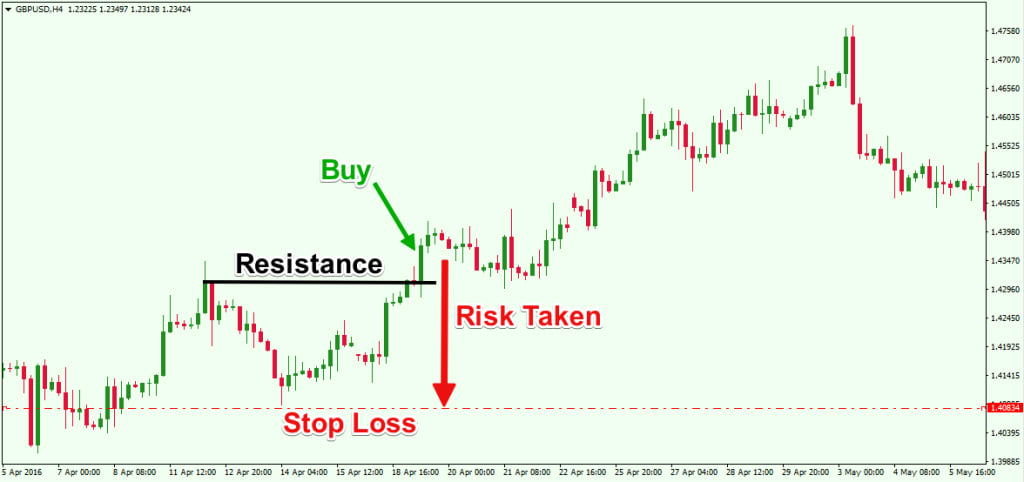
We need stop-loss orders as a risk management tool in forex trading. When you buy a currency pair, there is always a risk that the price of that base currency could decline, which could result in losses. Stop-loss orders provide a way to limit the potential loss on a position in a trade by automatically selling the currency pair when it reaches a certain price point. This can help traders protect their capital and manage risk.
Market volatility can make it difficult to predict the future price of a Currency. Stop-loss orders can help traders limit their losses in the event of a sudden market downturn or unexpected news.
Trading in forex always carries some level of risk, and there is always a possibility that the price of a currency pair could decline, resulting in losses. By using stop-loss orders, Traders can limit their potential losses on a position in a trade.
However, it's important to note that stop-loss orders are not perfect and can sometimes be triggered prematurely, resulting in unnecessary selling. In some cases, market volatility or unexpected news can cause the price of a security to gap down below the stop-loss price, resulting in a larger loss than anticipated.
Stop-loss is a valuable tool for managing risk and can help traders protect their capital. traders should carefully consider their trading strategy and risk tolerance before using stop-loss orders. Here are some reasons why stop-loss orders are necessary:
Risk management: One of the most important aspects of trading is managing risk. By setting a stop-loss order, traders can limit their potential losses on a position in a trade. This can help to protect their portfolio from significant losses and preserve their capital.
Emotion control: traders can sometimes become emotionally attached to a particular in forex trading, making it difficult for them to make rational decisions when the price begins to decline. By setting a stop-loss order, investors can remove the emotion from the decision-making process and let the market determine when to exit the position.
Market volatility: The forex market can be unpredictable, and prices can fluctuate rapidly. Setting a stop-loss order can help traders to limit their losses in the event of a sudden market downturn or unexpected news.
Discipline: Stop-loss orders can help traders to maintain discipline in their trading strategy. By setting a predetermined exit point, traders can stick to their plan and avoid making impulsive decisions.
There are different types of stop-loss orders, including:
Market stop-loss order: This is the most common type of stop-loss order. It is executed at the market price as soon as the stop-loss price is reached.
Limit stop-loss order: This type of stop-loss order is executed at the limit price or better. It provides additional control over the execution price, but there is a risk that the order may not be executed if the market price does not reach the limit price.
Trailing stop-loss order: This type of stop-loss order is based on a percentage or dollar amount that trails the market price. It adjusts the stop-loss price as the market price moves in your favor, allowing you to capture gains while limiting your losses.
Here are some common tips for determining where to place a stop-loss order:
Pips-based stop-loss: With this method, you set the stop-loss at a certain fixed number of pips below your entry price. For example, if you buy a GBPUSD at 1.2010 and set a stop-loss at 10 pips below your entry price, the stop-loss would be triggered if the price drops to 1.2000.
Percentage-based stop-loss orders can also be used in Forex trading to manage risk. When setting a stop-loss order in Forex trading, it's important to consider the volatility of the currency pair being traded and the size of your position.
Here's an example of how a percentage-based stop-loss order might work in Forex trading:
Let's say that you are trading EUR/USD, and you have a long position with an entry price of 1.2000. You want to limit your potential loss to 2% of your account balance, which is $200. To calculate your stop-loss price, you would use the following formula:
Stop-loss price = Entry price - (Entry price x Risk percentage)
Stop-loss price = 1.2000 - (1.2000 x 2%)
Stop-loss price = 1.1760
In this example, you would place a stop-loss order at 1.1760 to limit your potential loss to $200, or 2% of your account balance.
Support and resistance levels: Support and resistance levels are price points where a pair has historically found buying or selling pressure. Setting a stop-loss order just below a support level or just above a resistance level can help traders to limit their potential losses and protect their capital.
Moving averages: Moving averages are technical indicators that can help investors to identify trends and potential support or resistance levels. Setting a stop-loss order just below a moving average can help traders to limit their potential losses and avoid holding a position in a trade that has entered a downtrend.
Volatility-based stop: This method involves setting a stop-loss based on the volatility of the security being traded. For example, trader may set a stop-loss at a distance from the entry price that is equal to a multiple of the security's average true range (ATR).
It's important to note that the exact location of the stop-loss order will depend on the forex trader's trading strategy, risk tolerance, and the security being traded. traders should carefully consider their investment objectives and risk tolerance before using any stop-loss method.
Overall, stop-loss orders are a valuable tool for managing risk and protecting against unexpected market movements. It's important to note that stop-loss orders are not foolproof and can sometimes be triggered prematurely, resulting in unnecessary selling. traders should carefully consider their investment strategy and risk tolerance before using stop-loss orders.
About the Creator
Rajaratnam Lishanthan
I write about Finance/Forex & Equity Trading and Anything related to Trading that can give real value to people
Keep reading
More stories from Rajaratnam Lishanthan and writers in Trader and other communities.
The necessity of using trading tools
Trading tools refer to software programs or online platforms that traders use to help them analyze financial markets, identify trading opportunities, and execute trades. These tools can include charting software, news feeds, economic calendars, algorithmic trading software, risk management tools, social trading platforms, and more.
By Rajaratnam Lishanthan3 years ago in Trader
As U.S.-European trade tensions cause a "Transatlantic Tantrum," global markets fall.
This week, geopolitical tensions between the United States and key European allies grew, causing a broad sell-off in stocks, increased demand for safe-haven assets, and increased volatility across major asset classes in global financial markets. A contentious dispute involving the United States is at the center of the chaos. President Donald Trump’s aggressive tariff threats against eight European nations in connection with his bid to influence control over Greenland — a move that has quickly escalated into a flashpoint for transatlantic relations and market sentiment.
By Raviha Imranabout 21 hours ago in Trader


Comments
There are no comments for this story
Be the first to respond and start the conversation.