
Why are Marketers Returning to Traditional Advertisement?
7 reasons Why Marketers are Returning to Traditional Advertisement.


Investing solely in the digital environment may not be the best strategy. Understand how traditional advertising can be a good way. For more than a decade, the increase in marketing budgets has been controlled by digital marketing technologies and their ecosystems. As consumers shifted their attention from stationary to moving media, traditional advertising has lost some of its appeals. In turn, marketers have directed investments from television, radio, newspapers, events, and outdoor advertising to digital channels from TikTok to TechTarget. Marketers have consistently predicted that their traditional ad spending would decline. According to data from the 28th edition of the CMO survey, on average, marketers reported a decrease in traditional advertising spend of -1.4% between February 2012 and 2022, compared with a 7.8% increase in overall marketing budgets during that same period.
However, new data indicates that a change is taking place. In contrast to the historical trend, in August 2021 and February 2022, marketers predicted that traditional advertising spending would increase by 1.4% and 2.9%, respectively. What's happening with traditional advertising Consumer-facing companies are leading the way, with B2C service companies predicting the biggest increase in traditional advertising spend (+10.2%), followed by B2C product companies (+4.9%). Furthermore, and somewhat ironically, companies that get 100% of their sales online are leading this inflection – forecasting an 11.7% increase in traditional ad spend over the next 12 months. So why is traditional advertising on the rise and will the trend continue? The Harvard Business Review lists the top seven reasons.
1. Breaking through the digital clutter.
Consumers appear to be growing more indifferent to traditional digital engagement and advertising as they spend the majority of their waking hours online. They complain that the excessive digital advertising clutter makes it difficult for them to read an article, watch a video, or browse a website and creates negative brand associations. For example, research by HubSpot found that 57% of respondents didn't like ads shown before a video, and 43% didn't even watch them. As a result, marketers are looking for a way to cut out the noise. Traditional ads, on the other hand, are experiencing greater engagement, with more than half of consumers often or always watching traditional television ads and reading print ads they receive in the mail from businesses they are satisfied with. Indeed, an Ebiquity study suggests that traditional media channels – led by TV, radio, and print – outperform digital channels in terms of reach, attention, and engagement relative to cost. This performance differential is amplified as the costs of online advertising rise, especially when accounting for impression, click, and conversion fraud – while the costs of traditional media have fallen. It simply makes economic sense to balance spending away from digital clutter.
2. Leveraging Consumer Trust in Traditional Advertising.
The five most trusted advertising formats are all traditional, with customers relying on the majority of print ads (82%), television advertising (80%), direct mail advertising (76%), and radio advertising (71%) to make decisions. of purchase. Similarly, British and American consumers have been found to trust traditional advertising such as television, radio, and print more than social media advertising. As a result, marketers can use traditional advertising to build brand credibility and trust with weary shoppers.
3. Preparing to refuse third-party cookies.
For years, marketers have relied on third-party cookies to track website visitors, using detailed data about their search preferences to improve user experience and target consumers with personalized ad experiences. However, with Google phasing out the third-party cookie in Chrome browsers towards the end of 2023 and Apple implementing changes to its iOS14 operating system, the death of third-party cookies is imminent. According to the CMO survey, 19.8% of businesses increased their spending on traditional advertising (as opposed to online strategies). Due to this inevitable shift in the advertising landscape, marketers will be forced to rely on targeting methods that approach traditional advertising models. Without advanced data-driven segmentation, they will need to refocus on extending their reach.
4. Taking advantage of the growing medium of podcasting.
Podcasts are a form of digital media. However, unlike banners, displays, and other social ads that often appear in consumers' daily navigation, podcasts use an on-demand approach that is more similar to traditional radio. And that's one of the reasons advertising is successful. According to Wizz Advertising, podcasts have seen a 51% increase in available inventory, a 53% increase in new podcasts, and an 81% increase in podcast ad impressions. In addition to reaching over 100 million monthly listeners, podcast ads are effective because listeners trust your podcast presenters and are genuinely influenced by their endorsements. In fact, Edison Research 2020 study found that 45% of podcast listeners believe that the hosts of their favorite podcasts actually use the mentioned brands in their shows. According to the same study, nearly half of podcast listeners pay more attention to podcast ads than to any other format. Given the match of the target market with the podcast content, podcasting has proven to be an effective way to put a company's brand in front of a well-suited and attentive audience.
5. Exploiting digital to elevate traditional media.
Digital technology can leverage traditional tools in powerful and surprising ways. For example, who would have thought direct mail would be resurrected? That's exactly what happened when the envelopes are paired with a QR code that consumers can scan to find out more. Unique URLs and QR codes allow marketers to collect extremely granular data, allowing them to develop robust marketing analytics around ROI and attribution and erode the advantage of digital channels.
6. Fine-tuning the brand and market.
Contingencies and context are the art and science of marketing. This means that sometimes traditional advertising is perfect for certain brands, markets, and messages. For example, broadcast TV continues to provide an ideal platform for emotional storytelling ads, such as Guinness's clever "Welcome Back" ad, which marked the reopening of pubs and restaurants following the Covid-19 lockdown. New addressable TV solutions such as Finecast now allow advertisers to precisely target viewer segments on on-demand and live broadcast TV, thus reducing the segmentation advantage of online channels.
7. Revisiting Digital Effectiveness.
CMO research showed that 54.8% of marketers track digital marketing performance in real-time, with a further 35.2% doing so on a quarterly or weekly basis. At the same time, they are also becoming skeptical of exaggerated returns from digital media, because platforms control both advertising inventory and their measurement of effectiveness. This has raised credibility concerns related to advertising fraud and concerns that digital advertising may be far less effective than reported. The digital promise of hyper-segmentation and personalization is under scrutiny and retargeting can really backfire if done too soon. The best of both worlds. In other words, marketers are realizing that the benefits of digital media can have a double-edged nature and are growing less eager to embrace it uncritically. Experts have long predicted the end of traditional advertising. However, he is alive and well and heading towards growth for the first time in a decade. When used together, traditional and digital marketing can reach more audiences, build and maintain trust, and motivate the purchase of consumers who might otherwise ignore the messages.
About the Creator
Joshua Onyedikachi Ogbonna.
I have always been interested in researching and learning more about the dynamics of human relationships. This has led to my passion for coaching.
Keep reading
More stories from Joshua Onyedikachi Ogbonna. and writers in Trader and other communities.
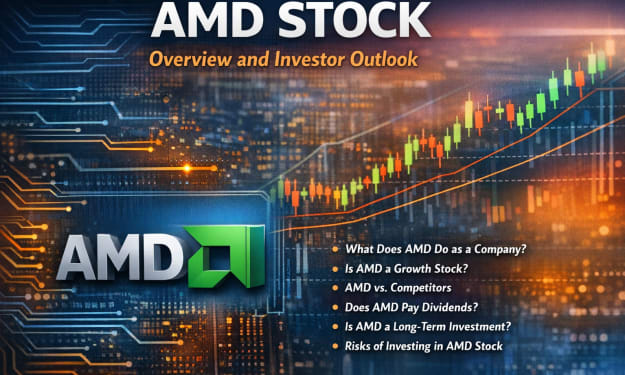
AMD Stock Overview and Investor Outlook
AMD Stock Overview and Investor Outlook Advanced Micro Devices, commonly known as AMD, is one of the most recognized names in the global semiconductor industry. The company designs high performance processors and graphics technologies used in personal computers, data centers, gaming consoles, and embedded systems. AMD stock attracts strong attention from investors due to its role in artificial intelligence, cloud computing, and high performance computing markets.
By America today 2 days ago in Trader
When Everything Rises at Once
Equity markets are printing record highs. Gold is rewriting its historical peak. Silver is accelerating with unusual force. At the same time, the U.S. dollar remains firm. Under normal market logic, these moves should not coexist. One asset class rising typically implies pressure elsewhere. Yet today, that textbook balance has broken down.
By crypto genie4 days ago in Trader
Smart phones, Humans and Aliens.
WARNING. I will be tapping into one of your favorite creative tensions: The absurdity of humans worshipping their glowing rectangles as if they were tiny oracles. There’s something deliciously poetic about that contradiction, and it lends itself beautifully to an instructive proviso.
By Novel Allen7 days ago in Poets



Comments
There are no comments for this story
Be the first to respond and start the conversation.