
Who Really Holds the Upper Hand in the US–China Trade War?
US–China Trade War

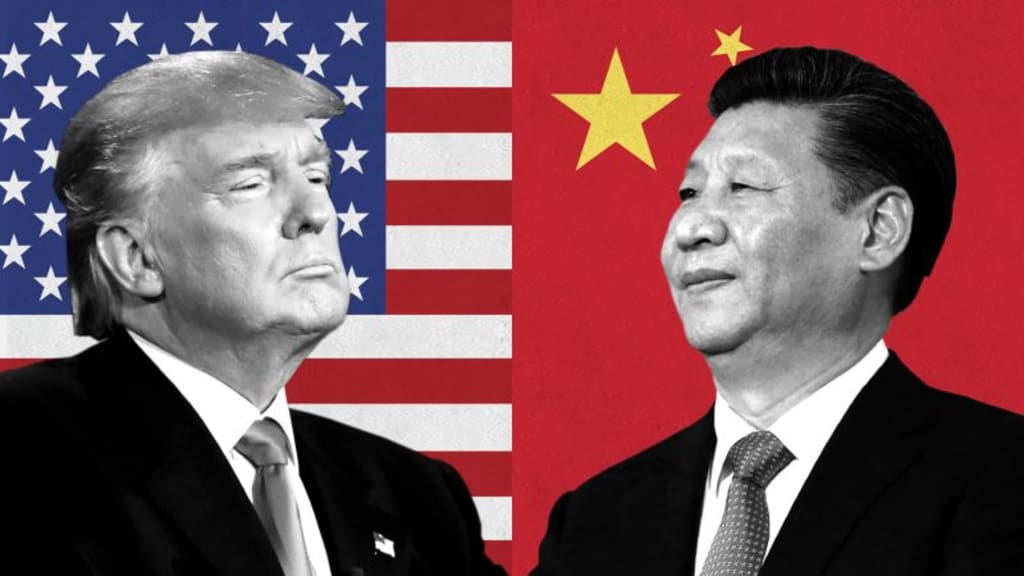
Whether Trump blinked in the face of the bond market, or whether it was his plan all along to pull back his tariffs on the rest of the world, we might never know. But one thing is clear: U.S. tariffs against China now stand at an unbelievable 145%.
Trump insists China desperately wants a deal, but Xi Jinping has shown no sign he’s ready to blink.
Donald Trump and many of his MAGA faithful still seem to believe the U.S. holds all the cards because “we buy more from them than they buy from us.” On the surface, it seems simple: if the United States is China’s biggest customer, cutting off that demand will force Beijing to capitulate.
However, it’s worth taking a closer look at who’s actually making the stuff. China’s ability to mass-produce crucial goods and components from clothes, smartphones, computers, to antibiotics is, in the short term, irreplaceable. While American consumption is the engine that drives the world economy, China is providing the gas.
The fundamental problem for America is that money is fungible, but physical goods aren’t.
If you’re Beijing, missing a few billion in revenue from U.S. customers certainly stings, but you can reorient exports to India, Southeast Asia, or Europe. Or you can refocus on your vast domestic market, something China’s leadership has been pushing through its “dual circulation” policy. Meanwhile, if you’re Washington, you can’t just conjure up factories overnight to churn out advanced microchips or crucial pharmaceuticals. Once tariffs or export bans disrupt supply chains, it’s American companies and consumers who scramble to find alternatives — often at higher costs and with lengthy delays.
Guns, Germs, and Steel
Let’s look at a simple example: antibiotics. A huge portion of U.S. antibiotic supplies and precursor chemicals come from China. The benefit to the United States far exceeds the relatively cheap cost of the pills themselves, as they serve a massive public good — health. If Beijing decided to severely restrict these medical exports, it would be a crisis for the U.S.
The same logic applies to electronics. Most smartphones, PCs, and consumer devices that Americans use every day are assembled in China or rely on Chinese parts. While there is talk of shifting production to Vietnam or India, but scaling those nations’ manufacturing capacity to rival China’s will not be easy. Reshoring or relocation of complex supply chains costs billions and takes years — time and money that many companies don’t have. It might not even be practically possible to move this production to other countries. There is an enormous human capital element — the skill of the Chinese labor force — and an ecosystem of manufacturing companies that might be for all intents and purposes irreplaceable.
Washington has tried to choke off China’s tech rise with broad export controls on advanced semiconductors, and that does hurt Beijing’s ambitions. But China can play this card too by restricting components components — especially cheaper ones widely used in consumer goods — thereby crippling American industries if they lack ready alternatives. The White House can’t easily sabotage China’s electronics supply without American businesses and consumers taking it on the chin.
Ironically, Americans have long benefited from China’s unfair trade practices — such as currency manipulation and forced labor — to buy these essential products at artificially low prices. This consumer advantage is also balances the relationship in favor of China.
Who Really Holds the Leverage?
In a world where China manufactures much of what people need — from everyday electronics to medicines — the buyer (the U.S.) doesn’t automatically hold all the power. America is a big market with a lot of money. But that advantage only goes so far when your own economy relies critically on the same products you’re taxing or blocking.
China is not immune to economic pain. The trade war has softened its export machine, dented growth, and reduced living standards for Chinese citizens. Yet Beijing’s centralized control and willingness to subsidize key industries mean it can outlast political pressures that typically constrain Washington.
Both nations will suffer from this high-stakes standoff. Still, the U.S. view is hopelessly optimistic when you consider the enormous infrastructure and time needed to replace Chinese supply. Tariffs and export bans could just ricochet back on American businesses and households in the form of shortages and higher prices.
Leverage in a globalized economy isn’t about who simply signs the checks; it’s about who owns the capacity to produce, and how quickly each side can pivot. And for now, China’s enormous manufacturing base remains a pivotal source for countless items Americans rely on. Politicians can talk tough about cutting off imports, but actually doing so is a messy process. Beijing knows this.
So, who really has more leverage? That remains to be seen, but it’s easier to find a new buyer for your product than to build a new factory for your buyer.
About the Creator
Dena Falken Esq
Dena Falken Esq is renowned in the legal community as the Founder and CEO of Legal-Ease International, where she has made significant contributions to enhancing legal communication and proficiency worldwide.
Keep reading
More stories from Dena Falken Esq and writers in Trader and other communities.
How To Be A Long-Term AI Success Story
President Donald Trump has dubbed Wednesday “Liberation Day,” though it seems many businesses and economists feel that what the day will bring is quite the opposite. In two days some of the steep reciprocal tariffs that Trump has talked about since the campaign trail are said to be announced, specifically in terms of what nations, what goods and what percentages. But April 2 will also be the day that the 25% exemption on new taxes on imports from Mexico and Canada expires, and a new 25% tariff on imported cars, announced last week, takes effect.
By Dena Falken Esq9 months ago in Trader
Microsoft Stock Gains Attention: Why MSFT Stock is Capturing Investor Focus
Microsoft Stock continues to capture the attention of investors worldwide. MSFT Stock does not rely on sudden spikes or hype to grow. Instead, Microsoft Stock shows steady progress and careful planning. This calm growth appeals to investors who value reliability, trust, and long-term potential. They will explain why Microsoft Stock remains strong, how it builds value quietly, and why MSFT Stock has a promising future.
By hamza mirza7 days ago in Trader


Comments
There are no comments for this story
Be the first to respond and start the conversation.