
Where Markets Still Breathe
How Distorted Industries Mislead Investors


Modern economies no longer move with a single heartbeat. Some parts pulse with genuine market energy, others drift along on political support. Anyone trying to understand where real value is created today has to face this uncomfortable reality. Certain industries still rely on the old logic of prices, competition and voluntary exchange, while others are shaped almost entirely by political engineering. The differences are not subtle. They determine where innovation takes root, and where investors unknowingly bet on the goodwill of bureaucracies instead of the choices of consumers.
Consider the financial system. It is difficult to find another industry more thorughly reshaped by policy. When interest rates are set by committees rater than by collective judgement of millions, something essential disappears. Markets stop whispering their warnings, instead they wait for announcements. Credit expands, not because people are saving, but because institutions can create money with a keystroke. This give the appearance of prosperity, but it is prosperity without a foundation, much like a house built on sand that only stands firm because the weather has been unusually calm.
Real estate follows a similar story. Housing prices tell us little about what people actually want or can afford. They tell us what zoning boards permit, what central banks subsidise, and what mortgage guarantees encourage. It is a sector full of signals, but few of them really matter. Investors often mistake these inflated prices for genuine strength. The truth is different. A market shaped by political favour may rise for years and then collapse without warning once the policy winds shift.
Healthcare and education have followed their own path into abstraction. In healthcare, the layers of regulation and third-party payment systems have nearly severed the link between patient and price. In education, state-backed loans have inflated demand for degrees far beyond what normal market would sustain. Both sectors feel prosperous from the outside: high revenues, steady demand, but much of its stability rests on subsidies and rules rather than on actual willingness to pay. They are systems that thrive because the state refuses to let them fail, not because they deliver value proportional to their costs.
Energy is another world where politics and economics are so intertwined that separating them becomes almost impossible. Entire technologies surge or stall depending on policy goals, diplomatic tensions, or ideological priorities. Investors often talk about the future of energy in the language of innovation, but the real determinants are political, who gets subsidised, who gets taxed, who fits the narrative of the moment. It is difficult to call this a market in any meaningful sense.
Yet, for all these heavily managed sectors, there remain parts of the economy that still operate with the straightforward clarity of competition. They are not always glamorous. Some, barely make headlines. But they retain the basic discipline that markets impose when no one is there to soften the blows.
Consumer software is one such place. Companies rise and fall quickly. Customers are unforgiving. If a product is slow, clumsy, or pointless, people abandon it without ceremony. This constant presure produces something like honesty. Retail and e-commenrce work in a similar way. Margins are thin, survival depends on execution, and no amount of lobbying can save a business that customers simply don't want.
Niche manufacturing and logistics are two other sectors where reality still maters. These firms solve real problems for real clients, day after day. They rarely attract subsidies or political attention, which may be the best thing that can happen to them. They succed because they understand their customers, not because they learned to navigate a regulatory labyrinth.
This pattern becomes impossible to ignore. The sectors most celebrated for their size or importance tend to be the ones least governed by market logic. The sectors that receive least attention often turn out to be most authentic. Investors who fail to notice this distinction risk confusing political stability with true economic health. They invest in industries where the numbers reflect policy preferences rather than supply and demand, and they ignore the quieter sectors where real value is created far from the spotlight.
What matters for investors is not simply identifying which industries still resemble functioning markets, but understanding what this means in practice. When a sector survives because it serves customers rather than because it pleases ministries or benfits from subsidies, it tells you something essential. The value it creates is anchored in human preferences, not in political strategy. Those are precisely the conditions under which capital can grow.
A market economy still contains the pockets of clarity. They are smaller, quieter, and less celebrated, but they exist. And for anyone thinking about where to place capital, these pockets matter more than any grand industrial plan or political pledge. Real investment seeks real prices. Real prices depend on real markets. Where those survive, opportunity survives with them.
About the Creator
Mateusz Banaszak
Writer, investor, independent thinker
Keep reading
More stories from writers in Trader and other communities.
John Mueller’s Guide to SEO Blog Writing for AI and Search Visibility
How search engines work is crucial for any blogger or business owner. SEO blog writing John Mueller emphasizes is not just about stuffing keywords but creating meaningful content that resonates with readers while remaining visible to AI and search engines.
By Safdar meyka2 days ago in Trader
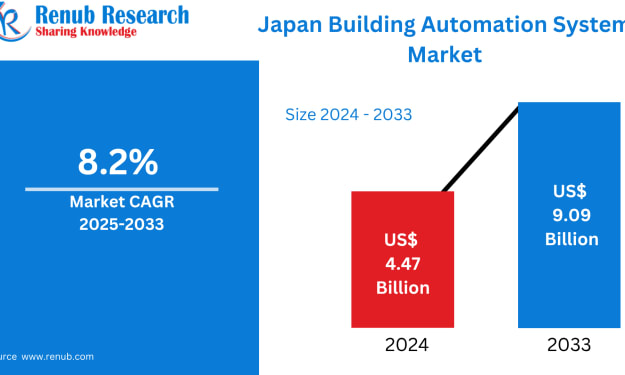
Japan Building Automation Systems Market Size and Forecast 2025–2033
Introduction Japan is undergoing a profound transformation in the way its buildings are designed, managed, and operated. From skyscrapers in Tokyo to manufacturing hubs in Aichi and logistics centers in Chiba, the demand for smarter, more energy-efficient, and digitally connected infrastructure is accelerating. At the center of this transformation lies the Building Automation Systems (BAS) market, which integrates mechanical, electrical, and electromechanical services into a centralized, intelligent control framework.
By Marthan Sir7 days ago in Trader



Comments
There are no comments for this story
Be the first to respond and start the conversation.