
What is Sound Money?
And how can it help your finances?
Sound money is a currency with stability that hedges against sudden appreciations or depreciations in value. As a result, sound money has a great deal of reliability as an investment against inflation.
This definition contains several implications about how we view sound money and how we should approach money in general.
Central banks across the world manipulate money. Ostensibly, they do this to “grow,” or “stabilize,” or otherwise achieve their desired goals for the economy. However, large swings of the purchasing power of a currency, such as that seen with the Federal Reserve Note, result from the same money manipulation that purports to solve the very problem it causes.
A negative consequence of central bank control of money is the disconnect between the supply and demand for money. Economic downturns strike when changes in the demand for money are not met with an automatic adjustment in its supply.
What Are Examples of Sound Money?
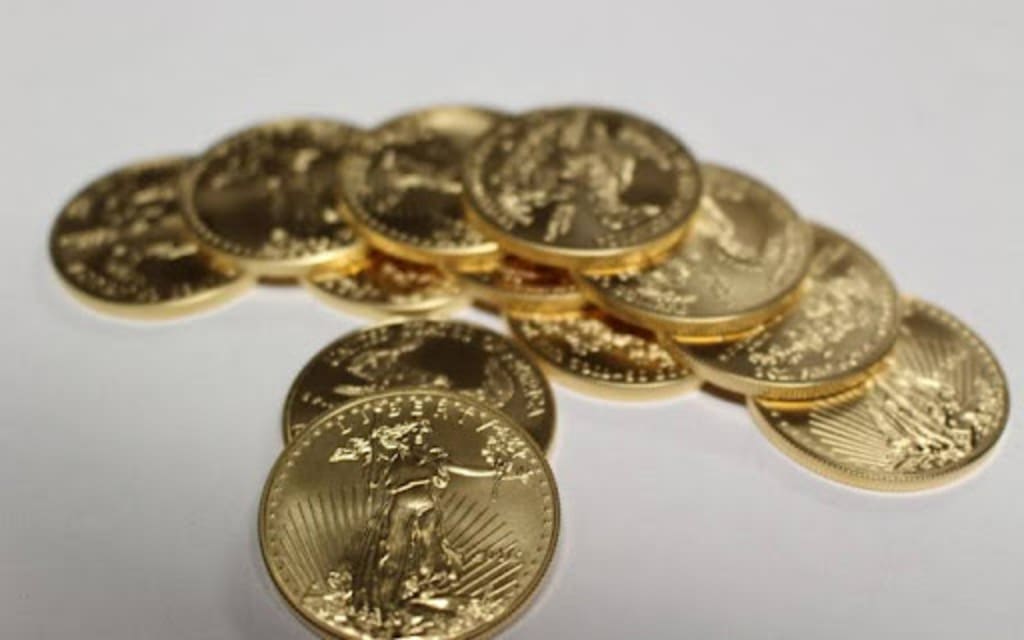
Gold coins and silver coins are the most prominent examples of sound money. As a currency that has withstood the test of the market over thousands of years while maintaining its purchasing power, gold and silver are the clearest example of sound money that exist in the world.
Gold and silver are not the only forms of sound money. Other precious metals also qualify, such as:
- copper
- palladium
- platinum
- rhodium
While many forms of sound money are hard currency, there are also digital examples. Cryptocurrencies like bitcoin also qualify, since they are exempt from fluctuations in value that affect the Federal Reserve Note.
What Are the Principles of Sound Money?
The most marketable goods establish themselves as common media of exchange. The marketability differences between commodities serve to discern between them. This discernment is how money can undergo competition.
Thanks to that competition, gold and silver rose as the most marketable commodities. The metals are portable, homogenous, divisible, durable, and scarce. These advantages helped them rise to the top as currencies.
Through market processes, the “most marketable commodity,” as economist Ludwig von Mises described money, makes itself known. Money is not created by government decree, but rather by surviving the test of time and the pressures of market forces while maintaining its value.
Fiat Currency vs. Sound Money
Our ancestors would not find it strange for someone to walk around with gold, silver, or copper coins. So, why is that today, such an action would be so bizarre?
The short answer is that most countries in the world have adopted fiat currencies. A fiat currency is not backed by physical goods, but instead valued by public trust in the government. Examples of this money include the U.S. dollar and the EU euro.
Fiat currencies obtain their value from the following factors:
- government stability
- the nation’s economy
- supply and demand
One of the biggest differences between sound money and fiat currencies is simplicity. Gold and silver have measurable value. Fiat currencies run on much more nebulous factors. So, why did the US government abandon gold and silver for such vague assets?
Why Did America Adopt Fiat Currency?
In the early days of the United States, paper money was intensely unpopular. The framers of the U.S. Constitution recognized gold and silver as crucial tools to constrain a government that might otherwise grow too large.
George Washington wrote that paper money was “wicked.” James Madison wrote it was “unjust” and “unconstitutional.” Thomas Jefferson wrote “its [paper money’s] abuses also are inevitable and, by breaking up the measure of value, makes a lottery of all private property, cannot be denied.”
However, less than a hundred years into the American experiment, the Civil War began. Wars are expensive, and the federal government, which had a policy to only print notes that were backed by an equal amount of gold and silver, was running low on specie.
Lincoln’s Solution: The Greenback Dollar
To fund the Civil War, President Lincoln signed the Legal Tender Act in 1862. This law allowed the U.S. government to print $150 million worth of unbacked paper notes, called Greenbacks. Though unconstitutional, Lincoln used the force of government to legitimize this fake, fiat money we still use today.
Lincoln and his money managers knew citizens would be wary of unbacked paper notes. After all, the Constitutional Convention that took place less than 75 years prior had overwhelmingly rejected paper money.
But how could he get people to accept them in exchange for their goods and services? Lincoln made them legal tender for debts (but not customs duties, which still had to be paid with gold or silver coin).
Legal tender is a stamp of approval by the federal government that magically turns strips of unbacked paper into money people must accept, if begrudgingly at first. By the end of the war, nearly half a billion unbacked notes had been issued.
As always happens with paper money, the Greenbacks lost buying power. At their low point, it took $265 in Greenbacks to buy $100 worth of gold. Legal tender allowed debtors who had borrowed money (gold or silver coin) before the Civil War to repay debts with Greenbacks that had less than half the buying power of the original loan.
After the War
Creditors were understandably furious over this swindle. When the war ended, the constitutionality of printing unbacked notes was heard by the Supreme Court of the United States in Hepburn vs. Griswold (1870).
Chief Justice Chase, who had been Lincoln’s Secretary of the Treasury and who had imposed legal tender, said that there is no legal tender power in the Constitution. He said that legal tender was a war measure used out of necessity. Since the war was over, so was legal tender.
On the same day the Hepburn decision was announced, two of President Grant’s nominations for Supreme Court Justice were appointed to the high court. The Legal Tender Act issue was reheard in Knox v. Lee (1871), and the Hepburn ruling was overturned. By a vote of 5–4, the Supreme Court ruled that printing unbacked paper money was no longer unconstitutional, even when there is no war or emergency.
The next 60 years were marred with the destruction of sound money (not to mention the Constitution): establishment of the Federal Reserve System (which has served to devalue the Federal Reserve Note 97% since its creation, despite its mandate to maintain price stability), an unconstitutional income tax, gold confiscation by executive order, and the abrogation of gold clause contracts.
What came next should surprise no one. An explosion of government spending brings us to today. Bureaucrats saw the constraint that sound money placed on government spending as a bug rather than a feature, and America is now well down the road to financial disaster, shouldering more than $21 trillion in debt.
After several millennia of being tested by market forces, gold and silver are undoubtedly sound money. It’s also possible that other sound monies could emerge. However, no government can replace the ringing echo of sound money from its system without grave consequences.
The process through which money is “created” is not one of central planning, but rather one in which money is “discovered” by markets. It would behoove us to realize and correct this mistake before it’s too late. Fortunately, due to the work of the Sound Money Defense League and Money Metals Exchange, the sound money movement at the state and federal level continues to grow.
What You Can Do
It is no secret that the 2020s have been filled with economic uncertainties. The effects of Lincoln’s Greenbacks remain with us over 160 years later.
Sound money is an excellent way to hedge against inflation. Investing in gold, silver, and other precious metals is a great way to establish your financial security.
Money Metals Exchange offers several products to help you get started with precious metals investments. Visit the exchange’s site today to see today’s prices for precious metals!
About the Creator
Sound Money
Sound Money Reform
The Sound Money Defense League advocates for restoring gold and silver as constitutional money through grassroots activism, policy reform, and public education on the risks of fiat currency and the benefits of sound money.
Keep reading
More stories from Sound Money and writers in Trader and other communities.
Junk Silver in 2026: Is It Still a Good Investment?
Junk silver refers to US currency coins in circulation prior to 1965. They are often considered a great way to get into silver investments. The reason for this is that junk silver coins have a 90% silver composition, which allows them to track the spot price of silver.
By Sound Money22 days ago in Trader
Small Steps, Big Impact: A Practical Guide to Lean Business Strategy
Lean business strategy centers on improving performance through focused, incremental change. In a fast-moving American economy, companies often feel pressure to grow quickly or to adopt bold transformations. Lean thinking offers an alternative path, one grounded in discipline, efficiency, and steady progress.
By Duke Valentour4 days ago in Trader


Comments
There are no comments for this story
Be the first to respond and start the conversation.