
What I Wish I Knew About Money Before I Turned 25
Lessons in Earning, Saving, and Self-Worth I Learned the Hard Way

What I Wish I Knew About Money Before I Turned 25
Lessons in Earning, Saving, and Self-Worth I Learned the Hard Way
Growing up, money was a mystery. It showed up when adults talked in hushed tones and vanished as quickly as it came. I knew it paid for food, school, and rent, but I didn’t know what to do with it beyond spending it. When I got my first job, I was too focused on earning to think much about what would happen after the pay hit my account.
Now, on the other side of 25, I find myself wishing someone had sat me down and told me a few honest truths. Not complex investment jargon or tales of stock market wizardry, just the simple, grounded lessons that form the backbone of financial stability. Here's what I wish I knew before I turned 25.
1. Your Relationship with Money Is Emotional
Money is not just math. It’s memory, emotion, and self-worth wrapped in currency. I spent a lot of time either avoiding money or trying to spend it into happiness. I wish I had known that understanding my emotional triggers; spending when I was sad, over-tipping to feel generous, or splurging after a tough day, was just as important as budgeting.
No one taught me that managing money was not just about logic; it was about healing and boundaries. If I had understood that sooner, I might have saved myself some guilt and shame.
2. Budgeting Isn’t Restrictive; It’s Liberating
I once thought a budget meant punishment. A cruel way to say no to fun and yes to boredom. What I later learned was that a budget is a way of telling your money where to go before it disappears. It’s not about denying joy, it’s about being intentional.
Had I known how powerful it feels to assign each pound a job, to see money grow in a savings account instead of vanishing into forgotten transactions, I would have started budgeting years earlier.
3. Credit Is Not Free Money
When I got my first credit card, I was thrilled. It felt like a rite of passage. What I didn’t fully grasp was the cost of borrowing. Interest, late fees, and minimum payments weren’t part of my vocabulary.
I wish I had known that credit is a tool, not a ticket. Used well, it builds trust with lenders. Misused, it can haunt you. By the time I understood compound interest, I had already spent hundreds servicing debts I didn’t even need to have.
4. Saving Even a Little Goes a Long Way
For years, I didn’t save because I thought I didn’t earn enough. I was waiting to earn more before I started. But saving is more about habit than amount. Even five pounds a week adds up.
What I wish I knew is that starting small is powerful. It teaches discipline, builds confidence, and opens the door to larger financial goals. The act of saving, even the smallest amount, creates momentum.
5. You Don’t Have to Match Other People’s Lifestyles
Comparison is expensive. I wasted money trying to keep up with friends whose financial situations I didn’t understand. I said yes to trips I couldn’t afford, nights out that left me broke, and clothes I wore once just to feel part of the group.
I now know that financial confidence comes from clarity, not conformity. What others do with their money has nothing to do with what’s right for you. I wish someone had told me that boundaries with money are a form of self-respect.
6. Talk About Money; Even If It Feels Awkward
In many families, money is a taboo subject. We don’t discuss salaries, budgets, or financial goals. I carried that silence into adulthood, and it cost me. I didn’t know how to negotiate a raise, ask for help, or admit when I was struggling.
Now I understand that talking about money is empowering. It normalises financial literacy, opens doors to advice and mentorship, and can even strengthen relationships. Vulnerability around money is a strength, not a weakness.
7. Your Income Is a Tool, Not Your Worth
In my early twenties, I believed my salary defined my success. The number on my payslip felt like a grade. If it was low, I felt like a failure. If it was high, I felt proud.
I wish I’d known that income is a tool, nothing more. It doesn’t measure your kindness, intelligence, or potential. Financial growth is a journey, and your value as a person is never up for debate.
8. Emergency Funds Aren’t Optional
Emergencies don’t wait until you’re financially ready. I learned that the hard way when my car broke down and I had to choose between fixing it or paying rent. That moment of panic could have been avoided with a small cushion of savings.
Now, I always prioritise an emergency fund. Even when my income is tight, I set something aside. Peace of mind isn’t just nice, it’s necessary.
9. Learn the Basics of Tax, Interest, and Investment Early
It’s astonishing how little I knew about tax bands, pension contributions, and interest rates. These are things that affect almost everyone, yet they were completely foreign to me.
I wish someone had handed me a simple guide to adult money. Not to overwhelm me, but to equip me. Financial ignorance isn’t bliss, it’s costly. The sooner you learn, the more you can take control.
10. Be Kind to Yourself as You Learn
Lastly, I wish I had known that making financial mistakes is part of the process. I carried a lot of shame for overdrafts, missed bills, and poor decisions. But beating myself up didn’t help me grow.
Money is a lifelong relationship. Like any relationship, it requires patience, learning, and grace. You don’t need to have it all figured out by 25, or 35, or 45. What matters is that you’re willing to learn and grow.
Looking back, I don’t regret the mistakes, I regret the silence. I regret not asking questions, not seeking guidance, and not believing that I was capable of financial responsibility. If you’re reading this and you’re under 25, consider it your invitation to start early. And if you’re older, know that it’s never too late.
The most important financial lesson I’ve learned is this: You are allowed to be both a work in progress and a wise steward of your money. You are not behind. You are right where you need to be to begin.
About the Creator
Mutonga Kamau
Mutonga Kamau, founder of Mutonga Kamau & Associates, writes on relationships, sports, health, and society. Passionate about insights and engagement, he blends expertise with thoughtful storytelling to inspire meaningful conversations.
Keep reading
More stories from Mutonga Kamau and writers in Trader and other communities.
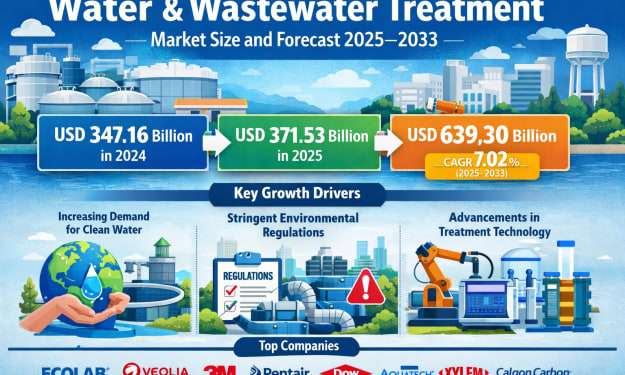
Water & Wastewater Treatment Market Size and Forecast 2025–2033
Access to clean and safe water has become one of the most pressing global priorities of the 21st century. Rapid urbanization, industrial expansion, environmental pollution, and climate change are intensifying pressure on freshwater resources worldwide. As a result, governments, industries, and municipalities are investing heavily in technologies that ensure water safety, sustainability, and reuse. These factors are collectively fueling strong growth in the global water and wastewater treatment market.
By Sakshi Sharmaabout 9 hours ago in Trader
United States Risk Analytics Market Size to Hit USD 28,411.7 Million by 2034: Trends & Forecast
United States Risk Analytics Market Overview The United States Risk Analytics market is experiencing strong growth as organizations increasingly rely on data-driven insights to manage financial, operational, and strategic risks. Risk analytics solutions use advanced technologies such as big data analytics, artificial intelligence, and machine learning to identify potential threats, assess vulnerabilities, and support informed decision-making.
By Jackson Watson4 days ago in Trader


Comments
There are no comments for this story
Be the first to respond and start the conversation.