
What are the potential use cases of Decentralized Finance?
In the conventional structure of the finance industry today, we have central authorities bound by country borders who hold the sole power of producing and distributing money bills used as the primary exchange element among people. Assets can be owned and trades can be conducted in exchange of these currencies, which essentially drive the economy of the world. These money bills are different in every country and have different values based on the economic conditions of specific countries. It’s true that this architecture works, but it has some very inherent flaws in it. Not only is having different currencies in almost all of the 195 countries on earth is inconvenient and limited by the country borders and rules, but this fundamentally also creates inequality which ultimately gives rise to corruption. Decentralized finance is a genius invention with the aim of eliminating all the issues that arise from this centralized structure.

What is DeFi ?
DeFi stands for decentralized finance which is a more evolved and technologically advanced alternative reality of the centralized fiscal arrangement that we currently deal with. Using these words may make it sound like science fiction, but in reality, it is already here, and it is changing the financial architecture of the world.
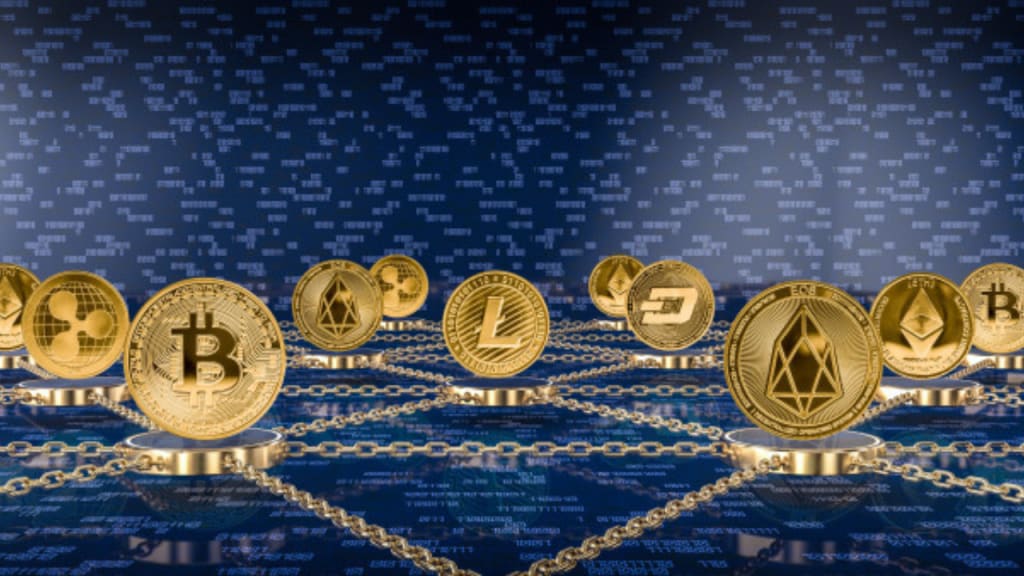
Decentralized Finance is basically a happy medium between the traditional financial system which is controlled by central authorities and purely decentralized cryptocurrencies like Bitcoin and Ethereum. DeFi is a platform where one can create the same traditional financial applications, with decentralized functionalities.
DeFi majorly comes in terms of decentralized apps aka dApps. These are primarily developed on a blockchain forum like Etheruem or Algorand which along with having a native currency to use, also gives the opportunity of creating blockchain applications based on the same cryptocurrency. In fact, if you make small dApps on one particular blockchain platform, you can merge them, amend them, or integrate parts of them to create more dApps to perform fiscal activities on bigger scales.
How does DeFi work?
As stated above, DeFi is predicated on the technology of blockchain in Australia, which means all dApps contain the basic characteristics of blockchain, viz., decentralized network and data verification procedure, permanence and transparency of the ledger, layers of cryptographic security of the information, data provenance, immutability of the stored data, and utter privacy and anonymity of users. All transactions on a decentralized finance platform are observed via smart contracts, which is a self-enforcing algorithm run on a p2p computer network that facilitates, verifies, or enforces the negotiation and/or execution of a contract.
On top of these, DeFi’s coding is also open-source and extremely flexible. Anyone can change the dApps to suit their requirements as well as safely add functionalities from third-party apps. Everything is transparent, so you can be assured that there is no secret application running in the background peeking on your information.
What are the use cases of DeFi?
Decentralized finance is an extremely potent invention with a plethora of possible use cases. Below we have mentioned the most revolutionary ones.
- Higher liquidity of non-cash assets:
Physical assets like real estate, jewellery, art, etc. have low liquidity in the current fiscal arrangement because they cannot be converted into other assets quickly. In a centralized system, you use cash to buy them and then sell them in exchange for cash again.
In a decentralized financial system, all your assets can have a digital value added to them, in other words, they can be “tokenized”.
Once this value is added to the decentralized ledger, everyone in the network can sell, borrow, or invest against the digital value of these assets directly. What is more, the moment you can assign a numerical value on a physical asset, it can be considered as an abstract being and therefore, can be divided into smaller pieces, where each of these pieces can have a lower value than the whole thing. This serves two purposes: -
- Smaller investments: Now one physical asset can be invested in multiple platforms being divided into parts. This not only makes it convenient, but a wider range of investment opportunities also become available for one asset.
- Inclusivity: The lower-income group who could not afford the whole piece of asset earlier can buy and sell these smaller pieces, and so can include themselves in the game.
- Open lending and borrowing:
The concept of lending and borrowing in a decentralized system remains the same as the one in the present centralized system - users deposit their currencies just like they do it in banks now and they can earn interest against their deposit when someone else borrows those. The difference is that you get the choice of depositing and thus investing any possession of yours from digital currencies to real-life physical assets, or even a fraction of the same, as explained in the previous point. Moreover, the decision and verification of the terms of the loan, the connection between the lender and the borrower, along with the distribution of interest - are all automated and securely carried out by smart contracts, without any human intervention from beginning till the end, making it automated and hence, unbiased. There are a number of benefits to this method:-
- Quick transactions: In a decentralized finance platform based on blockchain in Australia, transactions will be instantaneous.
- More options for collaterals: While taking a loan, you can keep digital assets as collateral instead of your physical property, keeping those safe in the case of an unfortunate financial disaster.
- Enhanced flexibility: In a DeFi system, all assets can be standardized with one digital value as stated above. This will, in turn, help in achieving much higher interoperability of financial services across various providers and platforms. This will reduce the friction that arises because of the rigidity in the current centralized system.
- Inclusivity, yet again: DeFi doesn’t require you to have a series of documentations or a credit check for borrowing, which will allow more people to enjoy the opportunity of a loan.
- Democracy in borrowing: As more people from various backgrounds get involved in the investment business, the lenders will be able to have a wider pool of borrowers, which will only benefit their business.
- Open marketplaces:
A decentralized marketplace brings back the barter system - only making it much simpler, more secure, and more convenient. Since in this marketplace, every single thing in this world can be defined by one standardized digital currency, two parties will be able to exchange items of value among themselves. These items can be anything - electronic and electrical appliances, research papers, collectibles, games - practically anything that one person has and another person wants, just like it is done now with cash. Except in this system, there will be no separate registration of items or verification of users required or any withdrawal fees. People can simply be parts of a DeFi network and perform a peer-to-peer transaction using a blockchain-powered smart contract, completely anonymously, yet securely.
- Prediction markets:
Decentralized finance is borderless and practically anybody with a smart device and an internet connection can be a part of the community. Prediction market or betting and gambling will take a completely new turn with DeFi. Gambling is a field with a lot of restrictions based on country-specific regulations, availability of betting on a certain sport in a country, financial capabilities, and many more. DeFi removes all segregations and anyone from any corner of the world can bet on any sport at any time, without asking for anyone’s approval.
Conclusion
There are already a number of dApps in the market, making quite a buzz in the financial community. MakerDAO, Dharma, BlockFi are just some of the names which have made quite a bit of an impact. In the 21st century, when we have seen too much of corruption and unjustified inequality by people in power; by creating a cost-effective, transparent, and all-inclusive financial system, decentralized finance promises to give the power back to the people, and gives us the hope of a future with a borderless economy - bringing equality among all humans on the planet.
About the Creator
Keep reading
More stories from writers in Trader and other communities.
Oil Market Dynamics — Venezuela Exports Resume, Iran Risks Loom
Global oil markets paused gains this week as fresh Venezuelan crude exports began flowing, while mounting domestic turmoil in Iran continued to rattle investor confidence. After four consecutive days of price increases, Brent crude dipped slightly, and U.S. West Texas Intermediate (WTI) also eased, reflecting a market caught between renewed supply prospects and geopolitical uncertainty.
By Ethan Cole3 days ago in Trader
United States Furniture Market Size and Forecast 2025–2033
Introduction: A Market Built Around Modern Living The United States furniture market is undergoing a significant transformation as consumer lifestyles, technology adoption, and design sensibilities evolve. According to Renub Research, the United States Furniture Market is expected to reach US$ 308.25 billion by 2033, up from US$ 171.67 billion in 2024, registering a compound annual growth rate (CAGR) of 6.72% between 2025 and 2033. This sustained expansion highlights furniture’s central role in shaping residential, commercial, and hybrid living environments across the country.
By Renub Research3 days ago in Trader



Comments
There are no comments for this story
Be the first to respond and start the conversation.