
Warren Buffett Warns Against Using Trade as a Weapon in Global Economics
The legendary investor calls for cooperative economic diplomacy, criticizing the growing trend of weaponizing trade in geopolitical disputes.
Omaha, May 3, 2025 —
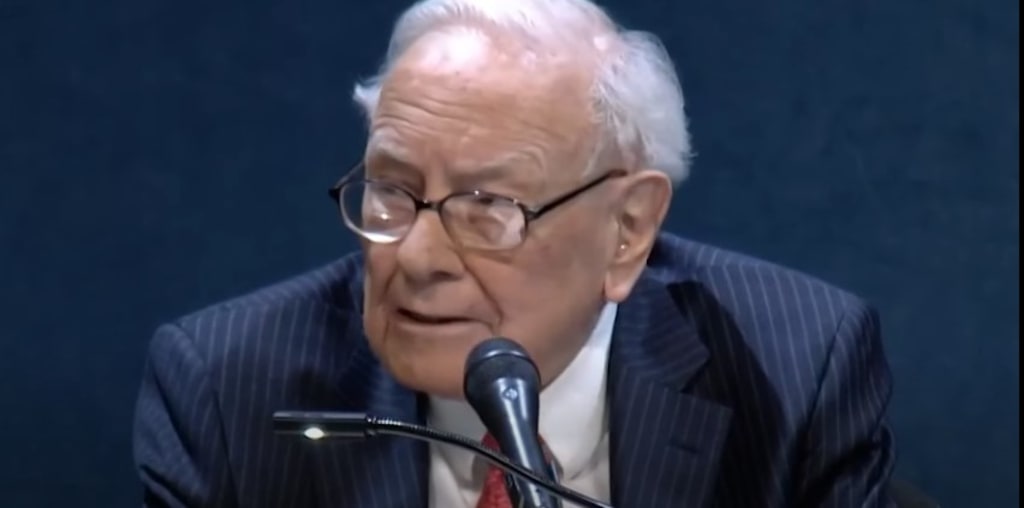
Warren Buffett, the billionaire investor and chairman of Berkshire Hathaway, has issued a stern warning against the use of trade as a geopolitical weapon, stating it could have long-term damaging effects on the global economy. Speaking at Berkshire’s annual shareholder meeting in Omaha, Buffett stressed the importance of mutual benefit in trade and called for a return to economic diplomacy over conflict-driven policies.
"Trade should be a bridge between nations, not a battlefield," said Buffett. "When we use trade as a weapon, everyone ends up paying the price — businesses, workers, and consumers alike."
Buffett’s comments come amid rising tensions between the United States and China, as well as ongoing trade disputes involving key global players like the European Union, India, and Russia. While he did not name specific political leaders, his remarks appeared to be a clear criticism of past and present U.S. administrations that have used tariffs and trade barriers as tools of pressure.
________________________________________
A Voice of Reason in a Fractured World
At 94 years old, Warren Buffett remains one of the most respected voices in finance, and his opinions still hold sway on Wall Street and beyond. His remarks reflect a growing concern that trade wars, once seen as temporary measures, are becoming normalized as long-term policy tools.
"Trade wars have no real winners," Buffett stated. "They weaken trust, distort supply chains, and disrupt innovation."
These statements echo his long-held belief that global cooperation, rather than conflict, is essential for sustained economic growth. Buffett emphasized that countries like the U.S. should focus on building resilient trade relationships instead of using punitive tactics.
________________________________________
Impact of Trade Conflicts on Business
Buffett pointed to the disruptions caused by the U.S.-China trade war between 2018 and 2020, noting its long-lasting effects on American farmers, tech companies, and consumers.
He cited examples such as:
• Soaring prices for imported goods
• Delayed product manufacturing due to strained supply chains
• Increased uncertainty for global investors
Buffett emphasized that unpredictability is the enemy of investment. When businesses can’t forecast costs or demand due to political interference in trade, they hesitate to grow — and the economy suffers.
________________________________________
Calls for Responsible Leadership
Buffett urged current global leaders to prioritize dialogue and diplomacy in trade matters, particularly as the world faces major challenges like inflation, climate change, and post-pandemic recovery.
"It’s time to put away the threats and pick up the phone," he said, receiving loud applause from the crowd of over 30,000 attendees.
He also praised past efforts, such as the World Trade Organization’s role in mediation, and encouraged reinvesting in global trade institutions rather than undermining them.
________________________________________
Investor Reactions and Market Sentiment
Following Buffett’s statements, shares in several multinational companies rose modestly, reflecting a cautious optimism that trade tensions could ease in the months ahead.
Market analysts noted that Buffett’s call for predictable and peaceful trade environments could influence future government approaches, especially with upcoming elections in several G7 countries.
“Warren Buffett’s message is clear: stability drives investment, not confrontation,” said Michael Rogers, a senior economist at Global Insight Group.
Historical Context and Global Implications
Buffett’s concerns echo a broader historical lesson: protectionism and economic isolation often lead to long-term instability. During the 1930s, for example, the Smoot-Hawley Tariff Act in the United States significantly worsened the Great Depression by igniting retaliatory tariffs from other nations. Drawing from such historical parallels, Buffett cautioned against repeating those same mistakes under the guise of national security or economic leverage.
He also warned that smaller economies suffer the most in trade conflicts, often caught in the crossfire between superpowers. Countries dependent on exports and foreign investment experience currency devaluation, rising debt, and domestic unrest when global supply chains are disrupted.
Moreover, Buffett highlighted that young people entering the workforce today deserve a world that embraces opportunity and collaboration—not economic warfare.
“The future depends on how we behave today. Trade should be part of the solution, not a new problem,” he said.
As the world becomes more interconnected through digital commerce, AI-driven logistics, and green energy cooperation, Buffett’s message may carry added weight. Economists and diplomats alike agree: moving from conflict to cooperation could be the defining challenge of this generation's global leadership.
Conclusion
As a lifelong advocate of common-sense capitalism, Warren Buffett’s latest remarks serve as a powerful reminder: trade should unite, not divide. At a time when the world faces overlapping crises — from inflation to climate — Buffett’s call for cooperation over confrontation may be exactly the kind of wisdom policymakers need to hear.
About the Creator
The Unseen Journey: Freight Forwarding in Japan’s Everyday Life
Most people in Japan go about their day without thinking twice about how things arrive where they do. A neatly packed bento appears at a convenience store early in the morning. Car parts reach a factory exactly when needed. Books printed overseas show up at a neighborhood shop without delay. These moments feel ordinary, but behind them is an intricate freight forwarding system working quietly in the background.
By Harley Morris7 days ago in Trader
South Korea Cryptocurrency Market: Trends, Growth Factors, and Future Outlook
South Korea Cryptocurrency Market Overview South Korea cryptocurrency market size is projected to exhibit a growth rate (CAGR) of 2.94% during 2025-2033. The increasing growth and adoption of decentralized finance platforms and applications that can influence the demand for specific cryptocurrencies, is driving the market.
By Kim Soo hyun2 days ago in Trader


Comments
There are no comments for this story
Be the first to respond and start the conversation.