
Vegan Ice Cream Market Size and Forecast 2025: A Plant-Based Treat Goes Mainstream
From niche indulgence to global freezer staple, vegan ice cream is reshaping the dessert industry with sustainability, innovation, and health-driven demand.

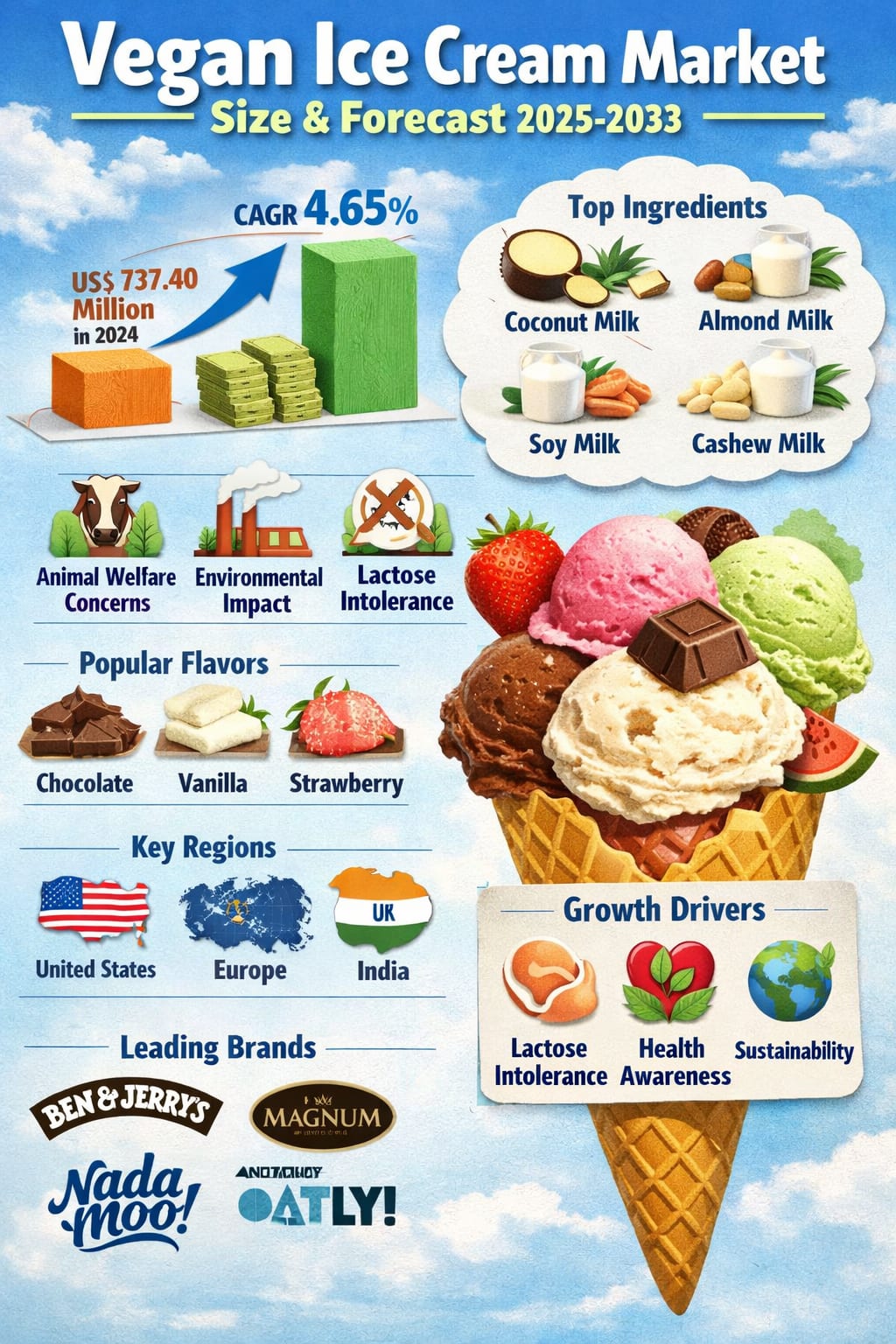
Global Vegan Ice Cream Market: A New Era for Frozen Desserts
The global food industry is undergoing a profound transformation, and few categories capture this shift as clearly as vegan ice cream. Once considered a niche product aimed only at strict vegans or people with dairy allergies, vegan ice cream has now become a mainstream alternative embraced by health-conscious consumers, environmental advocates, and adventurous food lovers alike.
According to Renub Research, the Vegan Ice Cream Market is expected to reach US$ 1,110.08 million by 2033, up from US$ 737.40 million in 2024, growing at a CAGR of 4.65% from 2025 to 2033. This steady growth reflects not only changing dietary preferences but also deeper structural changes in how consumers think about food, sustainability, and personal health.
Concerns around animal welfare, the environmental impact of dairy farming, and the rising prevalence of lactose intolerance are key factors driving this market globally, with Europe and North America playing especially influential roles. At the same time, rapid innovation in plant-based ingredients and food technology is helping vegan ice cream close the taste and texture gap with traditional dairy products.
Today’s vegan ice creams are no longer limited to a handful of basic flavors. They span a wide spectrum of flavors, textures, and indulgent formats, using bases such as coconut milk, soy milk, almond milk, and cashew milk. This evolution has turned vegan ice cream into a product that appeals not only to vegans, but also to flexitarians and even regular dairy consumers looking to reduce their environmental footprint or explore new tastes.
Innovation Is Changing the Scoop
One of the most important reasons behind the success of vegan ice cream is product innovation. Early plant-based ice creams often struggled with icy textures or bland flavors. Today, brands are investing heavily in R&D, better fat compositions, improved sweeteners, and advanced processing techniques to create products that rival traditional ice cream in creaminess and mouthfeel.
Manufacturers are also expanding into premium and indulgent segments, offering sugar-free options, exotic flavor combinations, and dessert-inspired varieties. This premiumization trend is helping vegan ice cream shed its “compromise product” image and reposition itself as a desirable treat in its own right.
Retailers and foodservice chains are also playing a key role. Supermarkets, hypermarkets, cafés, and online platforms are increasingly dedicating shelf space to plant-based frozen desserts, making vegan ice cream more visible and accessible to everyday consumers. As availability improves, trial rates increase—and with better taste experiences, repeat purchases follow.
The United States: A Powerhouse for Plant-Based Frozen Desserts
The United States has emerged as one of the most important markets for vegan ice cream, driven by a combination of health awareness, environmental concerns, and lifestyle trends. In 2024, about 3% of Americans identified as vegan, and a much larger segment actively seeks to reduce dairy consumption.
Health is a major factor. A significant share of the U.S. population experiences lactose intolerance, dairy sensitivities, or concerns about saturated fat and cholesterol in traditional ice cream. Vegan ice cream, typically made from plant-based milks, offers an appealing alternative that aligns better with these health goals.
Flavor diversity is another growth engine. While classics like chocolate and vanilla remain popular, U.S. consumers are increasingly drawn to innovative and exotic flavors, limited editions, and clean-label formulations. Major brands such as Ben & Jerry’s and Häagen-Dazs have entered the vegan space, helping normalize plant-based ice cream and bring it into mainstream grocery freezers.
The rise of e-commerce and direct-to-consumer food delivery has further expanded access, while sustainability concerns linked to dairy farming—such as greenhouse gas emissions, water use, and land degradation—continue to push consumers toward plant-based alternatives.
Europe and the United Kingdom: Ethics Meets Appetite
Europe plays a crucial role in the global vegan ice cream story, with the United Kingdom often seen as a leader in plant-based adoption. The UK has one of the highest vegan populations globally, and interest in vegan food has surged dramatically over the past decade. Searches for vegan restaurants and plant-based menus have multiplied, reflecting a broader cultural shift rather than a short-term trend.
Countries such as Germany, Sweden, Austria, and Switzerland also have strong vegan and flexitarian communities. In these markets, ethical and environmental considerations are especially influential. Strict food labeling regulations and the European Union’s sustainability goals further support the development and promotion of plant-based products.
In both retail and foodservice, vegan ice cream options are expanding rapidly. From supermarket private labels to artisanal brands and global multinationals, Europe is becoming a testing ground for new flavors, cleaner ingredient lists, and eco-friendly packaging concepts.
India: A Market with Untapped Potential
India presents a unique and promising landscape for vegan ice cream. With a large vegetarian population (around 30%) and an estimated 9% vegan population, the cultural foundation for plant-based diets already exists. At the same time, lactose intolerance and rising health awareness are pushing more consumers to explore dairy-free alternatives.
Urban centers such as Mumbai, Delhi, and Bangalore are leading adoption, supported by both domestic startups and international brands introducing innovative products. Popular bases include coconut milk, almond milk, and soy milk, often adapted to suit local taste preferences.
However, challenges remain. Higher prices, limited distribution in smaller cities, and lower consumer awareness still constrain market expansion. Despite these hurdles, the long-term outlook remains positive as more Indian consumers seek healthier, ethical, and globally aligned food choices.
The United Arab Emirates: A Premium, Health-Driven Market
In the UAE, the vegan ice cream market is growing steadily, supported by a cosmopolitan population, rising health awareness, and increasing interest in plant-based diets. Cities like Dubai and Abu Dhabi are seeing more cafés, restaurants, and specialty stores offer vegan desserts, including premium ice cream options.
Coconut milk, almond milk, and soy milk dominate as base ingredients, delivering rich textures that appeal to both vegan and non-vegan consumers. While premium ingredient costs keep prices relatively high, demand continues to rise—especially among consumers who prioritize ethical consumption and sustainability.
Key Growth Drivers Shaping the Market
1. Rising Lactose Intolerance and Dairy Allergies
A significant share of the global population struggles with lactose intolerance or dairy-related allergies. For these consumers, vegan ice cream is not just a lifestyle choice—it is a necessity. As awareness of these conditions grows, so does demand for reliable, tasty, dairy-free alternatives. Major companies are responding by expanding their portfolios, including launches like Unilever’s lactose- and cholesterol-free ice cream made with animal-free whey protein in 2024.
2. Health Awareness and the Plant-Based Movement
Health-conscious consumers increasingly view plant-based diets as beneficial for heart health, weight management, and overall wellness. Vegan ice cream, typically free from cholesterol and lower in saturated fat, fits neatly into this narrative. Industry research suggests that a large portion of consumers now actively seek “better-for-you” desserts, even when indulging.
3. Animal Welfare and Environmental Sustainability
Ethical concerns are no longer fringe issues. Many consumers are actively reducing animal-based products due to worries about animal exploitation, deforestation, water use, and greenhouse gas emissions linked to dairy farming. Vegan ice cream is widely perceived as a more sustainable and humane alternative, strengthening its appeal among environmentally conscious buyers. In 2024, brands like Magnum expanded their vegan offerings, signaling strong confidence in this demand shift.
Challenges That Still Lie Ahead
Nutritional Concerns
Despite its plant-based image, not all vegan ice cream is automatically healthy. Some products rely heavily on sugars, fats, and additives to achieve the desired taste and texture. This can create skepticism among health-focused consumers. The industry’s challenge is to balance indulgence with cleaner labels and improved nutritional profiles.
Higher Costs
Premium plant-based ingredients such as cashews, almonds, coconut milk, and organic sweeteners are typically more expensive than conventional dairy inputs. Combined with more complex production processes, this results in higher retail prices for vegan ice cream. Price sensitivity, especially in emerging markets, remains a key barrier to mass adoption.
Market Segmentation Snapshot
By Source:
Coconut Milk
Soy Milk
Almond Milk
Cashew Milk
By Flavor:
Chocolate
Caramel
Coconut
Vanilla
Coffee
Fruit
By Sales Type:
Impulse
Take Home
Artisanal
By Distribution Channel:
Supermarkets and Hypermarkets
Convenience Stores
Online Stores
Others
By Country:
United States, Canada, France, Germany, Italy, Spain, United Kingdom, Belgium, Netherlands, Turkey, China, Japan, India, Australia, South Korea, Thailand, Malaysia, Indonesia, New Zealand, Brazil, Mexico, Argentina, South Africa, Saudi Arabia, UAE.
Competitive Landscape: Who’s Scooping Up Market Share?
The vegan ice cream market features a mix of global giants, regional players, and innovative niche brands. Companies are analyzed across four dimensions: Overview, Key Persons, Recent Developments & Strategies, and Revenue.
Key players include:
Unilever PLC
Tofutti Brands Inc.
Van Leeuwen Ice Cream
SorBabes
Perry’s Ice Cream
NadaMoo!
Over The MOO
Morrisons
HappyCow
Double Rainbow Ice Cream
Booja-Booja
Arctic Zero
Competition is increasingly focused on flavor innovation, clean-label positioning, premiumization, and sustainability branding.
Final Thoughts: A Market That’s Only Getting Cooler
The vegan ice cream market is no longer a novelty—it is a structural growth story within the global food industry. With the market projected to rise from US$ 737.40 million in 2024 to US$ 1,110.08 million by 2033, the direction of travel is clear.
Driven by health awareness, ethical consumption, environmental concerns, and continuous product innovation, vegan ice cream is steadily moving from the margins to the mainstream. While challenges such as pricing and nutritional perceptions remain, the industry’s momentum suggests these hurdles will be addressed through better formulations, scale efficiencies, and smarter positioning.
About the Creator
United States Diabetes Market Size, Trends, Growth & Forecast 2034: A Transforming Healthcare Landscape
The United States diabetes market is entering a new era of transformation. With millions of Americans living with diabetes and prediabetes, the condition remains one of the most pressing public health challenges in the country. However, alongside rising prevalence comes rapid innovation — from advanced insulin therapies to AI-powered glucose monitoring systems.
By Adil Ali Khanabout 19 hours ago in Trader
Private Equity Market Transforming Through AI Integration and Strategic Investments
Private Equity Market Overview The Private Equity Market involves investment funds that acquire, manage, and restructure private companies or public companies taken private, with the goal of improving performance and generating strong returns. Private equity firms typically invest in sectors such as technology, healthcare, manufacturing, consumer goods, and financial services. The market has witnessed steady growth due to increasing institutional investor participation, favorable economic conditions, and expanding opportunities in emerging industries. Additionally, private equity firms are focusing on operational improvements, digital transformation, and strategic acquisitions to maximize portfolio company value. The integration of advanced technologies, particularly artificial intelligence, is playing a crucial role in reshaping investment decision-making and portfolio management strategies.
By James Smith3 days ago in Trader
📢 Raise Your Voice Thread: 02/05/2026
Our “Raise Your Voice Threads” are hosted most alternating Thursdays at 12PM ET to offer creators more avenues to uncover exceptional stories on Vocal. As we are continuously searching for fresh creators and inspiring stories, this thread provides an opportunity to exchange and discuss the stories that have moved and motivated us on Vocal.
By Raise Your Voice by Vocal7 days ago in Resources



Comments
There are no comments for this story
Be the first to respond and start the conversation.