
Unveiling the Thrilling World of Forex Trading: Conquer the Markets and Unleash Your Potential
Explore the World of Currency Trading - Navigate Volatility, Master Strategies, Claim Your Financial Destiny"

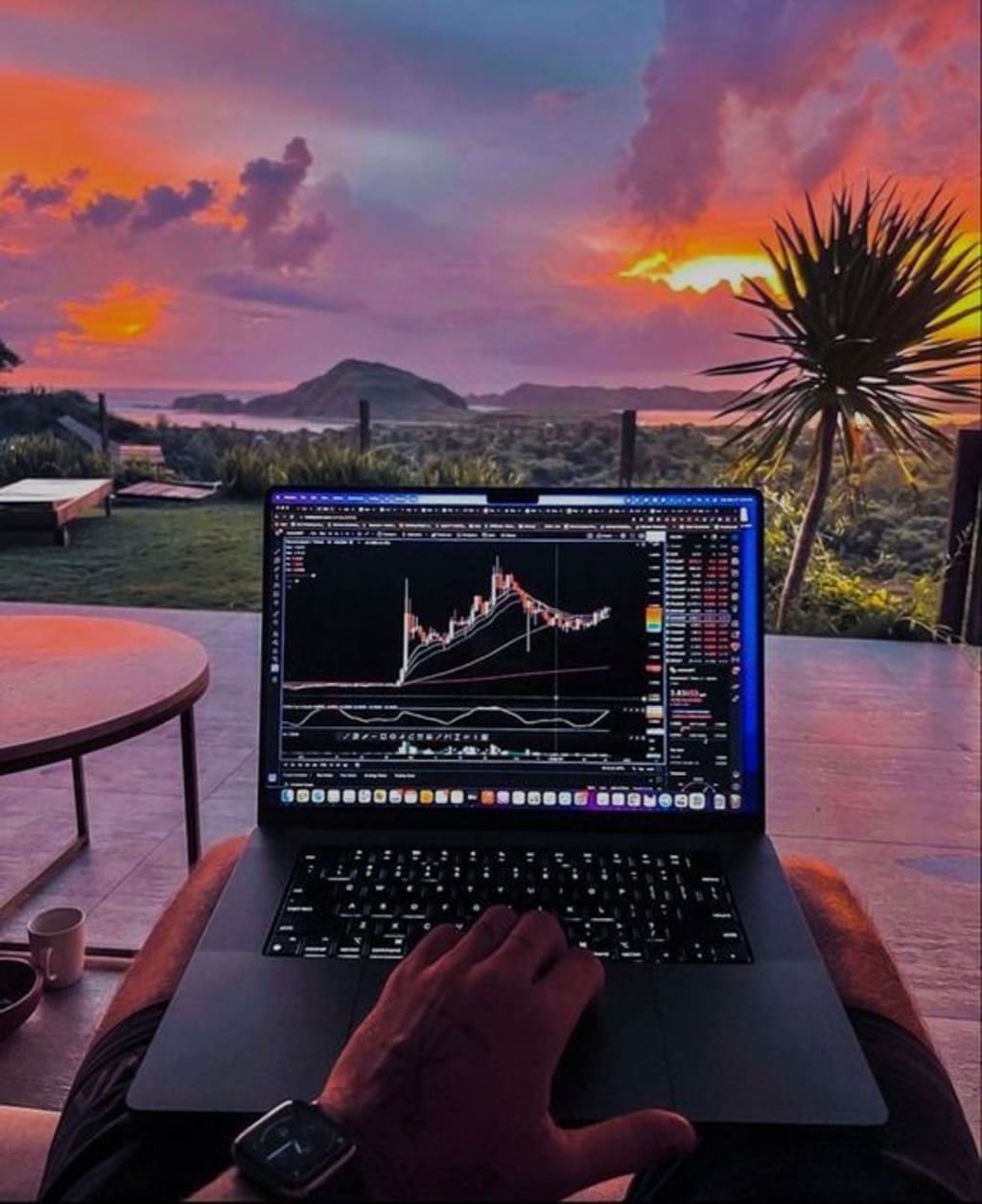
In this electrifying article, get ready to plunge into the heart of Forex trading and embark on an adrenaline-fueled journey like no other. Prepare yourself for a comprehensive exploration of the Foreign Exchange Market, where every trade holds the potential for untold riches and thrilling adventures.
Imagine a vast, bustling marketplace that spans the globe, where currencies are traded like commodities, and fortunes are made and lost in the blink of an eye. Welcome to the Foreign Exchange Market (Forex), the largest financial market in the world, with a daily trading volume exceeding a staggering $6 trillion.
But what sets Forex apart from other financial markets? Unlike traditional stock exchanges, Forex operates 24 hours a day, five days a week, from Sunday evening to Friday afternoon, Eastern Time. This non-stop frenzy of trading activity creates a dynamic and fast-paced environment where opportunities abound.
At the heart of Forex trading are currency pairs, where traders buy one currency while simultaneously selling another. From the ever-popular EUR/USD to the exotic USD/TRY, each pair represents a unique opportunity to capitalize on fluctuations in exchange rates and geopolitical events.
But understanding Forex goes beyond knowing currency pairs. It's about mastering key concepts like pips, lot sizes, bid/ask spreads, and leverage. A pip, short for "percentage in point," is the smallest unit of price movement in Forex trading. Lot sizes determine the volume of a trade, with standard, mini, micro, and nano lots offering varying levels of exposure to the market.
Bid and ask prices form the basis of trading in Forex, with the difference between them known as the spread. This spread represents the cost of entering the market and can vary between brokers and market conditions. Leverage, on the other hand, allows traders to amplify their exposure to the market using borrowed capital, potentially magnifying both profits and losses.
But navigating the Forex market isn't just about understanding the mechanics; it's also about mastering trading strategies and risk management techniques. Technical analysis involves studying historical price movements and chart patterns to predict future price movements. From trend lines to support and resistance levels, technical analysis provides traders with valuable insights into market dynamics.
On the other hand, fundamental analysis focuses on macroeconomic indicators, geopolitical events, and central bank policies to assess the intrinsic value of currencies. By analyzing factors such as interest rates, GDP growth, and inflation, fundamental traders seek to identify undervalued or overvalued currencies and capitalize on market inefficiencies.
With the right combination of technical and fundamental analysis, along with sound risk management practices, traders can navigate the volatile waters of the Forex market with confidence. Whether you're a seasoned veteran or a novice trader, there's always something new to learn and explore in this ever-evolving landscape.
And as our journey through the world of Forex trading draws to a close, remember that success in this dynamic market requires dedication, discipline, and a willingness to embrace uncertainty. So buckle up, hit that like button, and join us on the adventure of a lifetime as we unlock the secrets of Forex trading and unleash your potential for financial success.
Please Note. You should consider one or two things before you begin your Forex journey. That is:
1. Educate Yourself: Take the time to learn the fundamentals of Forex trading, including terminology, trading strategies, risk management techniques, and market analysis methods. There are countless resources available, including books, online courses, webinars, and educational videos.
2. Start Small: Begin with a demo trading account to practice your skills and familiarize yourself with the platform without risking real money. Use this opportunity to test different trading strategies, refine your approach, and gain confidence in your abilities.
3. Develop a Trading Plan: Define your trading goals, risk tolerance, and investment strategy before you start trading. Create a comprehensive trading plan that outlines your entry and exit criteria, position sizing rules, risk management guidelines, and trading schedule.
4. Manage Your Risk
5. Stay Disciplined:
6. Continuously Learn and Adapt:
7. Be Realistic:
About the Creator
Gregg Enos
With a insatiable curiosity and a finger on the pulse of global events, I connect you to the stories that matter most. Let's explore the world together!
Keep reading
More stories from Gregg Enos and writers in Trader and other communities.
HOW TO INVEST FOR BEGINNERS(2024)
In the realm of online income generation, navigating the path to passive earnings can be both alluring and daunting for newcomers. Luckily, seasoned entrepreneur Sam, who transitioned from a conventional 9-to-5 job to a lifestyle of financial freedom, offers invaluable insights in his tutorial.
By Gregg Enos2 years ago in Trader
Philippines Soft Drinks Market: Refreshing Growth, Consumer Trends & Industry Dynamics
Philippines Soft Drinks Market Overview The Philippines soft drinks market growth is a dynamic segment of the country’s non-alcoholic beverage industry, driven by evolving consumer tastes, increasing urban convenience, health-oriented product innovation and expanding retail channels. Soft drinks encompass carbonated beverages like colas and flavored sodas, as well as non-carbonated options such as juices, flavored water, energy drinks and ready-to-drink teas — forming a core part of daily consumption for many Filipino households. The Philippines soft drinks market size reached USD 2.8 Billion in 2024. Looking forward, IMARC Group expects the market to reach USD 4.0 Billion by 2033, exhibiting a growth rate (CAGR) of 3.4% during 2025-2033. This steady expansion highlights the resilience of soft drinks consumption amidst shifting dietary preferences and ongoing innovation in beverage offerings.
By Manisha Dixit6 days ago in Trader
Australia Welding Consumables Market: Industrial Demand, Construction Activity & Manufacturing Growth
Australia Welding Consumables Market Overview The Australia welding consumables market growth is witnessing steady expansion as key end-use industries — including construction, mining, automotive, shipbuilding and industrial fabrication — maintain strong production and infrastructure activity. Welding consumables, which include electrodes, welding wires, fluxes, flux-cored products and related materials, are essential for joining metal parts across applications in structural builds, heavy machinery, pipelines and industrial equipment. According to IMARC Group, The Australia welding consumables market size reached USD 516.4 Million in 2025. Looking forward, IMARC Group expects the market to reach USD 749.1 Million by 2034, exhibiting a growth rate (CAGR) of 4.22% during 2026-2034. This growth reflects sustained industrial demand, ongoing construction pipelines, increased maintenance activity and rising manufacturing output that prioritise quality, efficiency and performance. (Market data based on IMARC Group analysis.)
By Manisha Dixit7 days ago in Trader



Comments
There are no comments for this story
Be the first to respond and start the conversation.