
United States Oats Market Size and Forecast 2025–2033
How Health Trends, Plant-Based Diets, and Sustainability Are Powering America’s Growing Love for Oats

Introduction
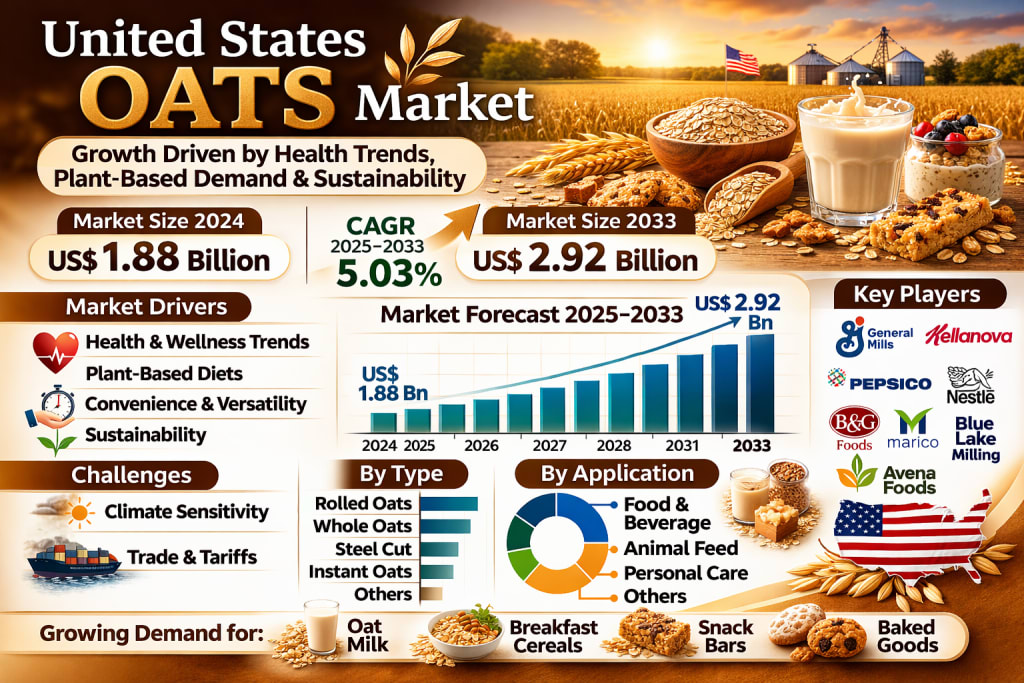
The United States oats market is steadily carving out a stronger position within the country’s broader food and agriculture landscape. According to Renub Research, the United States Oats Market is expected to reach US$ 2.92 billion by 2033, growing from US$ 1.88 billion in 2024, at a compound annual growth rate (CAGR) of 5.03% from 2025 to 2033. This growth reflects a deeper shift in American eating habits—one driven by health consciousness, the rise of plant-based diets, and a growing preference for convenient yet nutritious food options.
Once viewed mainly as a breakfast staple, oats have evolved into a versatile ingredient used across cereals, snacks, beverages, baked goods, and even personal care products. Their reputation as a heart-healthy, fiber-rich grain has made them a favorite among consumers seeking functional foods that support long-term wellness. At the same time, the food industry’s push toward sustainable and environmentally friendly ingredients has further boosted oats’ appeal, since oat cultivation generally requires fewer resources compared to some alternative crops.
In today’s market, oats are no longer just about a warm bowl of oatmeal in the morning. They are part of a broader lifestyle trend—one that blends nutrition, convenience, sustainability, and innovation. From oat milk in coffee shops to protein-enriched cereals and on-the-go snack bars, oats have become deeply embedded in modern American diets.
United States Oats Industry Overview
Globally, oats are a widely cultivated cereal grain belonging to the species Avena sativa. They are primarily grown for their edible seeds and are valued for their impressive nutritional profile. Oats are rich in protein, dietary fiber, vitamins, and essential minerals, and they are particularly well known for their beta-glucan content, a soluble fiber linked to improved heart health and better cholesterol management.
In the United States, oats are commonly consumed as oatmeal, a classic breakfast food prepared by boiling or soaking oats in milk or water. Beyond this traditional use, oats are widely incorporated into baked goods such as bread, cookies, granola bars, and muffins. Supermarkets offer a wide variety of oat-based products, including rolled oats, steel-cut oats, oat bran, and oat flour, catering to different cooking preferences and nutritional needs.
Oats are also recognized for their antioxidant properties and their role in supporting digestion and weight management. As awareness of these benefits continues to grow, oats are increasingly seen not just as a basic grain, but as a functional food ingredient with wide-ranging applications.
The U.S. oats market is benefiting from a broader consumer shift toward health and wellness. High in fiber and naturally nutritious, oats align well with the demand for foods that support heart health, digestive health, and overall well-being. The expansion of plant-based and vegan lifestyles—particularly among consumers who are lactose intolerant or environmentally conscious—has further increased demand for oat-based products such as oat milk. Additionally, the versatility of oats across meals, from breakfast to snacks and beverages, matches the modern consumer’s need for convenient, healthy options. Sustainability also plays a key role, as oats generally require fewer resources to grow, making them attractive to eco-conscious consumers.
Market Size and Growth Outlook
Renub Research projects a strong growth trajectory for the United States oats market over the next decade. From a market value of US$ 1.88 billion in 2024, the industry is forecast to reach US$ 2.92 billion by 2033, expanding at a CAGR of 5.03% during 2025–2033.
This growth is being fueled by several interconnected factors. Rising health awareness is encouraging consumers to choose foods with clear nutritional benefits. At the same time, the rapid expansion of plant-based alternatives, particularly in beverages and dairy substitutes, has created new demand streams for oats. Innovation in product development—such as protein-enriched cereals, flavored instant oats, and ready-to-drink oat beverages—is also helping manufacturers reach new consumer segments.
The steady pace of growth suggests that oats are moving beyond being a niche health food and are becoming a mainstream staple across multiple categories in the U.S. food and beverage market.
Key Growth Drivers
1. Rising Health and Wellness Trends
One of the most powerful drivers of the U.S. oats market is the growing focus on health and wellness. Consumers today are more informed about nutrition than ever before, and oats have earned a strong reputation as a heart-healthy, fiber-rich food. The beta-glucan found in oats is widely known for helping reduce cholesterol levels and supporting cardiovascular health, making oats a popular choice among health-conscious individuals.
In addition to heart health, oats are also associated with better digestion and weight management. Their high fiber content promotes a feeling of fullness, which can help with appetite control. Oats also act as a natural prebiotic, supporting the growth of beneficial gut bacteria and improving overall gut health.
As a result, oat-based products such as oatmeal, granola, energy bars, and oat milk are increasingly being included in daily diets. The growing interest in preventive healthcare and functional foods is likely to keep oats at the center of many consumers’ food choices in the years ahead.
2. Convenience and Versatility
Modern lifestyles are busier than ever, and convenience has become a critical factor in food choices. Oats fit perfectly into this trend due to their versatility and ease of preparation. They can be transformed into a wide range of quick and ready-to-eat products, including instant oatmeal cups, breakfast bars, and on-the-go meal replacements.
Major brands have capitalized on this demand by introducing innovative flavors and formats. For example, products that combine the familiarity of popular cereal flavors with the nutritional benefits of oats have helped attract younger consumers and families. This ability to blend convenience with health and taste has made oats a staple ingredient in many households.
Beyond breakfast, oats are increasingly used in savory dishes, baked goods, and snacks, further expanding their role in everyday cooking. Their adaptability across multiple meal occasions continues to strengthen their market position.
3. Plant-Based Diet Adoption
The shift toward plant-based eating is another major factor shaping the U.S. oats market. Oat-based products, especially oat milk, have seen rapid growth as consumers look for dairy alternatives that are both nutritious and environmentally friendly. Oat milk is valued for its smooth texture and neutral flavor, making it a popular choice in coffee, smoothies, and cooking.
From an environmental perspective, oat milk generally requires less water to produce than almond milk and generates fewer emissions than traditional dairy milk. This makes it an appealing option for consumers who are concerned about sustainability and climate impact.
Oats are also naturally lactose-free, soy-free, and nut-free, which makes them suitable for people with various dietary restrictions and allergies. With the rise of veganism, flexitarian diets, and lactose intolerance awareness, oats have become a key ingredient in the plant-based food movement across the United States.
Challenges Facing the Market
1. Climate Sensitivity
Despite its positive outlook, the U.S. oats market faces significant challenges, particularly related to climate sensitivity. Oats require specific temperature ranges and adequate rainfall for optimal growth. Increasing climate variability—such as droughts, excessive rainfall, and unseasonal temperature changes—can negatively affect crop yields and quality.
As climate change continues to influence weather patterns, farmers may face greater difficulty in maintaining consistent production levels. Crop losses due to unfavorable weather can lead to supply shortages and price volatility, impacting both producers and consumers. This climate-related uncertainty poses a long-term risk to the stability and scalability of oat farming in the United States.
2. Trade and Tariffs
The United States relies significantly on imported oats, particularly from Canada, which makes trade policies an important factor in market stability. Changes in trade agreements, tariffs, or export restrictions can disrupt supply chains and increase costs for manufacturers.
Such disruptions often translate into higher prices for oat-based products, affecting consumer demand and profit margins. Since domestic production alone may not always be sufficient to meet growing demand, the market remains vulnerable to global trade tensions. This highlights the importance of diversified sourcing strategies and stable trade relationships to ensure consistent supply and pricing.
Recent Developments in the U.S. Oats Industry
The oats industry in the United States has seen several notable developments that reflect both innovation and growing consumer engagement.
In November 2023, NFL legend Eli Manning and celebrity chef Carla Hall partnered with Quaker, the NFL’s official oatmeal sponsor, to promote healthier eating habits among children. The initiative, known as the Quaker Pregrain Tour, includes a digital Quaker Playbook featuring 32 team-inspired recipes and a tailgate truck visiting select NFL stadiums. Quaker, a division of PepsiCo, continues to expand its portfolio with products such as Quaker Chewy Granola Bars and Quaker Oats, while collaborating with organizations like GENYOUth to support youth health and wellness.
In June 2023, SunOpta and Seven Sundays introduced a new cereal made using repurposed oat protein powder. The product uses SunOpta’s OatGold, a byproduct of oat milk production, to create a cereal marketed as Oat Protein Cereal. This initiative aims to reduce food waste while offering a sustainable, high-protein option to consumers. The cereal is Non-GMO Project Verified, gluten-free, and available in four flavors through the Seven Sundays website and major U.S. retailers. This collaboration highlights how sustainability and innovation are becoming central themes in the oats industry.
Market Segmentation
By Type
Rolled Oats
Whole Oats
Steel Cut
Instant Oats
Others
By Application
Animal Feed
Food & Beverage
Personal Care & Cosmetics
Others
The food and beverage segment remains the dominant application area, driven by strong demand for breakfast cereals, snacks, and plant-based beverages. However, the use of oats in personal care and cosmetics—thanks to their soothing and moisturizing properties—is also gaining attention.
Company Analysis
All companies in the market have been analyzed from four key viewpoints:
Company Overview
Key Persons
Recent Developments & Strategies
Sales Analysis
Key Players
General Mills
B&G Foods Inc
Kellanova
Marico Ltd
PepsiCo Inc
Nestlé SA
Blue Lake Milling
Avena Foods
These companies are focusing on product innovation, brand partnerships, sustainability initiatives, and expanding distribution channels to strengthen their market positions.
Final Thoughts
The United States oats market is on a clear upward trajectory, supported by strong fundamentals and evolving consumer preferences. With the market projected to grow from US$ 1.88 billion in 2024 to US$ 2.92 billion by 2033 at a CAGR of 5.03%, oats are firmly positioned as more than just a traditional breakfast grain.
Health and wellness trends, the rise of plant-based diets, and the demand for convenient, sustainable food options are reshaping how Americans consume oats. While challenges such as climate sensitivity and trade uncertainties remain, ongoing innovation and strategic partnerships within the industry are helping to build resilience and unlock new growth opportunities.
As oats continue to expand into new product categories and applications, they are likely to remain a key ingredient in the future of the U.S. food and beverage market—combining nutrition, versatility, and sustainability in a way that resonates strongly with modern consumers.
About the Creator
Mexico Liposuction Surgery Devices Market Size and Forecast 2025–2033
Mexico Liposuction Surgery Devices Market Outlook The Mexico Liposuction Surgery Devices Market is entering a decisive growth phase, driven by a powerful mix of aesthetic awareness, technological innovation, and the country’s rising reputation as a global medical tourism hub. According to Renub Research, the market is expected to reach US$ 87.7 million by 2033, up from US$ 36.86 million in 2024, registering a robust compound annual growth rate (CAGR) of 10.11% from 2025 to 2033. This strong expansion reflects not only increasing procedure volumes but also the rapid adoption of advanced, minimally invasive liposuction technologies across Mexico’s healthcare landscape.
By shibansh kumarabout 12 hours ago in Trader
Understanding Stock Buybacks: What Investors Need to Know
Introduction Stock buybacks, also known as share repurchases, occur when a company buys back its own shares from the open market. Buybacks are a common way for companies to return value to shareholders, improve financial metrics, and signal confidence in their business.
By Hammad Nawaz5 days ago in Trader




Comments
There are no comments for this story
Be the first to respond and start the conversation.