
Australia Vegan Food Market Size and Forecast 2025–2033
From Niche to Mainstream: How Plant-Based Eating Is Reshaping Australia’s Food Industry

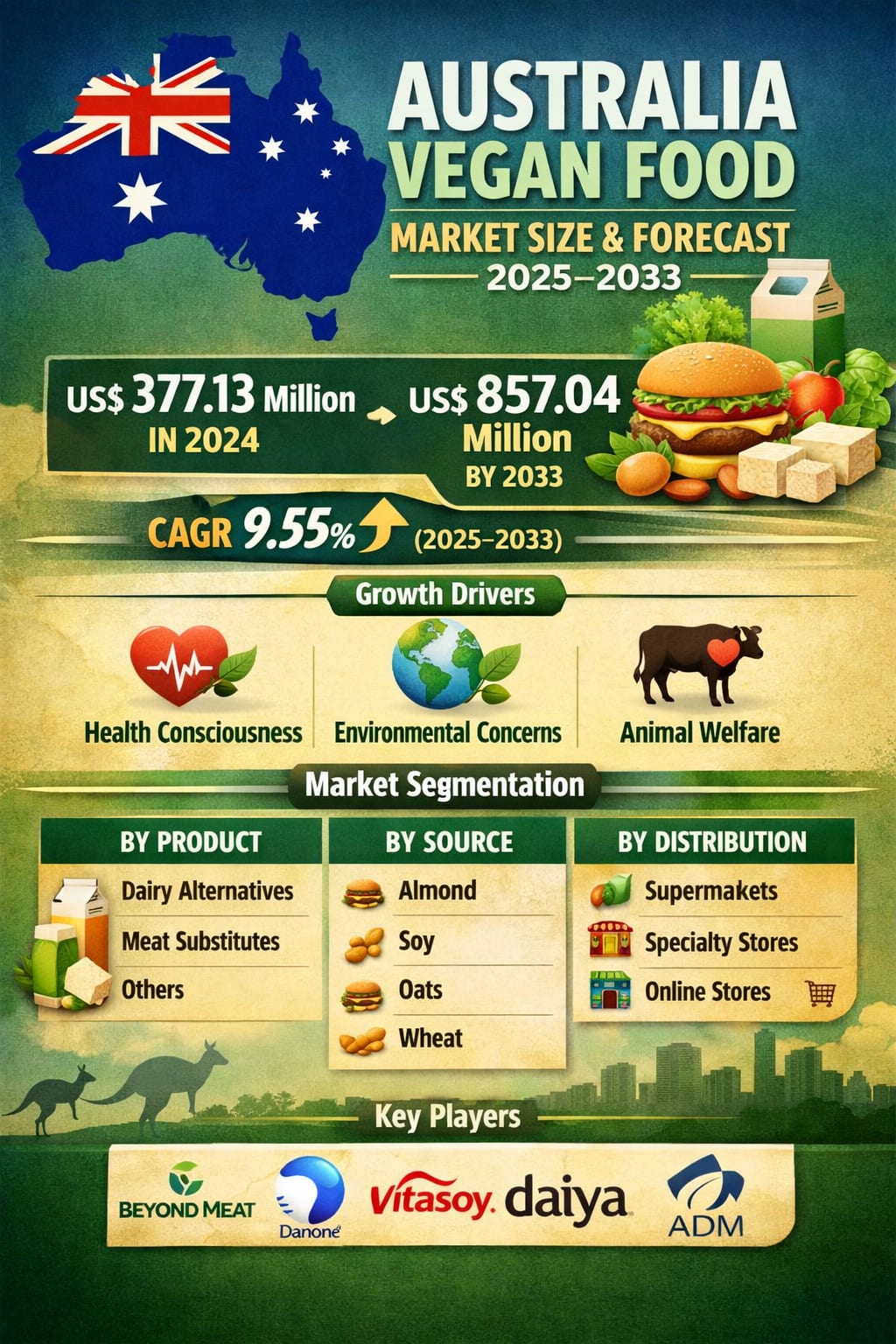
Australia Vegan Food Market Overview
The Australia Vegan Food Market is entering a powerful growth phase as plant-based eating shifts from a lifestyle niche to a mainstream consumer movement. According to Renub Research, the market is expected to reach US$ 857.04 million by 2033, rising from US$ 377.13 million in 2024, and expanding at a CAGR of 9.55% from 2025 to 2033.
This strong growth trajectory reflects deep changes in how Australians think about food, health, sustainability, and ethics. Vegan food, which excludes all animal-derived ingredients such as meat, dairy, eggs, and honey, is built entirely from plant-based sources including fruits, vegetables, grains, legumes, nuts, and seeds. Beyond being a dietary choice, veganism is increasingly viewed as a lifestyle that aligns with wellness goals, environmental responsibility, and animal welfare concerns.
Today’s plant-based food landscape in Australia is far more diverse than it was a decade ago. From almond and oat milk to realistic meat substitutes, dairy-free cheeses, vegan ice creams, and ready-to-eat meals, consumers now have access to a wide range of alternatives that match the taste, texture, and convenience of traditional foods. This expanding product ecosystem is helping plant-based food move from specialty shelves into everyday grocery baskets.
Why the Australian Vegan Food Industry Is Growing So Fast
Australia’s vegan food industry is being shaped by a powerful mix of social, cultural, and economic forces. The rise of health-conscious consumers, increasing awareness of climate change, ethical concerns about animal welfare, and the rapid expansion of retail and online distribution channels are all working together to push the market forward.
Millennials and Generation Z shoppers are playing a particularly important role. These younger consumers are more open to experimenting with new food formats, more concerned about sustainability, and more likely to align their purchasing decisions with personal values. At the same time, older consumers are also embracing plant-based products, especially those looking to manage cholesterol, weight, and lifestyle-related health risks.
Supermarkets, quick-service restaurants, and foodservice providers are responding quickly to this demand. Plant-based menus, vegan product lines, and private-label alternatives are becoming standard features rather than exceptions. Combined with ongoing product innovation and better branding, these trends are turning vegan food into a major growth engine within Australia’s broader food and beverage sector.
Key Growth Drivers of the Australia Vegan Food Market
1. Rising Health Consciousness
Health awareness is one of the strongest forces behind the growth of vegan food in Australia. A growing number of Australians are actively reducing their meat consumption, driven by concerns about heart disease, diabetes, obesity, and certain types of cancer. Plant-based diets, which are typically high in fiber, vitamins, minerals, and antioxidants, are increasingly seen as a practical way to support long-term health.
The rise of flexitarianism—where people eat mostly plant-based meals but occasionally consume meat—has also boosted demand for vegan alternatives. This group does not necessarily identify as vegan, but they regularly purchase plant-based products for health and wellness reasons. As a result, meat substitutes and dairy alternatives have moved well beyond niche health stores and into mainstream supermarkets.
Food manufacturers are responding by launching products that are not only vegan but also high in protein, low in sugar, and fortified with essential nutrients. This focus on “better-for-you” positioning is helping plant-based foods compete directly with traditional animal-based products in everyday diets.
2. Environmental Awareness and Sustainability
Environmental concerns are another major driver shaping the Australian vegan food market. The environmental impact of animal agriculture—especially greenhouse gas emissions, land use, deforestation, and water consumption—has become a widely discussed issue. Many consumers now see plant-based eating as a practical way to reduce their personal carbon footprint.
Plant-based foods generally require fewer natural resources to produce and generate lower emissions compared to meat and dairy. This has made vegan products particularly attractive to environmentally conscious consumers, especially younger generations who are more likely to consider sustainability when making purchasing decisions.
Brands and foodservice chains are increasingly highlighting the environmental benefits of their plant-based offerings, using sustainability as a core part of their marketing strategy. This not only helps attract eco-conscious buyers but also strengthens brand identity in a competitive market, further accelerating adoption.
3. Growing Focus on Animal Welfare
Ethical concerns around animal welfare are playing a significant role in Australia’s shift toward vegan food. Media coverage and investigations exposing cruelty in parts of the meat and dairy supply chain have increased public awareness and triggered strong emotional responses among consumers.
For many Australians, choosing plant-based alternatives is no longer just about health or the environment—it is also about aligning food choices with personal values. This ethical dimension has helped turn veganism into a broader social movement rather than just a dietary trend.
As more consumers seek cruelty-free options, demand for vegan-certified products continues to rise. This has encouraged both global and local brands to expand their plant-based portfolios, further strengthening the overall market.
Challenges Facing the Australia Vegan Food Market
1. High Cost of Plant-Based Products
Despite strong growth, price remains a key barrier to wider adoption. Many vegan products are still more expensive than their animal-based counterparts due to higher production costs, specialized ingredients, smaller-scale manufacturing, and in some cases, reliance on imported raw materials.
For budget-conscious consumers, this price gap can limit regular purchases and slow down mass-market penetration. The perception that vegan food is “premium” or “expensive” also discourages first-time buyers from experimenting with plant-based alternatives.
Over time, improvements in local manufacturing, supply chain efficiency, and economies of scale are expected to help bring prices down. Increased competition among brands should also play a role in making vegan products more affordable and accessible to a broader audience.
2. Taste and Texture Expectations
While product quality has improved significantly, taste and texture remain important challenges—especially for consumers transitioning from meat and dairy. Many buyers expect plant-based alternatives to closely replicate the sensory experience of traditional foods.
If products fail to meet these expectations, repeat purchases can suffer. This puts constant pressure on manufacturers to invest in food technology, ingredient innovation, and product reformulation. The good news is that advances in food science are rapidly closing this gap, and each new generation of products is getting closer to consumer expectations.
Recent Developments in the Australia Vegan Food Industry
The Australian vegan food sector has seen several notable developments that highlight both growing investment and increasing mainstream acceptance.
November 2024: Harvest B established Australia’s first plant-based meat ingredient production facility in Penrith, New South Wales. The facility focuses on clean-label, shelf-stable protein ingredients for food companies, supporting domestic manufacturing and reducing dependence on imported plant-based proteins.
September 2024: Australian brand vEEF launched a range of carbon-neutral plant-based meat products, including beef mince and sausages, at Woolworths. The range is priced competitively with animal meat, uses less plastic packaging, and targets households seeking affordable, sustainable, and healthier food options.
These developments signal a clear shift toward local production, better pricing strategies, and stronger sustainability positioning within the market.
Australia Vegan Food Market Segmentation
The Australia vegan food market is segmented by product type, source, and distribution channel, reflecting the diversity of consumer preferences and purchasing habits.
By Product:
Dairy Alternatives
Meat Substitutes
Others
Dairy alternatives and meat substitutes currently dominate the market, driven by high consumer demand for milk, cheese, burgers, sausages, and ready-to-cook meals that replicate familiar foods in plant-based form.
By Source:
Almond
Soy
Oats
Wheat
Others
Oats and almonds are gaining strong traction, particularly in the plant-based milk segment, while soy and wheat remain important for protein-rich meat substitutes and processed foods.
By Distribution Channel:
Supermarkets and Hypermarkets
Convenience Stores
Specialty Stores
Online Stores
Others
Supermarkets and hypermarkets lead in terms of volume sales, but online stores and specialty shops are growing quickly, especially among younger, urban consumers who value convenience and product variety.
Competitive Landscape and Key Players
The Australian vegan food market features a mix of global giants and regional specialists, all competing to capture a share of this fast-growing sector. Companies are focusing on product innovation, brand partnerships, improved distribution, and pricing strategies to strengthen their positions.
Key players include:
Beyond Meat Inc.
Danone S.A.
The Archer Daniels Midland Company
Tofutti Brands Inc.
Vitasoy Australia Products Pty Ltd.
SunOpta
Daiya Foods, Inc.
These companies are analyzed across four key dimensions:
Company Overview
Key Persons
Recent Developments & Strategies
Sales Analysis
Competition is intensifying, but it is also accelerating innovation and helping expand consumer awareness and acceptance of plant-based foods across Australia.
Market Outlook: What Lies Ahead
Looking ahead, the outlook for the Australia vegan food market remains highly positive. With a projected value of US$ 857.04 million by 2033 and a CAGR of 9.55%, the sector is set to remain one of the most dynamic segments of the country’s food and beverage industry.
Continued growth will be supported by:
Ongoing health and wellness trends
Strong sustainability and ethical consumer movements
Expanding product ranges and better taste profiles
Wider retail availability and stronger online channels
Increased local manufacturing and supply chain maturity
As vegan food becomes more affordable, accessible, and familiar, it is likely to move even deeper into everyday Australian diets.
Final Thoughts
The rise of the vegan food market in Australia is more than just a passing trend—it reflects a fundamental shift in how people think about food, health, ethics, and the environment. What was once a niche category is now a fast-growing, innovation-driven industry with strong commercial potential.
Backed by solid growth forecasts from Renub Research, and powered by changing consumer values, the Australian vegan food market is on track to become a core pillar of the country’s modern food economy. For brands, investors, and retailers alike, plant-based food is no longer just an alternative—it is a central part of the future of food in Australia.
About the Creator
Rail Composites Market – Overview, Growth Trends, Market Drivers & Future Outlook
Overview Rail Composites Market Rail composites are engineered materials used in a wide range of rail applications—from interior components (seating, panels) and exterior body parts to structural elements within rolling stock and infrastructure. Their high strength-to-weight ratio, durability, and design flexibility enhance operational efficiency, passenger safety, and lifecycle performance compared with conventional materials. Rail operators and manufacturers are increasingly adopting composites to meet stringent safety standards, reduce energy consumption, and align with global sustainability initiatives.
By James Smitha day ago in Trader
The Cave Part 6
If you have ever heard a tale about yourself that you cannot remember and doubtless think is made up, you will know how I felt when Tharkin related all that the eagle had seen of me before my memories were scattered. Of far distances and traveling companions that I did not recall, camping out under the stars and making our way to the mountains with deliberate purpose. The great bird had lost contact with my party once we entered the forests, and the seven other members were not seen again by him or his brethren since.
By Jamye Sharp5 days ago in Chapters




Comments
There are no comments for this story
Be the first to respond and start the conversation.