
United States Luxury Handbag Market Size and Forecast 2025
From Status Symbol to Smart Investment: How the U.S. Luxury Handbag Market Is Redefining Premium Fashion

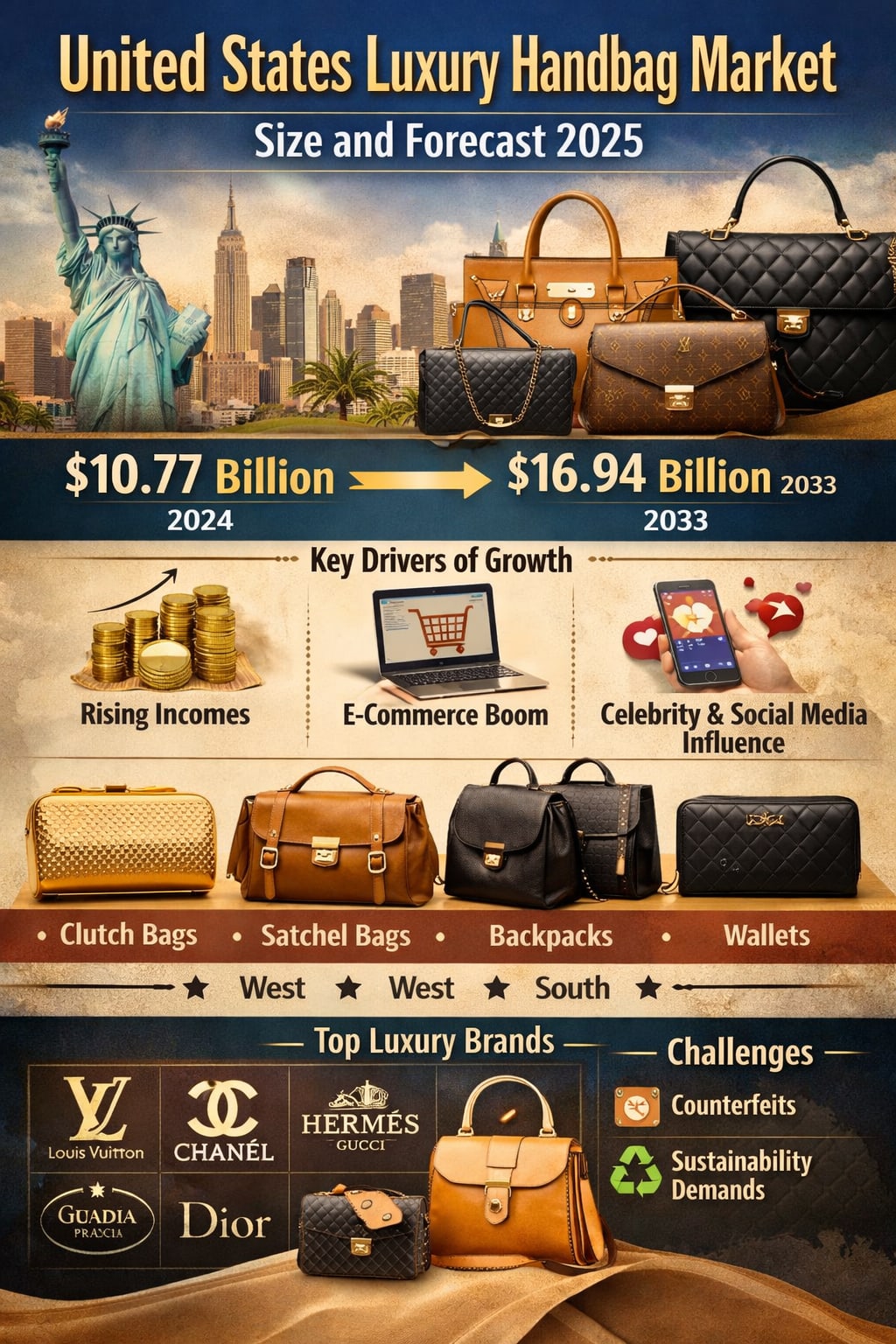
United States Luxury Handbag Market Overview
The United States luxury handbag market stood at US$ 10.77 billion in 2024 and is anticipated to grow to US$ 16.94 billion by 2033, expanding at a compound annual growth rate (CAGR) of 5.17% from 2025 to 2033. This steady rise reflects more than just a love for fashion—it highlights a deeper shift in how American consumers perceive luxury accessories: not only as style statements, but also as lifestyle markers and, in many cases, long-term investments.
A luxury handbag is an upscale, designer-made accessory crafted using premium materials such as fine leather, exotic skins, and high-quality fabrics. These products are typically associated with iconic global brands like Louis Vuitton, Chanel, Gucci, Hermès, Prada, and Dior. What separates luxury handbags from mass-market alternatives is their craftsmanship, limited availability, heritage value, and brand prestige. For many consumers, owning such a bag is not simply about utility—it is about identity, aspiration, and social signaling.
In the United States, demand for luxury handbags has accelerated due to rising disposable incomes, the influence of social media, and a growing base of brand-conscious consumers. An increasing number of buyers now view certain handbags as collectible assets, with some models appreciating in value over time. At the same time, the pre-owned and resale luxury handbag market has expanded rapidly, making premium brands accessible to a wider audience while reinforcing the idea of handbags as investment pieces.
Celebrities, influencers, and fashion trendsetters continue to shape consumer preferences, especially for limited-edition and exclusive designs. Combined with a rising focus on sustainability and artisanal craftsmanship, these factors are helping the U.S. luxury handbag market remain one of the most dynamic segments within the broader fashion and accessories industry.
Growth Drivers in the United States Luxury Handbag Market
Rising Disposable Income and Premium Spending
One of the strongest forces behind the growth of the U.S. luxury handbag market is the steady increase in disposable income among American consumers. As purchasing power rises, more consumers are willing to spend on high-end fashion accessories that offer both prestige and long-term value. Established luxury brands benefit from strong loyalty, with customers often returning for repeat purchases and seasonal collections.
In addition to affluent buyers, the aspirational middle class is also contributing to market expansion. For many, purchasing a luxury handbag represents a milestone purchase or a symbol of personal success. This broadening consumer base has helped sustain demand even during periods of economic uncertainty. With disposable personal income in the United States reaching record levels in recent years, premium fashion spending continues to find a solid foundation.
Growth of Online Luxury Retail and E-Commerce
Digital transformation has reshaped how luxury handbags are marketed and sold. Leading brands and multi-brand platforms now offer exclusive online collections, virtual showrooms, and personalized shopping experiences powered by data and AI-driven recommendations. Platforms such as Net-a-Porter, Farfetch, Saks Fifth Avenue, and brand-owned websites have made luxury more accessible without compromising on brand image.
The rise of the luxury resale market, supported by platforms like The RealReal and Vestiaire Collective, has also played a key role in expanding overall demand. These platforms allow consumers to buy and sell authenticated pre-owned luxury handbags, extending product life cycles and supporting sustainability trends. Together, convenience, trust, and wider product access have accelerated the shift toward digital luxury shopping in the U.S.
Influence of Celebrity Culture and Social Media
Few industries are as influenced by celebrity culture as luxury fashion. In the handbag segment, celebrity endorsements, influencer marketing, and social media visibility have become critical demand drivers. When high-profile figures showcase designer bags on Instagram, TikTok, or red carpets, it quickly translates into aspirational demand among millions of followers.
Limited-edition collaborations and capsule collections promoted by celebrities often sell out within days, reinforcing the power of digital hype. Fashion weeks, award shows, and high-visibility events continue to act as global showcases for new designs, ensuring that luxury handbags remain at the center of popular culture and consumer attention.
Challenges in the United States Luxury Handbag Industry
Counterfeiting and Market Saturation
Despite strong growth prospects, the market faces persistent challenges from counterfeit products. High-quality replicas flood online marketplaces and unauthorized sellers, threatening brand reputation and consumer trust. Luxury brands are increasingly investing in authentication technologies, blockchain tracking, and tighter supply chain controls to protect their intellectual property and maintain exclusivity.
Market saturation is another concern. With many brands competing for attention, maintaining differentiation and prestige has become more complex. Too many product launches or overly aggressive distribution strategies can dilute brand value, forcing companies to strike a careful balance between growth and exclusivity.
Shifting Consumer Preferences Toward Sustainability
Modern consumers are more environmentally and ethically conscious than ever before. This shift presents a challenge for traditional luxury brands that rely heavily on exotic leathers and resource-intensive production methods. Demand is rising for vegan leather, recycled materials, and transparent sourcing practices.
Brands that fail to adapt risk losing relevance, especially among younger buyers. In response, many luxury houses are now investing in sustainable materials, ethical sourcing, and circular fashion models, aiming to align premium quality with responsible production.
Key Product and Type Segments
United States Luxury Clutch Handbag Market
Luxury clutch handbags remain a staple for formal events, red carpet appearances, and high-end social occasions. Known for their sleek design and refined detailing, clutches from brands such as Dior, Bottega Veneta, and Prada continue to attract strong demand. Their role as statement accessories ensures that this segment remains both fashionable and profitable.
United States Luxury Satchel Handbag Market
Satchel handbags combine functionality with elegance, making them especially popular among working professionals. With structured designs and practical storage, brands like Michael Kors, Saint Laurent, and Coach have built strong followings in this segment. The ability of satchels to transition from work to social settings supports steady growth.
United States Luxury Backpack Handbag Market
Luxury backpacks have gained popularity among consumers seeking hands-free convenience without sacrificing style. High-end brands such as Chanel, Louis Vuitton, and Fendi have successfully reimagined backpacks as premium fashion items. Urban lifestyles, travel trends, and casual luxury fashion have all contributed to rising demand in this segment.
United States Luxury Wallet Handbag Market
Luxury wallet handbags, often used as wristlets or crossbody accessories, appeal to minimalist consumers who prefer compact yet stylish options. Products from Gucci, Prada, and Balenciaga serve both functional and symbolic roles, offering a subtle but powerful luxury statement.
Distribution Channel Insights
Online Stores
E-commerce has become one of the most influential sales channels for luxury handbags in the U.S. Consumers now expect secure payments, easy returns, authenticity guarantees, and personalized services when shopping online. This shift has encouraged both established brands and department stores to invest heavily in digital platforms.
Hypermarkets and Specialty Stores
Upscale department stores and specialty retailers such as Nordstrom, Neiman Marcus, and Bloomingdale’s continue to play a vital role by offering curated collections and premium in-store experiences. Personalized service, exclusive launches, and brand partnerships help these channels maintain strong relevance among high-net-worth shoppers.
Regional Market Landscape
East United States Luxury Handbag Market
The Eastern U.S., led by fashion hubs like New York City, Boston, and Washington, D.C., represents a mature and influential market. Flagship stores, luxury shopping districts, and a thriving resale culture support consistent demand for both new and vintage luxury handbags.
West United States Luxury Handbag Market
The Western U.S., particularly Los Angeles, San Francisco, and Las Vegas, is shaped by celebrity culture, tourism, and strong sustainability trends. California’s environmentally conscious consumers are pushing brands to innovate with greener materials, while tourism continues to boost high-end accessory sales.
Market Segmentation Overview
By Product:
Tote Bag
Clutch
Satchel
Others
By Type:
Handbag
Backpack
Wallet
Others
By Distribution Channel:
Duty-Free Stores
Online Stores
Discount Stores
Hypermarket
Specialty Stores
By Region:
East
West
North
South
Company Analysis (Covered from Four Viewpoints: Overview, Key Persons, Recent Development, Revenue)
Louis Vuitton
Hermès
Chanel
Gucci
Prada
Dior
Fendi
Burberry
Michael Kors
Tory Burch
Final Thoughts
The United States luxury handbag market is on a strong growth path, supported by rising incomes, digital retail expansion, and the enduring power of brand prestige. From iconic clutches and practical satchels to stylish backpacks and minimalist wallet bags, the market continues to diversify in both form and function.
At the same time, brands must navigate challenges such as counterfeiting, market saturation, and the growing demand for sustainability. Those that successfully blend heritage craftsmanship, modern design, digital innovation, and responsible practices will be best positioned to thrive in this competitive landscape.
With the market expected to rise from US$ 10.77 billion in 2024 to US$ 16.94 billion by 2033, luxury handbags in the U.S. are no longer just fashion accessories—they are cultural symbols, investment pieces, and powerful reflections of evolving consumer values.
About the Creator
Keep reading
More stories from shibansh kumar and writers in Trader and other communities.
United States Motorcycle Market Size and Forecast 2025
United States Motorcycle Market Overview The United States motorcycle market continues to hold a unique position within the broader automotive and mobility landscape, blending lifestyle, performance, and practical transportation into one dynamic industry. In 2024, the U.S. motorcycle market stood at US$ 9.85 billion and is projected to expand to US$ 14.64 billion by 2033, growing at a compound annual growth rate (CAGR) of 4.51% from 2025 to 2033. This steady growth reflects a combination of shifting consumer preferences, technological innovation, and the rising appeal of motorcycles as both recreational machines and efficient mobility solutions.
By shibansh kumarabout 23 hours ago in Trader
SBI Share Price Jumps 5.5% to Record High After Strong Q3 Results
State Bank of India (SBI) shares surged sharply after the country’s largest public sector lender reported robust Q3 financial results, pushing the stock to a fresh record high. The rally reflects strong investor confidence in SBI’s improving fundamentals, consistent profit growth, and better asset quality. As the broader Indian banking sector continues to show resilience, SBI has once again positioned itself as a standout performer.
By Hammad Nawazabout 3 hours ago in Trader

Comments
There are no comments for this story
Be the first to respond and start the conversation.