
United States Frozen Food Market Trends & Summary 2025
How Convenience, Health Innovation, and E-Commerce Are Reshaping America’s Freezer Aisles

A Market on Ice — But Heating Up Fast
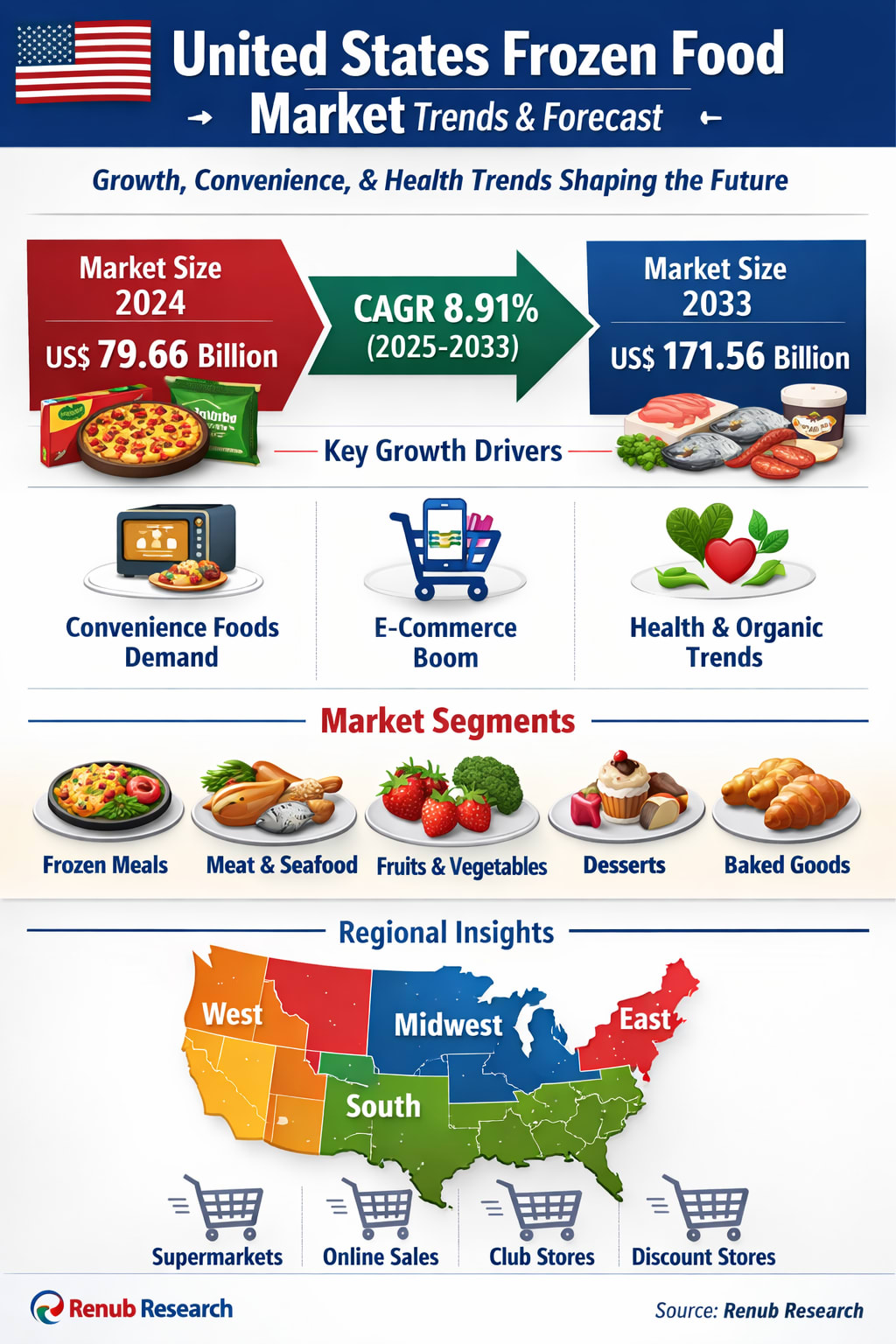
The United States Frozen Food Market is undergoing a powerful transformation, evolving far beyond its traditional role as a backup pantry solution. According to Renub Research, the market was valued at US$ 79.66 billion in 2024 and is projected to grow at a CAGR of 8.91% from 2025 to 2033, reaching an impressive US$ 171.56 billion by 2033.
This growth is being fueled by a perfect storm of modern consumer needs: rising demand for convenient ready-to-eat meals, growing usage of frozen fruits and vegetables, rapid advances in freezing and cold-chain technology, and the explosive rise of online grocery and e-commerce food delivery.
Once associated mainly with TV dinners and basic vegetables, frozen food today represents one of the most dynamic, innovative, and fast-growing segments of the U.S. food industry.
Understanding the Frozen Food Revolution
Frozen food refers to food products preserved at low temperatures to extend shelf life while maintaining nutritional value, texture, and flavor. This includes frozen vegetables, fruits, meat, seafood, ready-to-eat meals, desserts, snacks, and baked goods.
Modern technologies such as flash freezing and cryogenic freezing have significantly improved product quality. These methods lock in freshness and nutrients while preventing spoilage, helping frozen foods compete directly with fresh alternatives in terms of taste and health appeal.
In the United States, frozen foods have become a staple across households, restaurants, cafeterias, and fast-food chains. They also play a strategic role in food security and emergency preparedness, offering reliable, long-lasting meal solutions. With rising interest in organic, plant-based, and health-focused frozen options, the category continues to expand its reach and relevance.
Key Growth Drivers Shaping the Market
1. Rising Demand for Convenience Foods
American lifestyles are busier than ever. With more dual-income households, longer working hours, and urban living patterns, consumers are increasingly turning to quick, easy-to-prepare meals. Frozen foods fit perfectly into this routine, offering long shelf life, minimal preparation time, and reduced food waste.
Advancements in packaging and freezing technology have further improved quality, helping frozen products shed their outdated “inferior to fresh” reputation. A March 2025 consumer survey by the National Frozen & Refrigerated Foods Association (NFRA) highlights this shift:
83% of shoppers say frozen foods make meal planning easier
71% prefer ready-to-eat and quick-prep meal options
67% appreciate better ingredient organization for creative cooking
These insights confirm that frozen food is no longer just about convenience—it is now central to modern meal planning.
2. Expansion of E-Commerce and Online Grocery Shopping
The rapid rise of online grocery platforms and home delivery services has dramatically expanded access to frozen foods. Retail giants and digital platforms such as Walmart, Amazon Fresh, and Instacart continue to invest in cold-chain logistics and frozen food assortments.
By September 2024, over 138 million Americans were purchasing groceries online. Yet, only about 9.5% of U.S. supermarkets were actively selling online, highlighting massive untapped digital potential. As infrastructure improves and consumer trust in online food delivery grows, frozen food—thanks to its stability and shelf life—is becoming one of the strongest categories in e-commerce grocery.
3. Growing Shift Toward Health-Oriented and Organic Frozen Foods
Health-conscious consumers are reshaping the frozen food aisle. Demand is rising for organic, gluten-free, plant-based, low-sodium, and high-protein frozen products. Brands are responding with clean-label offerings, fewer preservatives, and sustainably sourced ingredients.
In September 2024, Amy’s Kitchen—widely known as the first organic frozen food company—expanded into frozen breakfast options, launching new burritos, wraps, and entrées aimed at busy, health-focused consumers. This reflects a broader industry trend: frozen food is no longer just convenient—it is increasingly nutritious, premium, and purpose-driven.
Challenges Facing the U.S. Frozen Food Market
Perception of Lower Nutritional Value
Despite technological progress, some consumers still perceive frozen foods as less healthy than fresh alternatives. Concerns around preservatives, artificial additives, and high sodium levels remain barriers to adoption in certain segments.
Overcoming this challenge requires continued consumer education and transparent labeling, especially around frozen fruits and vegetables, which often retain nutrients as well as—or better than—fresh produce stored for long periods.
Supply Chain and Cold Storage Constraints
Frozen food depends heavily on cold storage, refrigerated transport, and energy-intensive logistics. Rising fuel costs, labor shortages, and supply chain disruptions increase operational expenses and complexity. Smaller companies, in particular, face challenges scaling distribution across large geographic regions.
Ongoing investments in cold-chain infrastructure will be critical to sustaining long-term market growth.
Segment Highlights: Where Growth Is Happening
Frozen Breakfast Foods
This segment includes pancakes, waffles, breakfast sandwiches, and burritos. Demand is rising for high-protein, whole-grain, and low-sugar options. In March 2024, Mason Dixie Foods introduced single-serve breakfast sandwiches made with simple ingredients and no preservatives, reflecting consumer demand for both convenience and quality.
Frozen Seafood
Frozen seafood—such as shrimp, salmon, cod, and shellfish—benefits from longer shelf life, better price stability, and year-round availability. Growing awareness of omega-3 benefits and protein-rich diets is supporting demand. In February 2023, Red Lobster entered the retail space with frozen seafood products, bringing restaurant-style experiences into home kitchens.
Frozen Poultry
Products like nuggets, wings, and chicken breasts remain staples due to affordability, high protein content, and ease of preparation. Innovation is focused on pre-seasoned, air-fried, and premium-quality offerings. In June 2024, Hooters launched a frozen appetizer range in Publix stores, expanding its brand from restaurants into retail freezers.
Frozen Ice Cream and Desserts
The dessert segment is evolving rapidly with plant-based, dairy-free, keto, and low-calorie options gaining popularity. Brands are investing in unique flavors and premium ingredients to attract health-conscious and indulgence-seeking consumers alike.
Frozen Fruits and Vegetables
Frozen strawberries, broccoli, and prepared vegetables are increasingly popular for smoothies, cooking, and meal prep. Consumers value their year-round availability, reduced waste, and consistent quality. Demand for organic and non-GMO frozen produce is also growing, reinforcing the category’s health-focused repositioning.
Frozen Snacks and Baked Goods
Items like pizza rolls, dumplings, and mozzarella sticks remain popular among Gen Z and millennials. The trend toward air-fried, gluten-free, and better-for-you snacks is driving innovation in this high-volume category.
Distribution Channels: Where Consumers Buy
Hypermarkets & Supermarkets
Retail giants such as Walmart, Kroger, and Target remain the backbone of frozen food sales. Many are expanding freezer aisles and launching private-label frozen brands to compete with established manufacturers.
Online Channels
Online grocery and direct-to-consumer frozen food brands are growing rapidly. Consumers appreciate the convenience, wider selection, and subscription-based meal solutions, making digital platforms one of the fastest-growing channels in the market.
Regional Insights
East U.S.: Dense population, urban lifestyles, and strong online grocery adoption drive high frozen food consumption in cities like New York, Boston, and Washington, D.C.
North U.S.: Colder climates and seasonal stocking habits support strong demand, with rising interest in organic and plant-based frozen foods in states like Illinois, Michigan, and Minnesota.
West & South: These regions continue to see growth driven by lifestyle changes, expanding retail infrastructure, and increasing focus on health-oriented frozen products.
Competitive Landscape
Major companies shaping the U.S. frozen food market include:
Unilever PLC, Nestlé S.A., General Mills, Nomad Foods, Tyson Foods, Conagra Brands, Wawona Frozen Foods, Bellisio Parent, McCain Foods, and The Kraft Heinz Company.
These players compete across four key dimensions: product innovation, leadership strategy, recent developments, and revenue performance, with strong focus on health, convenience, and sustainability.
Final Thoughts: The Freezer Is the Future
The United States Frozen Food Market is no longer just a convenience-driven category—it is becoming a core pillar of modern food consumption. With a projected rise from US$ 79.66 billion in 2024 to US$ 171.56 billion by 2033, the sector reflects deep changes in how Americans shop, cook, and eat.
Driven by busy lifestyles, digital grocery adoption, health-focused innovation, and better technology, frozen food is transforming from a backup option into a first-choice solution for millions of households. For brands, retailers, and investors, the message is clear: the future of food isn’t just fresh—it’s smart, efficient, and increasingly… frozen.
About the Creator
Keep reading
More stories from shibansh kumar and writers in Trader and other communities.
United States Luxury Handbag Market Size and Forecast 2025
United States Luxury Handbag Market Overview The United States luxury handbag market stood at US$ 10.77 billion in 2024 and is anticipated to grow to US$ 16.94 billion by 2033, expanding at a compound annual growth rate (CAGR) of 5.17% from 2025 to 2033. This steady rise reflects more than just a love for fashion—it highlights a deeper shift in how American consumers perceive luxury accessories: not only as style statements, but also as lifestyle markers and, in many cases, long-term investments.
By shibansh kumarabout 21 hours ago in Trader
Buried for 33 Years: The Dream to Revive One of the Country’s Largest Gold Mines Suddenly Back on the Map
Gold has always held an undeniable allure. From ancient civilizations hoarding it in tombs to modern-day investors seeking refuge in its precious metal, gold remains a timeless symbol of wealth and power. Yet, sometimes, even the most promising gold mines can fade into obscurity due to unforeseen circumstances. One such mine, buried for 33 years, has suddenly reappeared on the map, sparking fresh hopes of revitalizing one of the country’s largest gold deposits. The question on everyone's mind: Can the dream of reviving this colossal gold mine become a reality?
By Ayesha Lashari6 days ago in Trader


Comments
There are no comments for this story
Be the first to respond and start the conversation.