
United States Alternative Protein Ingredients Market Trends & Summary (2025–2033)
How Plant-Based, Insect, and Microbial Proteins Are Reshaping the Future of Food in America

United States Alternative Protein Ingredients Market Overview
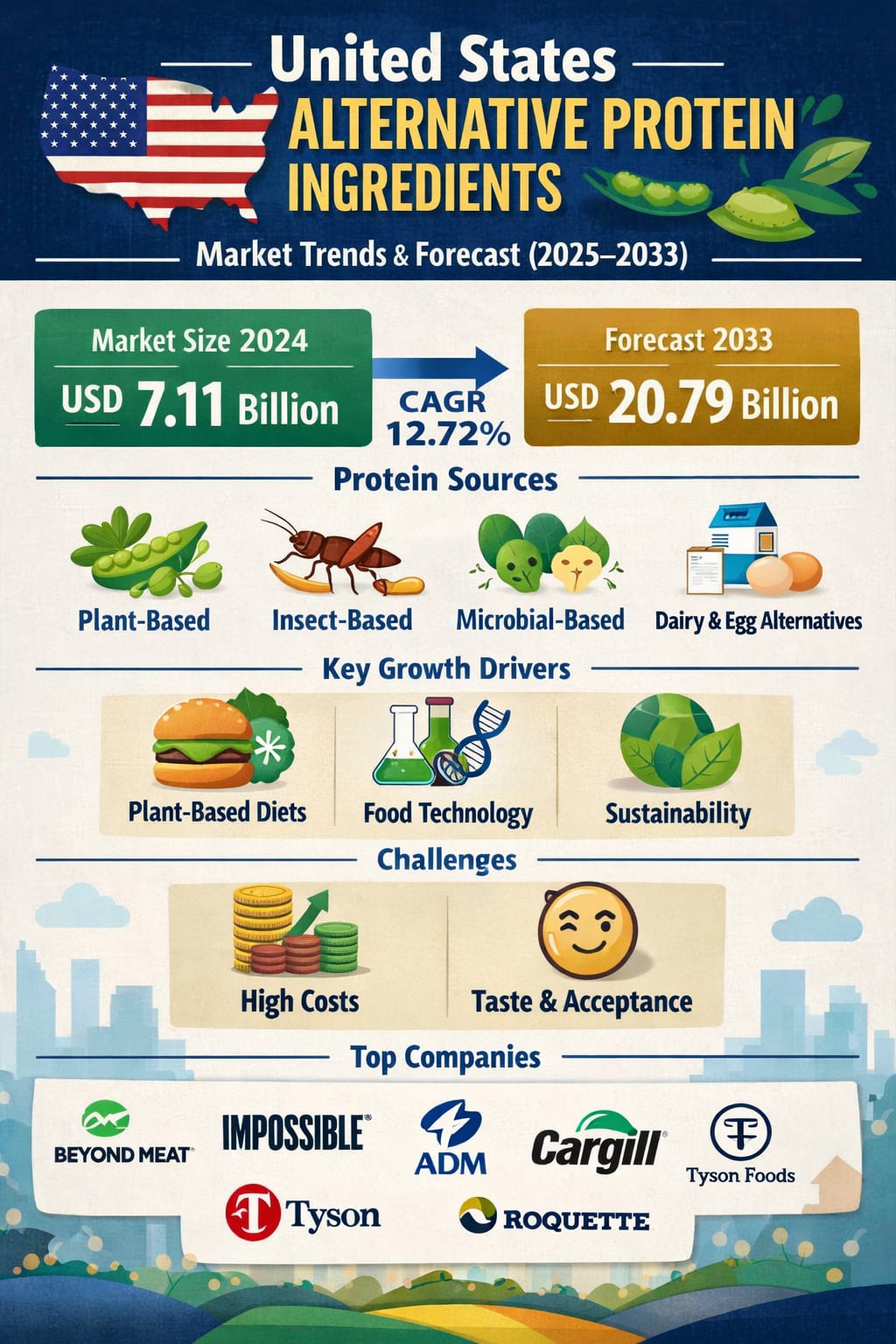
The United States Alternative Protein Ingredients Market is entering a decisive growth phase as consumers, food manufacturers, and policymakers rethink the future of protein consumption. According to Renub Research, the market is expected to expand substantially from USD 7.11 billion in 2024 to USD 20.79 billion by 2033, registering a strong compound annual growth rate (CAGR) of 12.72% between 2025 and 2033.
This impressive expansion is being fueled by a combination of factors: rising demand for plant-based and sustainable protein sources, rapid improvements in food and fermentation technology, growing health awareness, and continuous innovation in alternative protein products. What was once a niche category dominated by tofu and soy milk has now become a dynamic, multi-billion-dollar ecosystem spanning plant-based, insect-based, and microbial-based proteins.
Alternative protein ingredients refer to non-traditional protein sources derived from plants, insects, algae, fungi, bacteria, and precision fermentation processes. These ingredients are widely used in meat substitutes, dairy alternatives, protein supplements, functional foods, and even animal feed. Popular examples include soy, pea, lentil, chickpea, mycoprotein, algae protein, and precision-fermented dairy and egg proteins.
In the United States, the shift toward alternative proteins reflects deeper changes in consumer behavior. Health concerns, environmental awareness, and ethical considerations around animal welfare are reshaping food choices. Vegetarian, vegan, and flexitarian diets are no longer fringe lifestyles—they are now part of the mainstream. Major food companies, fast-food chains, and grocery retailers have responded by expanding their plant-based and alternative protein offerings, making these products more accessible than ever before.
Key Growth Drivers in the U.S. Alternative Protein Ingredients Market
Rising Consumer Demand for Plant-Based Diets
One of the most powerful drivers of market growth is the accelerating shift toward plant-based and flexitarian diets. American consumers are increasingly seeking foods that support heart health, weight management, and overall wellness while also aligning with sustainability and ethical values.
Plant-based meat alternatives, dairy-free milks, protein-enriched snacks, and ready-to-eat meals are now widely available across supermarkets, quick-service restaurants, and premium food outlets. This growing accessibility has helped normalize alternative proteins in everyday diets rather than positioning them as specialty products.
The movement is also supported by industry organizations and advocacy groups. For instance, in September 2022, the Plant Based Foods Association (PBFA) launched the Plant Based Foods Institute (PBFI), a non-profit organization aligned with PBFA’s mission to improve the food system. Such initiatives continue to strengthen the ecosystem around plant-based foods and ingredients.
Advancements in Food Technology and Innovation
Technology is playing a central role in transforming alternative proteins from “good enough” substitutes into highly competitive, high-quality products. Innovations in extrusion, fermentation, cellular agriculture, and precision fermentation have significantly improved the taste, texture, and nutritional profile of alternative protein ingredients.
Food technology companies are now able to create proteins that closely mimic the sensory experience of meat and dairy while offering cleaner labels and better sustainability credentials. Precision fermentation, in particular, is opening new doors by enabling the production of dairy and egg proteins without animals.
A notable example came in February 2024, when Califia Farms launched Califia Farms Complete, a plant-based milk made from chickpea, pea, and fava bean proteins, offering a strong amino acid profile with lower sugar than traditional dairy milk. Such innovations continue to raise consumer confidence and expand market potential.
Environmental and Sustainability Concerns
Environmental awareness is another major catalyst for growth. Conventional animal agriculture is associated with high greenhouse gas emissions, land use, deforestation, and water consumption. In contrast, alternative proteins—whether plant-based, insect-based, or microbial—generally require fewer natural resources and produce a lower carbon footprint.
Both consumers and corporations are increasingly factoring sustainability into their purchasing and sourcing decisions. Government initiatives are also beginning to support this transition. In July 2023, the PLANT Act was introduced in Congress to secure USDA support for plant-based diets, highlighting the potential for significant healthcare savings and climate benefits.
As sustainability becomes a core pillar of food system transformation, alternative protein ingredients are well positioned to benefit from long-term structural shifts in the U.S. market.
Challenges Facing the Market
High Production Costs and Price Sensitivity
Despite strong growth prospects, alternative protein ingredients still face cost-related challenges. Many of these products, especially those based on precision fermentation, algae, or novel microbial processes, require significant investment in research, development, and infrastructure. Scaling production while maintaining consistent quality and affordability remains a complex task.
For price-sensitive consumers, traditional animal proteins often remain the cheaper option, which can slow mass adoption. Over time, however, economies of scale, improved processes, and increased competition are expected to help narrow this price gap.
Consumer Acceptance and Taste Preferences
While acceptance of alternative proteins is rising, taste, texture, and cultural preferences still play a crucial role in purchasing decisions. Some consumers remain skeptical about insect-based or lab-grown proteins, and others feel that certain plant-based products do not yet fully match the sensory experience of conventional meat and dairy.
Overcoming these barriers will require continued product improvement, transparent communication, and effective consumer education about the nutritional and environmental benefits of alternative proteins.
Market Insights by Source Type
United States Wheat Plant-Based Proteins Market
Wheat proteins, particularly wheat gluten and seitan, are widely used in meat alternatives due to their high protein content and meat-like texture. They are popular in vegetarian and vegan products such as plant-based sausages, deli slices, and ready meals. However, concerns around gluten intolerance and celiac disease have pushed some consumers and manufacturers to diversify into other plant protein sources.
United States Soy Alternative Protein Ingredients Market
Soy protein remains one of the most established and widely used alternative protein ingredients in the U.S. Its affordability, versatility, and strong nutritional profile make it a staple in soy milk, tofu, meat substitutes, and protein bars. Demand for non-GMO and organic soy is growing, although issues related to allergies and environmental concerns around soy cultivation continue to influence market dynamics.
United States Coleoptera Alternative Protein Ingredients Market
Coleoptera, which includes beetles and beetle larvae, is gaining attention as a highly efficient protein source. These insects are rich in protein, essential amino acids, and healthy fats, while requiring far fewer resources than traditional livestock. However, cultural resistance and regulatory hurdles remain significant barriers to widespread adoption in the U.S. food market.
United States Diptera Alternative Protein Ingredients Market
Diptera, such as black soldier flies and their larvae, are increasingly being used in animal feed and pet food applications. They offer a sustainable, high-quality protein source and can be cultivated using organic waste. While human consumption remains limited, this segment shows strong potential in feed and industrial applications.
United States Algae Alternative Protein Ingredients Market
Algae-based proteins, including spirulina and chlorella, are gaining popularity due to their rich nutrient profile and sustainability advantages. These proteins are used in plant-based meats, dietary supplements, and functional foods. With growing interest in clean-label and nutrient-dense ingredients, algae proteins are expected to see strong growth in the coming years.
United States Yeast Alternative Protein Ingredients Market
Yeast proteins and extracts are valued for their natural umami flavor and high nutritional content, including B vitamins. They are increasingly used in meat substitutes, savory snacks, and plant-based dairy alternatives. As fermentation technologies continue to advance, yeast-based proteins are likely to play a larger role in the alternative protein landscape.
Market Insights by Application
United States Alternative Processed Meat Food & Beverage Market
The U.S. market for alternative processed meats is expanding rapidly as consumers seek healthier and more sustainable options. Plant-based burgers, sausages, nuggets, and deli meats are now common in both retail and foodservice channels. Brands like Beyond Meat and Impossible Foods have played a major role in bringing these products into the mainstream, supported by continuous innovation and marketing investments.
United States Alternative Animal Feed Protein Ingredients Market
Alternative proteins are also transforming the animal feed sector. Insect-based, algae-based, and plant-based proteins are being used in livestock, aquaculture, and pet food formulations as sustainable alternatives to fishmeal and soybean meal. This shift helps reduce environmental pressure while improving feed efficiency and supply chain resilience.
Regional Market Insights
East United States
The eastern U.S., including cities like New York, Boston, and Washington, D.C., is a major hub for alternative protein consumption and innovation. Health-conscious consumers, strong retail networks, and the presence of research institutions support steady market growth in this region.
West United States
The western U.S., particularly California, leads the nation in alternative protein innovation. Silicon Valley has become a hotspot for food tech startups, precision fermentation companies, and plant-based brands. A strong culture of health, sustainability, and early adoption continues to drive rapid market expansion in this region.
Market Segmentation Snapshot
By Source Type:
Plant-Based Proteins: Wheat, Rice, Oats, Soy, Pea, Lupine, Chickpea, Potato, Almond, Others
Insect-Based Proteins: Coleoptera, Lepidoptera, Hymenoptera, Orthoptera, Hemiptera, Diptera, Others
Microbial-Based Proteins: Algae, Bacteria, Yeast, Fungi, Precision Fermentation Proteins, Dairy Proteins (Caseins or Whey), Egg Proteins, Others
By Application:
Food & Beverage
Animal Feed
Dietary Supplements
Others
By Region:
East
West
North
South
Key Players in the U.S. Alternative Protein Ingredients Market
Beyond Meat
Impossible Foods Inc.
Archer Daniels Midland (ADM)
Cargill Inc.
Roquette Frères
Tyson Foods Inc.
Ingredion Incorporated
Novozymes
Kerry Group
DuPont Nutrition & Biosciences
These companies are shaping the market through product innovation, strategic partnerships, capacity expansions, and investments in next-generation protein technologies.
Final Thoughts
The United States Alternative Protein Ingredients Market is no longer an experimental niche—it is a fast-growing, strategically important segment of the modern food industry. With the market projected to surge from USD 7.11 billion in 2024 to USD 20.79 billion by 2033, the momentum is clear.
Driven by changing consumer preferences, technological breakthroughs, and sustainability priorities, alternative proteins are steadily redefining how America thinks about nutrition and food production. While challenges remain in terms of cost, scalability, and consumer perception, the long-term outlook is highly promising.
As innovation continues and acceptance grows, alternative protein ingredients are set to become a cornerstone of the U.S. food system—supporting not only healthier diets, but also a more sustainable and resilient future for the global food industry.
About the Creator
Keep reading
More stories from shibansh kumar and writers in Trader and other communities.
Russia Wine Market Size & Forecast 2025–2033: A New Era for Domestic Vineyards and Changing Consumer Tastes
Introduction The Russia wine market is entering a transformative phase marked by rising domestic production, shifting consumer preferences, and a renewed focus on quality and origin. According to market estimates, the Russia wine market is anticipated to grow from US$ 9.23 billion in 2024 to US$ 15.61 billion by 2033, expanding at a compound annual growth rate (CAGR) of 6.11% during 2025–2033. This steady rise reflects not only increasing wine consumption but also the structural evolution of the industry itself.
By shibansh kumarabout 14 hours ago in Trader
📢 Raise Your Voice Thread: 02/05/2026
Our “Raise Your Voice Threads” are hosted most alternating Thursdays at 12PM ET to offer creators more avenues to uncover exceptional stories on Vocal. As we are continuously searching for fresh creators and inspiring stories, this thread provides an opportunity to exchange and discuss the stories that have moved and motivated us on Vocal.
By Raise Your Voice by Vocal4 days ago in Resources



Comments
There are no comments for this story
Be the first to respond and start the conversation.