
United Kingdom Steel Market Size and Forecast 2026–2034
UK Steel Industry Outlook: Infrastructure, Clean Energy, and Manufacturing Demand to Drive Steady Growth

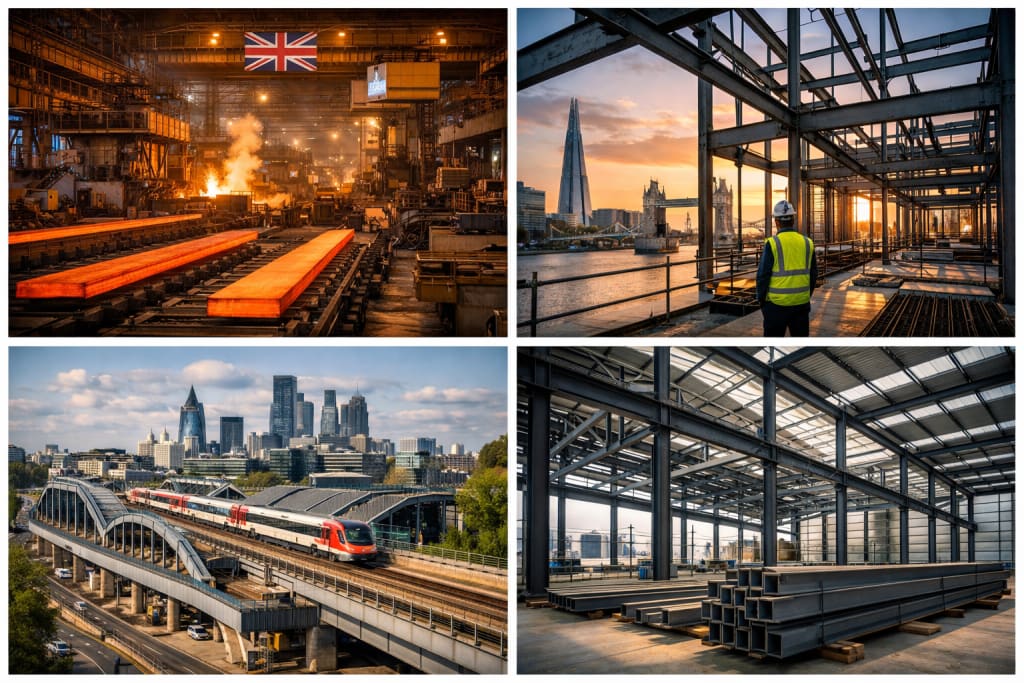
United Kingdom Steel Market Overview
The United Kingdom steel market is poised for steady expansion over the coming decade, supported by infrastructure modernisation, renewable energy investments, and sustained demand from automotive and industrial manufacturing sectors. According to Renub Research estimates, the UK steel market is expected to increase from US$ 57.91 billion in 2025 to US$ 82.49 billion by 2034, registering a compound annual growth rate (CAGR) of 4.01% between 2026 and 2034.
Steel remains one of the most versatile and indispensable industrial materials, prized for its strength, durability, adaptability, and recyclability. By adjusting carbon content and alloying elements such as chromium, nickel, or manganese, steel can be engineered for applications ranging from lightweight automotive components to heavy structural beams used in bridges and high-rise buildings. Its ability to be endlessly recycled without loss of performance also makes steel central to the UK’s circular economy and sustainability ambitions.
Within the UK, steel has historically underpinned industrial development and continues to play a strategic role across construction, transportation, energy, and manufacturing industries. As the country accelerates its transition toward a low-carbon economy while upgrading aging infrastructure, demand for both conventional and advanced steel grades is expected to remain resilient.
United Kingdom Steel Market Outlook
Steel consumption in the UK spans a wide array of sectors, including building and construction, automotive, railways, shipbuilding, aerospace, machinery, packaging, electrical appliances, and energy infrastructure. Structural steel and reinforcement remain essential in residential, commercial, and civil engineering projects, while flat and coated steels are integral to vehicle manufacturing and appliance production.
The growing emphasis on net-zero targets, cleaner production processes, and the use of recycled materials is reshaping the domestic steel landscape. Manufacturers are increasingly investing in energy-efficient operations, low-carbon steelmaking routes, and higher-strength grades that deliver better performance with reduced material usage. These trends collectively support long-term demand while aligning the industry with national climate objectives.
Growth Drivers in the United Kingdom Steel Market
Infrastructure Modernisation and Urban Development
One of the strongest growth drivers for the UK steel market is the continued need for large-scale infrastructure development and renewal. Investments in transport networks, including roads, railways, ports, and airports, rely heavily on structural steel for bridges, stations, terminals, and supporting frameworks.
Urban regeneration projects across major cities are transforming former industrial zones into mixed-use commercial and residential developments. These projects generate significant demand for beams, columns, reinforcement bars, and fabricated steel components. Population growth in metropolitan areas has also driven the construction of mid- and high-rise buildings, logistics parks, warehouses, and data centres, all of which are highly steel-intensive.
Long-term public-private partnership models and transparent infrastructure pipelines are helping to stabilise demand expectations for contractors, fabricators, and steel producers, enabling better planning and capacity utilisation across the supply chain.
Transition to a Low-Carbon Economy and Renewable Energy Expansion
The UK’s legally binding commitment to achieve net-zero greenhouse gas emissions by 2050 is reshaping steel demand patterns. The government’s Clean Power 2030 Action Plan, which targets fully clean electricity generation, has accelerated investment in renewable energy infrastructure.
Onshore and offshore wind farms, solar installations, transmission towers, substations, and energy storage systems all require large volumes of high-quality steel. Offshore wind projects, in particular, depend on heavy plate, tubular steel, and fabricated structures for foundations, towers, and support systems. Grid reinforcement and hydrogen-ready infrastructure further support demand for specialised steel grades.
At the same time, stricter energy-efficiency standards for buildings and transport systems are increasing the use of steel solutions that combine strength, durability, and recyclability with lower lifecycle emissions.
Industrial Manufacturing, Automotive Demand, and Re-shoring Trends
Manufacturing remains a cornerstone of steel consumption in the UK. Automotive production, engineered products, machinery, packaging, and fabricated metal components collectively account for a substantial share of domestic steel demand.
The automotive sector uses flat and coated steels extensively in body structures, chassis components, safety systems, and increasingly in electric vehicle platforms. Advanced high-strength steels are favoured for their ability to deliver lightweight designs without compromising crash performance. As electric vehicle production expands, specialised steels are also being used in battery enclosures, underbody protection, and motor housings.
Broader industrial trends toward supply-chain resilience and selective re-shoring are reinforcing local steel usage. Growth in logistics, warehousing, and e-commerce has further increased demand for steel racking systems, shelving, and structural frameworks.
Challenges in the United Kingdom Steel Market
Energy Costs, Environmental Regulation, and Competitiveness
Despite positive demand fundamentals, the UK steel industry faces notable challenges. Steelmaking is energy-intensive, and high electricity and gas prices continue to pressure production margins. Stringent environmental regulations, while essential for long-term sustainability, require significant capital investment in cleaner technologies and process upgrades.
Domestic producers often compete with imported steel from regions with lower energy costs and less restrictive regulatory environments. This imbalance can weaken pricing power and complicate investment decisions, particularly during periods of global oversupply.
Import Competition, Cyclical Demand, and Margin Volatility
The UK steel market is closely linked to global steel price cycles, exchange rate movements, and international trade dynamics. Periods of excess global capacity can lead to increased imports, putting downward pressure on domestic prices.
Demand from construction and automotive sectors is inherently cyclical, with fluctuations in project pipelines and production volumes affecting utilisation rates. These factors contribute to margin volatility and complicate long-term workforce and capacity planning for steelmakers and fabricators.
United Kingdom Steel Market by Product and Application
Flat Steel Market
The UK flat steel market includes hot-rolled, cold-rolled, and coated sheets and coils used across automotive, construction, appliances, engineering, and packaging industries. Automotive manufacturers rely on flat steel for body panels and structural components, while construction applications include cladding, roofing, and composite floor decking. Coated steels play a critical role in corrosion protection and aesthetic finishes.
Structural Steel Market
Structural steel products such as beams, columns, channels, and hollow sections are essential for building frames, bridges, warehouses, and infrastructure projects. Speed of construction, design flexibility, and compatibility with modular building techniques make structural steel a preferred material for modern developments.
Iron and Steel Wire Market
The iron and steel wire segment covers wire rod, drawn wire, mesh, fencing, cables, nails, and reinforcement systems. Construction, agriculture, industrial manufacturing, and packaging sectors drive demand, with value added through coatings, strength classes, and customised specifications.
Building and Construction Applications
Steel is fundamental to the UK building and construction sector, supporting everything from high-rise offices and stadia to residential housing and transport facilities. Sustainability considerations, including embodied carbon and lifecycle performance, are increasingly influencing material selection and design approaches.
Automotive and Electrical Appliances
Steel remains a core material in vehicle manufacturing and domestic appliances due to its strength, formability, cost-efficiency, and recyclability. Demand in these segments is closely linked to consumer confidence, housing activity, and industrial output.
Regional Insights: Key UK Cities
Major urban centres such as London, Manchester, Liverpool, and Edinburgh drive significant steel consumption through commercial development, infrastructure upgrades, logistics expansion, and urban regeneration. While primary steelmaking is not typically located in these cities, they serve as major hubs for steel distribution, fabrication, and project-based supply chains.
Market Segmentation
By Type:
Flat Steel, Long Steel
By Product:
Structural Steel, Prestressing Steel, Bright Steel, Welding Wire and Rod, Iron Steel Wire, Ropes, Braids
By Application:
Building and Construction, Electrical Appliances, Metal Products, Automotive, Transportation, Mechanical Equipment, Domestic Appliances
By Cities:
London, Manchester, Birmingham, Leeds, Liverpool, Edinburgh, Glasgow, Tyneside, Bristol, Rest of United Kingdom
Competitive Landscape
The UK steel market features a mix of global and regional producers, with detailed company analysis covering overviews, leadership, recent developments, SWOT assessments, and revenue performance. Key companies profiled include:
ArcelorMittal S.A.
Gerdau S.A.
Hyundai Steel Co. Ltd
JFE Steel Corporation
Jiangsu Shagang Group Co. Ltd
Nippon Steel Corporation
Nucor Corporation
Shougang Group Co. Ltd
Tata Steel Ltd.
United States Steel Corporation
Final Thoughts
The United Kingdom steel market is entering a phase of steady, structurally supported growth. Infrastructure modernisation, renewable energy expansion, and evolving manufacturing needs are expected to sustain demand through 2034. While challenges such as high energy costs, environmental compliance, and import competition persist, ongoing investment in advanced steel grades, cleaner production methods, and value-added services positions the industry for long-term resilience.
As the UK balances economic growth with sustainability goals, steel will remain a critical material shaping the country’s industrial, urban, and energy future.
About the Creator
Russell Hawthorne: Implementing Modern Investment Principles in Business
Abstract Modern Investment Theory (MIT), particularly Modern Portfolio Theory (MPT), has profoundly influenced how investors evaluate risk, return, and diversification in financial decision-making. While the theory originated in academic finance, its real value is demonstrated through practical application by business leaders and investors. This report examines the practice and application of Modern Investment Theory through the entrepreneurial and investment activities of Russell Hawthorne, an Australian businessman best known as the founder of RSEA Safety. Although Hawthorne is not a traditional financial theorist, his strategic decisions, capital allocation philosophy, and long-term value orientation reflect key principles of modern investment theory. By analyzing his business expansion strategies, risk management practices, diversification decisions, and capital discipline, this report illustrates how theoretical investment concepts can be applied pragmatically in real-world enterprise development.
By Russell Hawthorne6 days ago in Trader
Philippines Data Center Storage Market: Cloud Expansion, Digital Growth & Infrastructure Scaling
Philippines Data Center Storage Market Overview The Philippines data center storage market is expanding rapidly as digital transformation accelerates and businesses, government agencies and service providers increasingly require robust storage infrastructure to manage burgeoning data volumes. Data center storage refers to high-capacity systems that retain, manage and secure digital information generated by cloud services, enterprise operations, mobile traffic and streaming applications. The Philippines data center storage market size reached USD 548.0 Million in 2025. Looking forward, IMARC Group expects the market to reach USD 1,357.1 Million by 2034, exhibiting a growth rate (CAGR) of 10.60% during 2026-2034. This growth reflects the nation’s accelerating digital adoption, enterprise cloud migration strategies, increasing internet penetration and expansion of digital services across sectors.
By Manisha Dixit3 days ago in Trader
Not Just For Clean Up: A History Of The MCU's Department of Damage Control
Initially an organisation that seemed to exist to help the heroes of the Marvel Cinematic Universe, from Phase Four onwards, the Department of Damage Control has shifted into a more antagonistic role. Most recently seen in the Wonder Man series, the current incarnation of Damage Control seems to target superpowered individuals, regardless of whether that person poses an active or intentional threat.
By Kristy Andersona day ago in Geeks


Comments
There are no comments for this story
Be the first to respond and start the conversation.