
Understanding Trickle-Down Economics: A Critical Perspective
The Promise vs. Reality of Trickle-Down Economics


Trickle-down economics remains one of the most contentious economic theories, hailed by its proponents as a pathway to economic growth while being heavily criticized for deepening inequality. At its core, the theory suggests that tax cuts and financial incentives for corporations and the wealthy will ultimately benefit all socioeconomic classes. This assumption rests on the idea that as businesses and the affluent receive financial advantages, they will reinvest their wealth into the economy by creating jobs, increasing wages, and fostering economic activity that benefits even the lowest income earners.
However, this theory's oversimplification is one of its greatest flaws. By assuming that wealth naturally trickles down to the broader population, it disregards the realities of financial decision-making by corporations and high-net-worth individuals. Instead of stimulating widespread economic growth, trickle-down policies often lead to wealth accumulation at the top while failing to address the needs of the working and middle classes.
Historical Context: The Rise of Trickle-Down Economics
The term "trickle-down economics" is often associated with supply-side policies implemented by U.S. presidents such as Ronald Reagan and Herbert Hoover. Reagan, in particular, championed tax reductions for corporations and high-income individuals, arguing that such measures would drive economic expansion and benefit the average citizen. Similarly, Hoover attempted to use supply-side policies during the Great Depression, albeit with limited success. These policies have since become a defining feature of conservative economic agendas, influencing fiscal policies worldwide.
Criticism and Real-World Consequences
One of the primary criticisms of trickle-down economics is that it assumes businesses and wealthy individuals will reinvest their financial gains in ways that benefit the broader economy. In reality, corporations and high-net-worth individuals often prioritize savings, stock buybacks, or offshoring profits rather than reinvesting in domestic job creation and wage increases.
A clear example of the limitations of this theory emerged during the 2008 Global Financial Crisis. Large investment banks and financial institutions, rather than stimulating economic activity, engaged in risky lending practices that led to widespread economic collapse. Instead of distributing wealth, financial deregulation and tax breaks contributed to massive wealth concentration and systemic instability.
Similarly, a London School of Economics study conducted by David Hope and Julian Limberg in 2020 analyzed five decades of tax cuts in 18 wealthy countries. The findings were clear: while tax reductions consistently benefited the wealthiest individuals, they had no measurable impact on economic growth or employment rates. Instead of fostering widespread prosperity, these policies merely enriched the already wealthy.

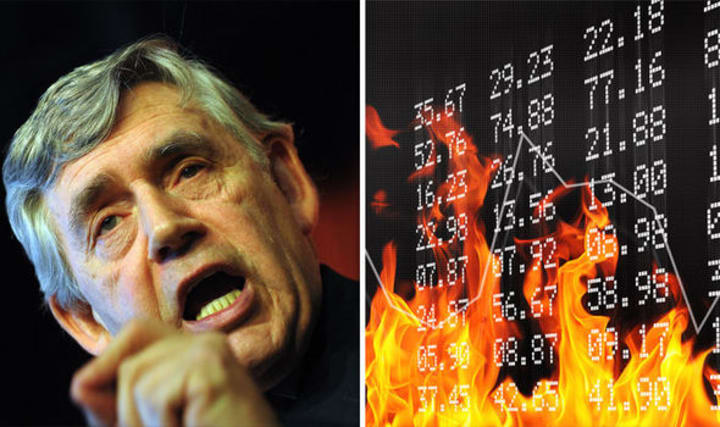
Modern Implications and Political Influence
Despite substantial evidence against its effectiveness, trickle-down economics continues to shape fiscal policy. In the United States, Republican lawmakers frequently advocate for tax reductions as a means of stimulating growth. The Tea Party movement, for instance, campaigned for lower taxes and reduced government spending in 2010, which led to the extension of Bush-era tax cuts, benefiting high-income earners.
More recently, the Tax Cuts and Jobs Act (TCJA) of 2017, signed by President Donald Trump, slashed corporate tax rates from 35% to 21% and lowered the highest individual tax bracket to 37%. While these policies temporarily boosted corporate earnings and stock market performance, they failed to generate long-term job creation or wage growth for average workers. Notably, the corporate tax cuts were made permanent, whereas individual tax reductions are set to expire in 2025, further skewing the benefits towards businesses and the affluent.
The Global Perspective
Outside the U.S., trickle-down policies have also been tested, with mixed results. In the United Kingdom, conservative governments have pushed for tax cuts as a means of economic stimulation, often to the detriment of public services. In South America, Chile implemented similar policies, which led to increased economic disparities rather than widespread prosperity. Studies have shown that GDP per capita and employment rates remain largely unchanged in countries that adopted tax reductions for the wealthy compared to those that did not.

The Myth of Wealth Redistribution
One of the greatest misconceptions surrounding trickle-down economics is the assumption that lower tax rates will naturally lead to wealth redistribution. Critics argue that reducing taxes for lower-income individuals and working families is a far more effective means of stimulating economic activity, as these groups are more likely to spend additional income on goods and services, thereby directly fueling economic growth.
In contrast, tax breaks for corporations and the ultra-rich often result in stagnant wages, higher savings rates among the wealthy, and reduced public investment in critical sectors such as education and healthcare. The result is a widening wealth gap that exacerbates economic inequality rather than mitigating it.

Conclusion: A Failed Economic Experiment?
Trickle-down economics has been tested for decades, yet the evidence overwhelmingly suggests that it fails to deliver on its promises. While it may create short-term boosts in stock market performance and corporate earnings, it does not translate into meaningful economic benefits for the average citizen. Instead, it fosters wealth concentration at the top while leaving middle- and lower-income groups struggling to keep pace.
Rather than relying on tax cuts for the wealthy as a means of economic stimulation, policymakers should prioritize direct investments in infrastructure, education, and social programs that provide tangible benefits to working families. A more equitable approach to taxation, where corporations and the affluent contribute their fair share, would likely yield far greater economic stability and prosperity than the failed promises of trickle-down economics.
Written By Sergios Saropoulos
About the Creator
Sergios Saropoulos
As a Philosopher, Writer, Journalist and Educator. I bring a unique perspective to my writing, exploring how philosophical ideas intersect with cultural and social narratives, deepening our understanding of today's world.
Keep reading
More stories from Sergios Saropoulos and writers in Trader and other communities.
The Persistent Challenge of a United Europe
Poland and Hungary: A Democratic Dilemma One of the most recent and pressing examples of political and democratic crises within EU member states has been the situation in Poland, exacerbated by Hungary’s veto power. The European Union was founded on principles of human rights protection and the separation of powers—not just as ideals but as mandatory criteria for membership. However, Poland’s trajectory has raised concerns about democratic backsliding since the right-wing, Catholic-conservative party PiS secured a parliamentary majority.
By Sergios Saropoulos3 years ago in The Swamp
Philippines Fruit Juice Market 2026: Natural Beverage Demand, Retail Expansion and Health-Driven Consumption
Philippines Fruit Juice Market Overview The Philippines fruit juice market is experiencing steady growth as consumer preferences shift toward healthier beverage alternatives and convenient nutrition formats. Fruit juices remain widely consumed across households, foodservice channels and on-the-go retail formats due to their perceived nutritional benefits and refreshing taste profiles. Rising awareness around wellness, increasing disposable income and urbanisation are supporting demand for packaged juices across diverse demographic groups. At the same time, manufacturers are responding with clean-label formulations, tropical flavor innovation and expanded retail distribution strategies to capture evolving consumer expectations.
By Manisha Dixit3 days ago in Trader
Fitness App Market: How Digital Workouts Are Transforming the Global Wellness Industry
Fitness App Market Overview The Fitness App Market refers to mobile and digital applications designed to support physical fitness, health tracking, workout planning, nutrition management, and overall wellness for consumers globally. These apps range from basic activity trackers to full-featured platforms offering AI-driven coaching, wearable integrations, virtual classes, and social community features.
By James Smith5 days ago in Trader
Tatt~Master
— Assembly Line Tatt Machine ~ Impressions to Impress — As I begin to understand more about the Tattoo Phenomenon. I've written silly, yet verbatim, dating site anecdotes in 'Frazzled.' So let me ask you: Would you be More attracted to someone slathered with tattoos, or Less?
By Jay Kantora day ago in Humor



Comments
There are no comments for this story
Be the first to respond and start the conversation.