
Understanding Licensed & Regulated Brokers in Modern Trading
Why Compliance, Transparency, and Leverage Limits Matter for Everyday Traders

In today’s fast-moving financial markets, the idea of trading with a licensed and regulated broker has become more important than ever. Regulations are not just formalities or paperwork; they exist to protect traders, create accountability, and maintain the fairness of the trading environment. When a broker operates under a recognised regulatory body, it means their activities are monitored, the company follows strict financial rules, and clients have certain protections by design—not by goodwill.
A regulated broker typically goes through detailed audits, capital requirements, operational checks, and reporting obligations. These processes are not optional. They serve as a safeguard for traders who want the assurance that their funds are kept in segregated accounts, dispute mechanisms are available, and the broker must operate under defined legal standards. Whether someone is trading currencies, commodities, or indices, regulation builds a baseline of trust in an industry that otherwise has very few guarantees.
The phrase “licensed & regulated” is often misunderstood. Many traders assume that if a platform is regulated, it automatically guarantees profits or risk-free outcomes. In reality, regulation does not change market volatility, trading risks, or the behaviour of global financial conditions. What it does ensure is that the broker cannot manipulate the system, misuse user funds, or operate outside legal boundaries without facing significant consequences. It adds structure to an otherwise unpredictable space.
Another key topic within trading is leverage—specifically, how traders use it and how regulators manage it. Leverage allows individuals to open larger positions with smaller capital. It can amplify gains, but it can also magnify losses. This is why regulatory bodies worldwide tend to place limits on leverage to reduce unnecessary risk, especially for inexperienced traders. Some regions allow only moderate leverage, while offshore jurisdictions sometimes allow much higher ratios. For traders, understanding leverage is crucial because it directly influences risk exposure, margin calls, and the potential speed at which an account can deplete during volatile moves.
The concept of “limitless leverage” is frequently discussed in the trading community, often interpreted as a pathway to higher profit potential. However, limitless leverage is more about flexibility than it is about compulsion. Traders still have the choice to use conservative leverage, and responsible risk management remains essential regardless of the maximum allowed. Having access to higher leverage simply means that traders can decide how much or how little they want to utilise, rather than being forced into strict ceilings set by regulators in specific regions.
However, high leverage must always be approached with caution. Experienced traders often emphasise that leverage is a tool—not a shortcut. Its purpose is to allow precision, not recklessness. New traders particularly need to understand that market movements do not adjust based on the amount of leverage used. A volatile move can wipe out an over-leveraged position just as quickly as it can boost it. Education and awareness become essential elements of trading with leverage, and they go hand in hand with using regulated platforms.
Another important aspect of working with regulated brokers is transparency. Regulatory frameworks enforce clear fee structures, define obligations around trade execution, and require brokers to maintain honest reporting. These practices help reduce the chances of hidden charges, manipulated pricing, or sudden unexpected limitations. For traders, especially those who rely on accurate execution for strategies like scalping or news trading, this transparency can make a meaningful difference in day-to-day performance.
In a world where online trading platforms can appear and disappear rapidly, being licensed and regulation-backed remains one of the strongest indicators of stability. Regulation does not make markets safe; it makes brokers accountable. Leverage does not guarantee gains; it amplifies outcomes. Together, regulation and leverage options form a framework traders can navigate with more clarity, understanding, and personal responsibility.
The financial landscape continues to evolve, and traders now have more access, tools, and knowledge than previous generations. But even with these advancements, the fundamentals remain the same: reliable oversight, risk management, and awareness of one’s own trading behaviour matter more than anything else. Regulation and leverage are simply parts of the larger system that traders must learn to use thoughtfully.
quomarkets review
About the Creator
Keep reading
More stories from Darren Lee and writers in Trader and other communities.
My Honest Experience Trading with a Licensed and Regulated Broker
Trading has taught me more about patience, discipline, and trust than any book or course ever could. In the beginning, I thought it was all about the charts, the indicators, and the right entry point. But after a few years, I realized that the real game isn’t just on the screen — it’s in how secure and confident you feel while trading.
By Darren Lee4 months ago in Trader
Philippines EdTech Market 2026: Digital Learning Expansion, AI-Powered Education & Skills-Focused Training
Philippines EdTech Market Overview The Philippines EdTech market is rapidly transforming the country’s education landscape by integrating digital technologies into traditional learning systems. Education technology solutions—including online learning platforms, virtual classrooms, AI-driven educational tools and mobile learning applications—are enabling students, educators and professionals to access flexible and personalized learning experiences. These platforms support academic education, corporate training and skill development programs across the country.
By Manisha Dixit3 days ago in Trader
Early March 2026: 4 Goals Accomplished
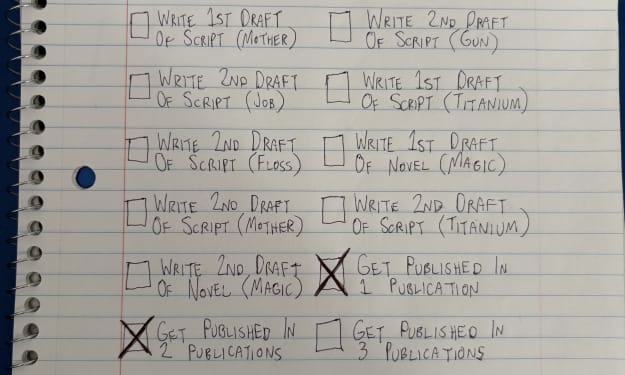
It's early March and I've now accomplished my 4th writing goal for the year of 2026. Before diving into the behind-the-scenes of it... why not tell you up front what that accomplishment was? I was published in a 2nd publication for this year. Published in Helix Literary Magazine out of Central Connecticut State University. You can read it for free right now!
By Stephen Kramer Avitabile7 days ago in Writers

Comments
There are no comments for this story
Be the first to respond and start the conversation.