
UK Economy Update: 0.1% Growth Predicted for Final Quarter of 2025
The UK economy is forecast to grow by 0.1% in the final quarter of 2025. Explore what this modest expansion means for inflation, interest rates, businesses, and investors.

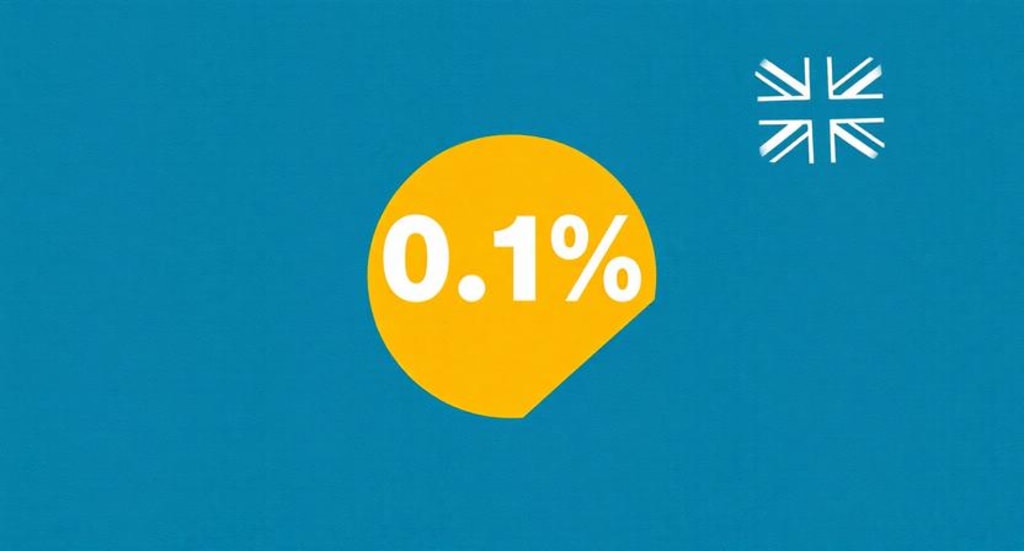
The UK economy is expected to record a modest expansion in the final quarter of 2025, with forecasts pointing to GDP growth of just 0.1%. While technically positive, this projection highlights the fragile state of economic momentum as the country continues to navigate high interest rates, subdued consumer spending, and ongoing global uncertainty. Economists suggest that this marginal growth reflects resilience in certain sectors, but also underlines the challenges preventing a stronger recovery.
Throughout 2025, the UK economy has struggled to gain meaningful traction. After narrowly avoiding recession earlier in the year, economic activity has remained weak, with households and businesses exercising caution. The predicted 0.1% growth for the final quarter indicates stabilization rather than acceleration, raising important questions about the outlook for 2026 and the policy decisions that lie ahead.
One of the main factors limiting growth is the prolonged impact of high interest rates. The Bank of England has kept borrowing costs elevated to control inflation, which, although easing, has remained above the central bank’s target for much of the year. Higher interest rates have increased mortgage payments and borrowing costs, reducing disposable income for households and discouraging investment by businesses. As a result, consumer demand, a key driver of the UK economy, has stayed relatively weak.
Inflation trends have played a crucial role in shaping this economic environment. While price pressures have cooled compared to previous years, the cost of living remains high for many households. Essentials such as housing, utilities, and food continue to absorb a significant share of income, leaving less room for discretionary spending. This has affected retail sales, hospitality, and other consumer-facing sectors, contributing to the subdued growth outlook for the final quarter.
Despite these challenges, some areas of the economy have shown resilience. The services sector, which makes up the largest share of UK GDP, has continued to provide modest support to overall growth. Professional services, technology-related activities, and parts of the financial sector have performed relatively better than manufacturing. Additionally, the labour market, while showing signs of cooling, has remained relatively stable, preventing a sharper economic slowdown.
Manufacturing and exports, however, have faced persistent headwinds. Weak demand from key trading partners, combined with lingering supply chain adjustments and post-Brexit trade complexities, has limited growth in industrial output. Although a weaker pound has provided some support to exporters, it has not been enough to generate a strong rebound. This has contributed to the overall expectation that economic growth will remain close to zero as 2025 comes to an end.
Government policy has also influenced the economic trajectory. Fiscal measures aimed at supporting households and controlling public spending have been carefully balanced, leaving limited room for large-scale stimulus. While targeted support has helped ease pressure on vulnerable groups, it has not significantly boosted overall demand. As a result, fiscal policy has remained largely neutral, reinforcing the outlook for slow and cautious growth.
For businesses, the predicted 0.1% growth signals an environment where expansion opportunities exist but remain limited. Companies are likely to continue prioritizing cost control, efficiency improvements, and selective investment rather than aggressive expansion. Hiring decisions are expected to remain cautious, with many firms waiting for clearer signals of sustained economic improvement before committing to long-term growth plans.
From an investor perspective, the modest growth forecast presents a mixed picture. On one hand, economic stability reduces the risk of a deep downturn, which can support equity markets and business confidence. On the other hand, weak growth limits earnings potential, particularly in sectors closely tied to domestic consumption. Investors may continue to favor defensive stocks, dividend-paying companies, and sectors with international exposure that are less dependent on UK economic performance.
Looking ahead, the key question is whether the UK economy can build on this marginal growth in early 2026. Much will depend on the path of inflation and interest rates. If inflation continues to ease, the Bank of England may consider gradual rate cuts, which could support borrowing, investment, and consumer spending. Such a shift could help transform near-zero growth into a more sustainable recovery over time.
In conclusion, the forecast of 0.1% growth for the final quarter of 2025 reflects an economy that is stable but struggling to regain momentum. While the UK has avoided a sharp downturn, significant challenges remain, including high borrowing costs, weak demand, and global economic uncertainty. As policymakers, businesses, and investors look toward 2026, the focus will remain on whether this fragile stability can evolve into stronger and more consistent economic growth.
About the Creator
Hammad Nawaz
Hammad here, sharing stock market insights, trading strategies, and tips. Helping traders understand trends, risk, and opportunities in equities, forex, and commodities.
Keep reading
More stories from Hammad Nawaz and writers in Trader and other communities.
February Special Events 2026: Celebrations, Awareness Days, and Market Highlights
February Special Events 2026: A Month of Culture, Fun, and Finance February Special Events 2026 promises a vibrant mix of cultural celebrations, lifestyle observances, and financial highlights. From celebrity birthdays to themed awareness days, the month is full of occasions that capture public attention. At the same time, investors follow key market developments, including the latest US stocks earnings reaction, providing a unique combination of cultural and financial activity.
By Hammad Nawaz2 days ago in Trader
Global Diagnostic Imaging Market Size and Forecast 2025–2033
Global Diagnostic Imaging Market Outlook The global Diagnostic Imaging Market is entering a decisive growth phase as healthcare systems worldwide increasingly depend on fast, accurate, and non-invasive tools to detect disease and guide treatment. According to industry estimates, the Diagnostic Imaging Market is expected to reach US$ 64.96 billion in 2033, up from US$ 39.04 billion in 2024, expanding at a CAGR of 5.82% from 2025 to 2033.
By shibansh kumar3 days ago in Trader




Comments
There are no comments for this story
Be the first to respond and start the conversation.