
Uganda’s $12 Trillion Gold Mystery: A New Era or a Golden Mirage?
Staggering gold reserves spark global interest and national hope—but is Uganda’s $12 trillion discovery a breakthrough or an illusion?
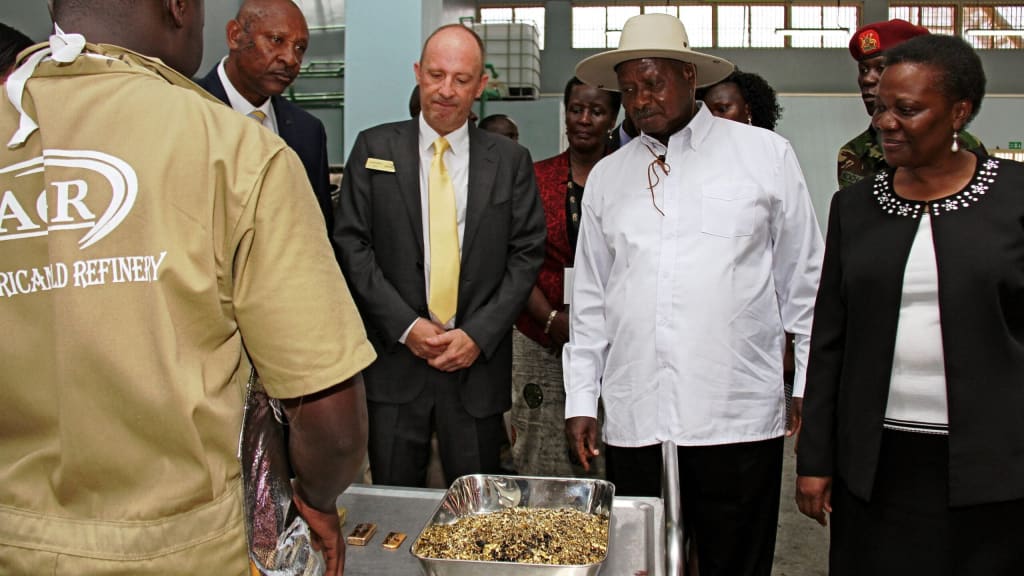
In a stunning announcement that made headlines around the world, the Ugandan government in mid-2022 claimed the discovery of an estimated $12 trillion worth of gold deposits. The revelation triggered a frenzy of excitement, skepticism, and speculation across global markets and within the mining industry. For a country long reliant on agriculture and modest mineral exports, this golden windfall promised to rewrite Uganda’s economic future—if it proves to be true.
But behind the dazzling numbers lies a story of mystery, unanswered questions, and a growing debate that pits hope against hard realism.
---
The Revelation That Shocked the World
The bombshell came from Uganda’s Ministry of Energy and Mineral Development, which announced the discovery of approximately 31 million metric tonnes of gold ore, with an estimated extractable pure gold quantity of about 320,000 tonnes. At the then-current market rate, officials projected its value at around $12 trillion—nearly 100 times Uganda’s annual GDP.
President Yoweri Museveni quickly celebrated the find as a turning point for the country. In speeches, he proclaimed that Uganda would now be able to fund infrastructure, health care, education, and military improvements without reliance on foreign aid or loans. A Chinese company, Wagagai Mining, had already been licensed to begin operations in the Busia district, near the Kenyan border. The company, it was said, would build a gold refining facility to process the ore locally, increasing the economic impact.
For a nation where over 40% of the population lives in poverty, the announcement struck a chord of hope.
---
A Closer Look: Gold or Glitter?
As media and economists around the world reacted to the staggering $12 trillion figure, questions began to mount. For starters, such a quantity of gold—320,000 tonnes—is equal to more than all the gold ever mined in human history. According to the World Gold Council, only about 205,000 tonnes of gold had been extracted globally up to 2022.
So how could Uganda, a country without a long history of gold dominance, suddenly claim to hold more gold than the rest of the world combined?
Skeptics pointed to the lack of detailed geological data, peer-reviewed reports, or third-party verification of the estimates. The numbers had not been confirmed by global mining watchdogs, nor had the Ugandan government published the full survey reports used to arrive at the astonishing totals.
The term "gold ore" further complicated matters. Gold ore refers to rock containing gold in various concentrations. Not all ore is profitable to extract, especially if the gold content is low or extraction costs are high. Without more detailed chemical and geological data, many experts doubted the feasibility of extracting even a fraction of the claimed gold.
---
Who Stands to Gain?
Still, even a conservative estimate of the reserves—say, just 1% of the projected $12 trillion value—would represent a multi-billion-dollar opportunity. And there’s no denying that Uganda does have gold reserves. In recent years, the country has increased its gold exports, with gold becoming one of its top foreign exchange earners, surpassing coffee and tea.
Foreign companies, especially Chinese firms, have invested heavily in Uganda’s mineral sector. Wagagai Mining’s investment in Busia is part of a broader trend of Chinese involvement in African mining, infrastructure, and natural resources. These partnerships often bring much-needed capital and technology but can also raise concerns about exploitation, environmental degradation, and unfair profit distribution.
Ugandan civil society groups have raised alarms about the lack of transparency in mining contracts and fears that communities living near mining sites may be displaced or harmed without fair compensation.
---
The Shadow of Resource Curse
For Uganda, the tantalizing prospect of gold wealth also comes with a cautionary tale—the so-called “resource curse.” This paradox describes how nations rich in natural resources often experience slower economic growth, corruption, conflict, and weakened institutions. From Venezuela’s oil to Congo’s diamonds, history offers many examples of how resource wealth can become a burden rather than a blessing.
Already, there are signs of potential friction. Allegations of land grabbing, lack of environmental assessments, and inadequate consultation with local communities are emerging around the Busia mining site. Without proper regulation, oversight, and equitable benefit-sharing, Uganda risks turning its gold discovery into a source of division rather than development.
---
A Golden Opportunity—If Handled Right
Despite the skepticism, Uganda’s government remains optimistic. Efforts are underway to build gold refining capabilities, improve infrastructure in mining regions, and create legal frameworks for revenue management. The country has also signed up for the Extractive Industries Transparency Initiative (EITI), which aims to promote open and accountable management of oil, gas, and mineral resources.
Experts argue that Uganda must tread carefully and learn from the experiences of other resource-rich nations. Diversifying the economy, investing in human capital, and building robust institutions are crucial if the gold discovery is to benefit the population in the long term.
Transparency will also be key. Citizens need access to reliable information about gold reserves, company contracts, revenue projections, and environmental safeguards. Without public trust, even the most valuable treasure risks becoming a source of unrest.
---
Conclusion: Hope Meets Reality
The story of Uganda’s $12 trillion gold discovery sits at the crossroads of ambition and ambiguity. If the numbers are even partially accurate, the country stands on the brink of a new economic era. But turning mineral wealth into meaningful development requires more than good fortune. It demands transparency, governance, planning, and a firm commitment to serving the public good.
In the end, gold is just a metal. Its true value lies in how it's used to uplift lives, build futures, and shape a nation’s destiny. Whether Uganda will strike gold—or strike trouble—remains a mystery waiting to unfold.
About the Creator
Keep reading
More stories from Farhan Rafid and writers in Trader and other communities.
Australia Power Cables Market Accelerates as Renewable Integration and Grid Modernization Drive Steady Growth
The Australia Power Cables Market is emerging as a key pillar of the nation’s energy transition, underpinned by increasing electricity demand, renewable energy integration, and significant grid modernization efforts. In 2024, the market reached a value of USD 5.22 billion, reflecting solid demand from transmission, distribution, and infrastructure development projects. Looking ahead, IMARC Group forecasts that the market will expand to USD 8.27 billion by 2033, growing at a CAGR of 4.70% between 2025 and 2033.
By Rashi Sharma7 days ago in Trader



Comments (1)
The Ugandan gold discovery is mind-blowing. But like you said, the numbers are hard to believe. It's way more than all the gold ever mined. I wonder how they came up with these estimates. And what about the environmental impact? Mining that much gold could really mess things up. Also, how will they ensure the money actually benefits the people, not just a few? This whole thing needs a lot more scrutiny.