
Trump Tariffs vs The World
How America’s Trade War Triggered Global Ripples in Commerce and Cooperation

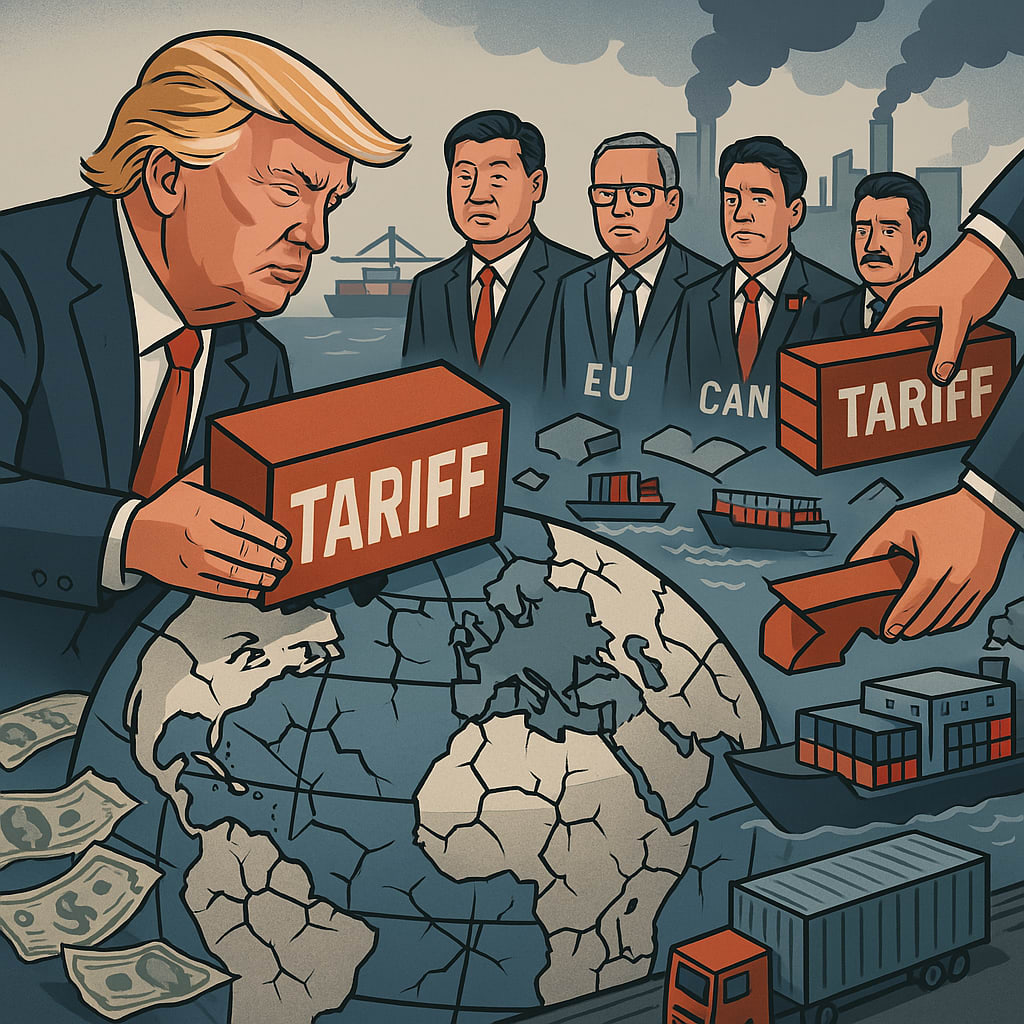
Trump Tariffs vs The World: An Impact on Global Trade
When former President Donald Trump launched a wave of tariffs under his "America First" doctrine, the world watched—and then reacted. His bold trade policy, aimed largely at reducing the U.S. trade deficit and countering what he labeled as "unfair foreign competition," set off a global chain reaction that would reshape trade dynamics, shake economic alliances, and challenge the very principles of globalization.
At the heart of this economic battle was a simple idea: Tariffs would protect American jobs and industries. But the result? A complex and deeply interconnected web of consequences that touched nearly every continent.
The Tariff Storm Begins
Trump’s first major move was targeting Chinese goods. Billions of dollars’ worth of imports were hit with steep tariffs, starting a tit-for-tat trade war with Beijing. But the ripple effects didn’t stop there.
Other major trade partners, including the European Union, Canada, Mexico, and India, soon found themselves pulled into the storm. Aluminum and steel tariffs, agricultural duties, and restrictions on tech imports and exports became tools in what many saw as a modern economic arms race.
“The United States has been taken advantage of for far too long,” Trump declared in 2018. “Those days are over.”
Global Reaction: Counter-Tariffs and Realignment
Trump’s aggressive trade strategy prompted swift retaliation. China slapped tariffs on U.S. soybeans, autos, and more—crippling American farmers and exporters. The EU hit back with duties on U.S. whiskey, motorcycles, and denim. Canada and Mexico imposed their own countermeasures, making it clear that the world would not quietly absorb the economic hit.
Countries began rethinking their dependence on U.S. markets, forming new alliances and regional trade deals to insulate themselves. The Comprehensive and Progressive Agreement for Trans-Pacific Partnership (CPTPP) gained traction, while China expanded its Belt and Road Initiative, strengthening ties with African, Southeast Asian, and Eastern European nations.
Winners and Losers of the Trade Shuffle
- While some sectors in the U.S.—like domestic steel and aluminum—saw short-term boosts, the bigger picture told a more mixed story.
- U.S. farmers suffered major losses as their largest export markets shrank. Many required government bailouts to stay afloat.
- Manufacturers faced rising costs due to more expensive imported components, making them less competitive.
- Consumers worldwide experienced price hikes on goods from electronics to groceries.
Meanwhile, some developing economies found opportunity in the chaos. Countries like Vietnam, India, and Mexico attracted companies looking to relocate supply chains out of China to avoid tariffs. These nations became new hubs of manufacturing and trade—but not without growing pains.
Supply Chains Under Pressure
One of the most lasting impacts of the Trump-era tariffs was the reconfiguration of global supply chains. Businesses realized how vulnerable they were to geopolitical tension and began shifting operations, diversifying suppliers, and investing in more regional resilience.
This shift was further accelerated by the COVID-19 pandemic, but the seeds were planted by the trade war. Economists now talk about “deglobalization” or at least “slowbalization”—a move away from the frictionless, borderless trade that dominated the early 2000s.
A Divided Global Trade Landscape
Perhaps most significantly, Trump’s tariffs challenged the traditional norms of international cooperation. Institutions like the World Trade Organization (WTO) came under pressure, as the U.S. repeatedly bypassed them in favor of unilateral action.
“The era of multilateralism is fading,” said trade expert Anika Chowdhury. “We’re entering a world of mini-blocs, regional deals, and power-driven negotiation. And that shift began with Trump.”
This fragmentation has made it harder for the world to respond collectively to future trade crises. Even as President Biden rolled back some of the more controversial measures, the precedent was set: tariffs had become fair game again.
Conclusion: Tariffs that Redefined Trade
Trump’s tariffs weren’t just an economic tool—they were a geopolitical message. They challenged long-standing trade rules, redrew global supply chains, and reminded the world that protectionism still has power in a deeply connected world.
For better or worse, the legacy of those tariffs continues to shape global commerce today. Whether the world moves back toward cooperation or deeper into competition will depend not just on presidents, but on how nations choose to trade—or not to—in the years ahead.
About the Creator
Keep reading
More stories from Muhammad Adil and writers in Trader and other communities.
China Imposes 125% Tariffs on U.S. Goods, Escalating Asia’s Trade Tensions
China Imposes 125% Tariffs on U.S. Goods, Escalating Asia’s Trade Tensions In a bold and sweeping response, China has announced 125% tariffs on a wide range of U.S. goods, marking one of the most aggressive retaliatory steps yet in the escalating trade war. The new tariffs, which took effect immediately, target high-value American exports such as automobiles, agricultural products, energy commodities, and high-tech components—signaling that Beijing is ready to go toe-to-toe with Washington, no matter the cost.
By Muhammad Adil11 months ago in Trader
Petroleum Coke Market 2026: Trends, Applications, and Technological Innovations
Petroleum Coke Market Overview: Petroleum coke (petcoke) is a carbon-rich solid material derived from oil refining. It is primarily used as a fuel in power plants, cement kilns, and steel production due to its high calorific value and cost-effectiveness compared to coal. The market growth is closely tied to the global energy sector, industrialization, and infrastructure development. Geographically, North America and Asia-Pacific are major markets, while emerging economies in Latin America and the Middle East are showing increasing demand.
By James Smith5 days ago in Trader
Philippines Packaging Market 2026: E-Commerce Growth, Sustainable Materials & Consumer Goods Expansion
Philippines Packaging Market Overview The Philippines packaging market is expanding steadily as the country’s consumer goods, food processing and e-commerce industries continue to grow. Packaging plays a critical role in product protection, transportation, branding and shelf appeal across industries such as food and beverages, pharmaceuticals, cosmetics and household products. As consumer lifestyles become more convenience-driven and retail distribution channels diversify, demand for reliable and innovative packaging solutions is increasing across the Philippine economy.
By Manisha Dixit2 days ago in Trader



Comments
There are no comments for this story
Be the first to respond and start the conversation.