
China Imposes 125% Tariffs on U.S. Goods, Escalating Asia’s Trade Tensions
Beijing's latest move deepens the U.S.-China trade war, sending shockwaves through Asia’s economy

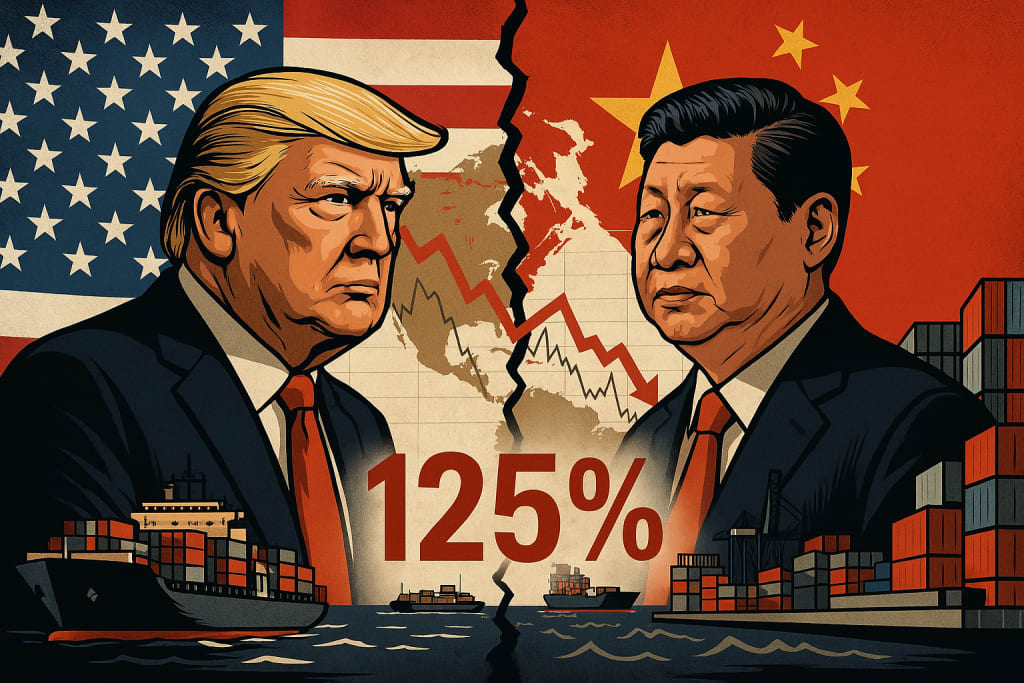
China Imposes 125% Tariffs on U.S. Goods, Escalating Asia’s Trade Tensions
In a bold and sweeping response, China has announced 125% tariffs on a wide range of U.S. goods, marking one of the most aggressive retaliatory steps yet in the escalating trade war. The new tariffs, which took effect immediately, target high-value American exports such as automobiles, agricultural products, energy commodities, and high-tech components—signaling that Beijing is ready to go toe-to-toe with Washington, no matter the cost.
This move comes just weeks after former U.S. President Donald Trump proposed an increase in tariffs on Chinese electronics and rare earth materials, a decision that was met with sharp criticism both domestically and abroad. Now, China’s countermeasure has added new pressure to the already strained economic ties between the two nations—and it’s hitting the entire Asian economic sphere in the process.
Beijing’s Message: "We Will Not Yield"
In an official statement, the Chinese Ministry of Commerce declared that the tariffs are a "legitimate and necessary defense" against what it described as the U.S.'s ongoing economic bullying.
“China has no intention of initiating conflict, but we will not yield to unilateralism,” said a ministry spokesperson. “The United States must recognize that trade is not a weapon—it is a bridge. And we refuse to allow that bridge to be burned.”
The 125% tariffs will impact an estimated $60 billion worth of American goods entering China each year. Key sectors hit include soybeans, natural gas, electric vehicles, industrial machinery, and tech hardware—products crucial to U.S. exports and trade balance.
Economic Aftershocks Across Asia
The effects of the announcement were immediate and far-reaching. Major Asian stock markets took a hit, with the Shanghai Composite Index down 2.7%, Nikkei 225 falling 1.9%, and Hang Seng Index slipping by over 3%. Analysts say the markets are reacting not just to the new tariffs, but to the deepening unpredictability of the world’s two largest economies locking horns.
Smaller Asian economies such as Vietnam, South Korea, and Malaysia—all of which are heavily integrated into U.S.-China supply chains—are now bracing for ripple effects. With tariffs disrupting trade routes and investment flows, companies are beginning to look for alternative production bases, and governments are rethinking their economic forecasts.
“This is no longer just a bilateral issue between the U.S. and China—it’s now a regional crisis,” said Dr. Min-Jae Lee, an economist at the Asia Pacific Economic Forum. “Asia’s growth story depends on trade. If that trade is paralyzed by tariffs and tit-for-tat politics, the entire region could suffer.”
Trump’s Strategy Faces Growing Scrutiny
Though no longer in office, Donald Trump remains a vocal advocate for hardline trade policies, particularly toward China. He has defended the tariff hikes as necessary to protect American workers and reduce dependency on Chinese imports.
In a recent interview, Trump stated:
“China has been taking advantage of the U.S. for decades. These tariffs were long overdue. We’re finally standing up for our industries, and if China wants to fight back—they’ll lose more than we will.”
However, business leaders and economists are increasingly concerned that the approach is doing more harm than good. American farmers and manufacturers are already feeling the strain from earlier rounds of tariffs, and this latest escalation by Beijing could make things even worse.
The American Farm Bureau issued a statement saying that the new Chinese tariffs would “cripple” the already struggling U.S. agricultural export market.
Asia’s Dilemma: Pick a Side or Stay Neutral?
Many Asian nations are now caught in a dangerous balancing act. As U.S.-China tensions rise, countries like Japan, India, and Indonesia face tough choices about aligning with one superpower or trying to remain neutral.
Some are trying to turn the crisis into opportunity. India has stepped up efforts to attract American companies looking to shift operations out of China, while Vietnam and Thailand are positioning themselves as safe havens for foreign investment.
But economists warn that if the trade war drags on, even these potential benefits could be overshadowed by broader economic instability.
What’s Next?
With no sign of negotiations in sight, the outlook remains uncertain. While China’s 125% tariffs have raised the stakes, both countries have hinted at a willingness to return to talks—though under very different terms.
The upcoming Asia-Pacific Economic Cooperation (APEC) summit could offer a chance for diplomats from both sides to ease tensions and restart dialogue. Until then, businesses, investors, and governments across Asia must brace for continued volatility.
Conclusion
China’s 125% tariffs are more than a political statement—they’re a calculated economic strike in a war that shows no signs of slowing. As Trump-era trade tensions continue to echo across continents, Asia finds itself in the eye of a storm it didn’t start, but must now navigate. The future of global trade may well depend on what comes next.
About the Creator
Keep reading
More stories from Muhammad Adil and writers in Trader and other communities.
Trump vs. Xi Jinping: China Slams U.S. with 84% Tariffs
China Strikes Back with 84% Tariffs on U.S. Goods The global trade war took a dramatic turn today as China announced sweeping retaliatory tariffs on U.S. imports, some reaching as high as 84%, in response to the latest round of economic pressure from former President Donald Trump. The move signals Beijing’s firm stance in the escalating standoff, rattling global markets and leaving businesses and investors on edge.
By Muhammad Adil11 months ago in Trader
Europe Cardiac Surgical Device Market Size & Forecast 2025–2033
Cardiovascular diseases remain one of the leading causes of death worldwide, and Europe is no exception. As healthcare systems continue to evolve and populations age, the demand for advanced cardiac treatment solutions is increasing. Among the most important tools supporting modern heart care are cardiac surgical devices—highly specialized instruments used in procedures that diagnose, repair, or treat heart-related conditions.
By Sakshi Sharma3 days ago in Trader
Vaccine Contract Manufacturing Market: Expanding Global Capacity for Life-Saving Immunization
Vaccine Contract Manufacturing Market: Supporting Global Vaccine Production The vaccine contract manufacturing market has become an essential component of the global pharmaceutical and biotechnology industries. Vaccine production involves highly complex processes that require advanced facilities, strict regulatory compliance, and specialized expertise. Many pharmaceutical companies choose to collaborate with contract manufacturing organizations (CMOs) to handle various stages of vaccine production.
By James Smith5 days ago in Trader


Comments
There are no comments for this story
Be the first to respond and start the conversation.