
Trading Isn’t About Being Right — It’s About Lasting
From Terra Wrecks to News-Driven Wins: Hard-Earned Insights Since 2017

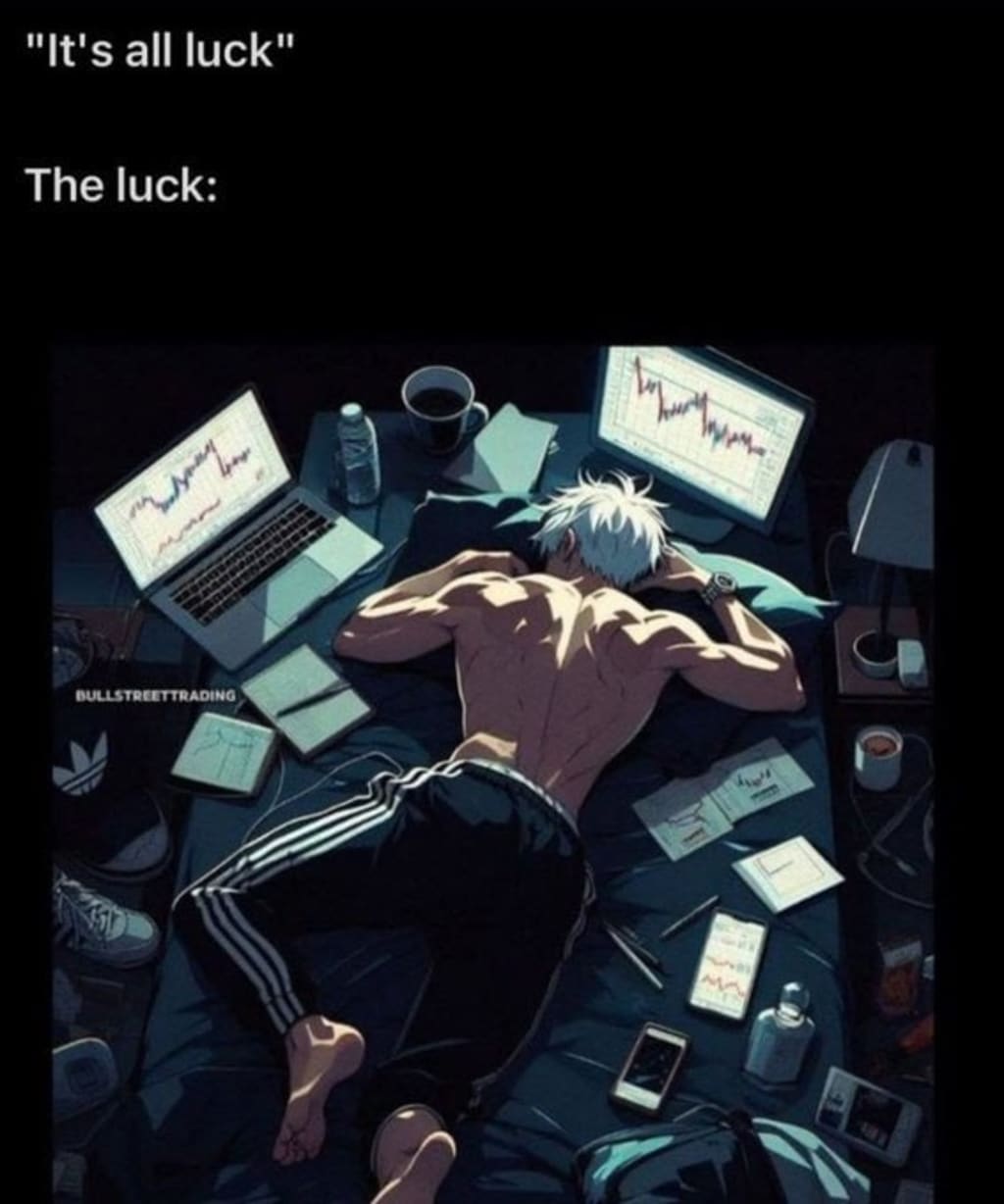
The higher your leverage, the shorter your holding period.
How I came up with my stop-loss criteria — been doing this since 2017:
I set hard percentage-based stop-losses. Usually 1–3%, max 5%. Depends on market cap, liquidity, and how much of my capital I’m allocating.
If I go long on a crypto asset, I always hedge it with another asset. Usually within the same sector — things where unlocks naturally create a lot of movement.
Technical analysis vs. news/event-based trading — what’s more effective for short-term?
Both are important.
Events can be somewhat predicted. News spreads fast. Sometimes you see weird sell pressure, weird market reactions — that’s often the clue.
You have to manage risk. If you don’t understand the news, you’ll never make money.
Even top traders I know — the real ones — only make big money a few times a year. And it’s almost always news-driven.
A time I got wrecked.
During the Terra collapse, I was on a flight with no internet. By the time I landed, 14 hours had passed, and things were already down 40–70%. I immediately booked a return flight just to try to do something, but yeah… took a massive loss.
Cutting losses lets you reset. Otherwise you keep making up BS reasons to hold. Confirmation bias. Cutting allows you to see things objectively again. It's necessary for the next trade.
How do I recover mentally?
If I get a big stop-loss or miss the market view, I take at least 10 days off. You need time for your brain to reset.
Another thing I’ve learned over the years: journaling your trades helps more than you think. It doesn’t have to be fancy — just a simple note on what you saw, what your plan was, how it went, and how you felt.
Over time, this becomes a mirror. You start to notice patterns — not just in the market, but in yourself. Maybe you keep entering too early.
Maybe you’re always cutting winners too fast. Maybe you revenge trade after a loss.
Without writing things down, you’ll likely repeat the same mistakes. Logging builds self-awareness — and that’s underrated in trading.
Also, stay connected to people who are better than you.
Not in a copy-trade way, but people who’ve been through cycles, crashes, and recoveries.
They don’t panic. They don’t overreact. Sometimes just seeing how calm they are helps you regulate your own emotions.
Trading can be isolating, but if you build a circle of serious, grounded people — you’ll grow faster.
And when you’re stuck, just having someone say, “Yeah, I’ve been there too,” can make a difference.
The process of cutting losses is what matters.
If the market crashes and you take a hit, but you can sit back down without FOMO or panic — then yeah, you’re good to go again. Because big crashes create big opportunities.
Something people might relate to now — what do I do during sideways/chop markets?
I cut down on trading. I wait for confirmation trades. I think of this time as rest — to prepare for when the market does move.
You need to rest so you can catch the real setups when they show up.
Like back in April — I was barely sleeping, trading around the clock.
Advice for beginners:
Most advice is already out there — in books or YouTube. But here’s something practical:
When we trade, we develop good and bad habits. The good ones stick around because we try to keep them. But the bad habits — you need to deliberately kill them off, one by one.
That’s it!
About the Creator
Yonas
Rule No. 1: Never lose money.
Rule No. 2: Never forget rule No. 1.
Mexico 5G Infrastructure Market Size, Share, Industry Trends & Forecast 2026–2034
Market Overview The Mexico 5G infrastructure market is becoming a critical pillar in the country’s digital transformation. Telecommunication companies, infrastructure providers, and government agencies are increasingly investing in next‑generation network technologies to deliver faster connectivity, lower latency, and greater network capacity. As businesses and consumers rely more on digital platforms, the demand for advanced communication infrastructure is expanding rapidly across Mexico.
By Jackson Watson5 days ago in Trader


Comments
There are no comments for this story
Be the first to respond and start the conversation.