
Top 7 Benefits of Using a Stone Crusher in Mining and Aggregates
This article explores the top seven benefits of using a stone crusher in mining and aggregates, detailing how these machines contribute to efficiency, productivity, and overall project success.
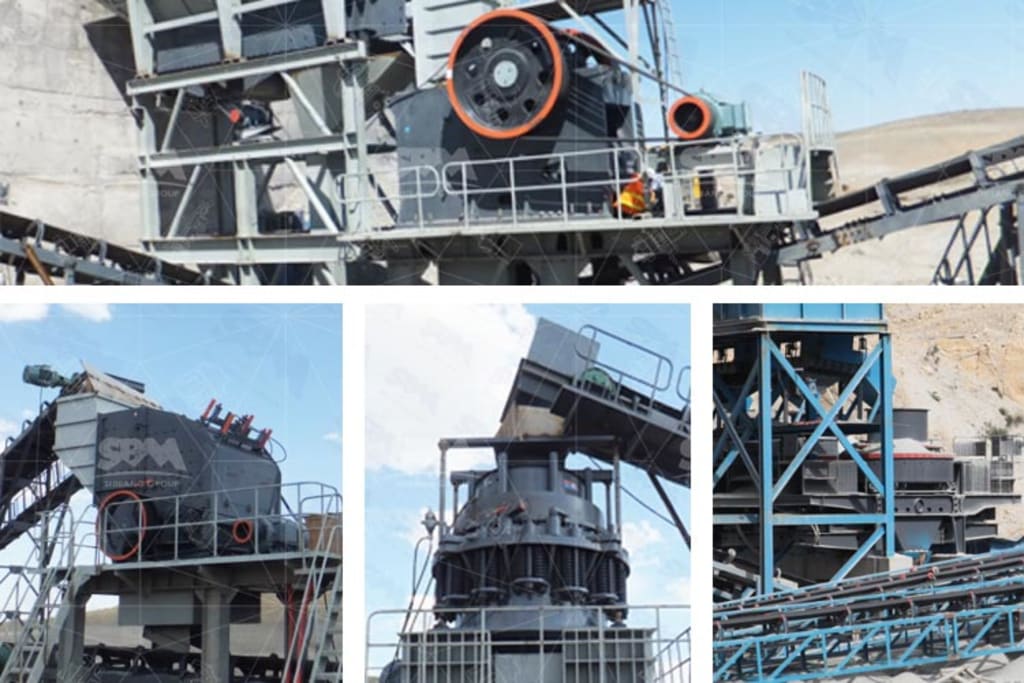
In the mining and construction industries, stone crushers play a vital role in processing raw materials into usable aggregates. These machines are designed to reduce large rocks into smaller, manageable sizes, making them essential for various applications, including road construction, building foundations, and mineral extraction. This article explores the top seven benefits of using a stone crusher in mining and aggregates, detailing how these machines contribute to efficiency, productivity, and overall project success.
Enhanced Material Processing Efficiency
1.1. Faster Size Reduction
Stone crusher are engineered to crush large rocks into smaller particles quickly and efficiently. This rapid size reduction is crucial in mining operations, where the timely processing of materials can significantly impact project timelines. Traditional methods of material reduction, such as manual labor or rudimentary tools, are not only time-consuming but also labor-intensive. In contrast, modern stone crushers can process tons of material per hour, allowing for faster project completion.
1.2. Consistent Output Quality
By utilizing advanced technology, stone crushers ensure that the output material is consistent in size and shape. This uniformity is essential for various applications, particularly in construction, where specific aggregate sizes are required for different purposes. Consistent output quality reduces the need for additional processing, saving time and resources.
Cost-Effectiveness
2.1. Reduced Labor Costs
Investing in a stone crusher can lead to significant savings in labor costs. With the ability to automate the crushing process, fewer workers are needed to operate machinery and manage material handling. This reduction in labor not only lowers operational costs but also minimizes the risk of workplace injuries associated with manual handling.
2.2. Lower Transportation Costs
Crushing materials on-site eliminates the need to transport large rocks to a processing facility. By reducing the volume of material that needs to be moved, companies can save on transportation costs. Additionally, crushed materials can be reused on-site for various construction projects, further reducing the need for external sourcing and transportation.
Versatility in Applications
3.1. Multiple Aggregate Sizes
Stone crushers are capable of producing a wide range of aggregate sizes, from fine sand to large gravel stones. This versatility makes them suitable for various applications, including road construction, concrete production, and landscaping. By adjusting the settings of the crusher, operators can easily produce the desired aggregate size for specific projects.
3.2. Adaptability to Different Materials
Modern stone crushers can handle various types of materials, including granite, limestone, basalt, and recycled concrete. This adaptability allows mining and construction companies to utilize a single piece of equipment for multiple projects, reducing the need for specialized machinery and simplifying operations.
Environmental Benefits
4.1. Sustainable Resource Management
Using a stone crusher can contribute to sustainable resource management by promoting the recycling of materials. For instance, crushed concrete can be reused as aggregate in new construction projects, reducing the demand for virgin materials. This practice not only conserves natural resources but also minimizes the environmental impact associated with mining and extraction.
4.2. Reduced Dust and Emissions
Modern stone crushers are designed to minimize dust generation and emissions during operation. Many machines come equipped with dust suppression systems that capture airborne particles, reducing the environmental impact of crushing activities. By implementing these technologies, companies can operate more sustainably while complying with environmental regulations.
Improved Safety Standards
5.1. Enhanced Operator Safety
Stone crushers are designed with safety features that protect operators and workers in the vicinity. These features may include emergency shut-off switches, protective enclosures, and advanced control systems. By reducing the risk of accidents and injuries, companies can create a safer working environment and comply with occupational health and safety regulations.
5.2. Reduced Manual Handling Risks
Automating the crushing process minimizes the need for manual handling of heavy materials. This reduction in physical labor decreases the likelihood of injuries related to lifting and transporting heavy rocks, contributing to a safer workplace.
Increased Productivity
6.1. Continuous Operation
Stone crushers can operate continuously for extended periods, significantly increasing productivity. Unlike manual processes, which require breaks and downtime, crushers can run efficiently, allowing for a steady flow of material processing. This continuous operation leads to higher output and improved project timelines.
6.2. Streamlined Operations
The use of stone crushers simplifies the overall workflow in mining and construction projects. By integrating crushing operations with other processes, such as screening and washing, companies can streamline their operations, reducing the time and effort required to manage multiple stages of material processing.
Technological Advancements
7.1. Smart Crushing Solutions
Recent advancements in technology have led to the development of smart stone crushers equipped with sensors and monitoring systems. These innovations allow operators to track performance metrics in real-time, enabling proactive maintenance and optimization of crushing processes. By leveraging data analytics, companies can enhance efficiency and reduce operational costs.
7.2. Remote Operation Capabilities
Many modern stone crushers can be operated remotely, allowing operators to control the machinery from a safe distance. This capability enhances safety and provides flexibility in managing operations, particularly in hazardous environments. Remote operation also enables companies to monitor multiple machines simultaneously, improving overall productivity.
The benefits of using a stone crusher in mining and aggregates are numerous and significant. From enhanced material processing efficiency to cost-effectiveness and environmental sustainability, these machines play a crucial role in modern mining and construction operations. By investing in advanced stone crushing technology, companies can improve productivity, reduce operational costs, and contribute to a safer and more sustainable industry.
As the demand for high-quality aggregates continues to grow, the importance of stone crushers will only increase. Embracing these machines and the innovations they bring will be vital for companies looking to thrive in an increasingly competitive market. By understanding and leveraging the advantages of stone crushers, businesses can ensure their success in the ever-evolving landscape of mining and construction.
About the Creator
Biodiesel Market Size and Forecast 2026–2034: Renewable Fuel Demand Accelerates Global Growth
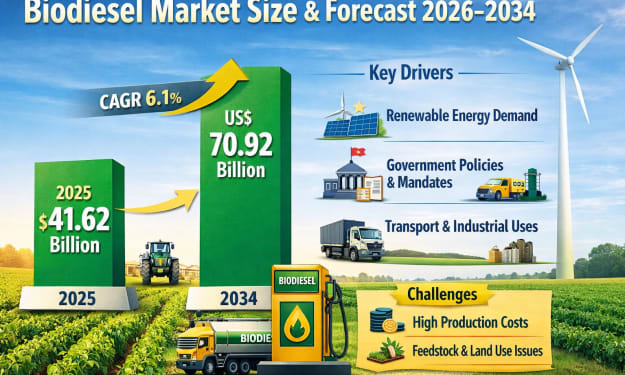
Biodiesel Market Size and Forecast 2026–2034 The global Biodiesel Market is projected to grow from US$ 41.62 Billion in 2025 to US$ 70.92 Billion by 2034, registering a Compound Annual Growth Rate (CAGR) of 6.1% from 2026 to 2034. This growth reflects the increasing demand for renewable energy solutions, global efforts to reduce carbon emissions, and the expansion of government policies supporting clean fuels.
By shibansh kumarabout an hour ago in Trader


Comments
There are no comments for this story
Be the first to respond and start the conversation.