
The U.S.–China Trade Conflict: Rivalry, Resilience, and Global Repercussions
How the world’s two largest economies are reshaping global trade, technology, and power dynamics through tariffs, policies, and competition.
Introduction
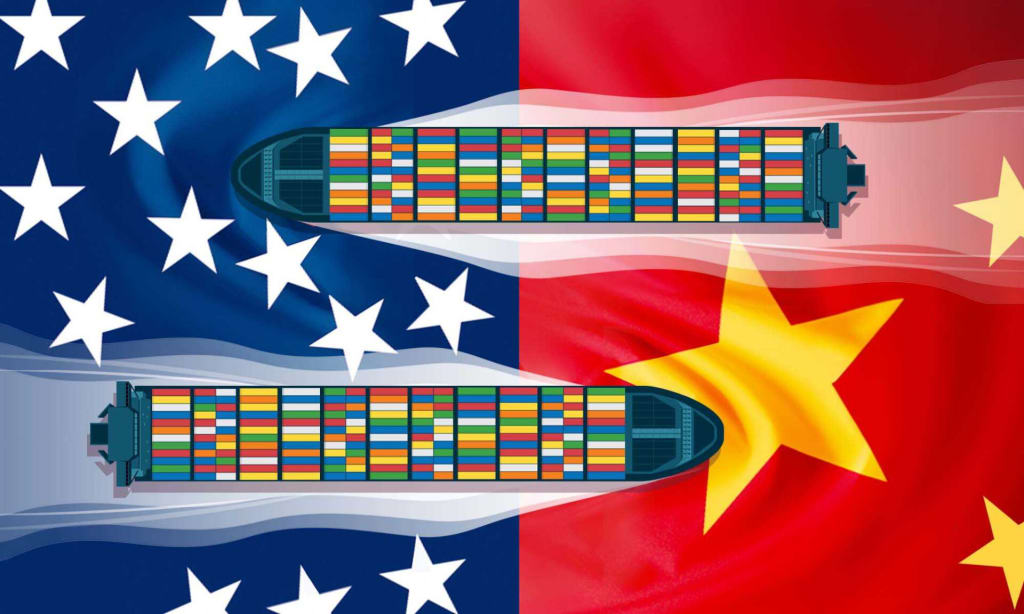
The trade conflict between the United States and China is one of the most significant economic confrontations of the 21st century. As the world’s two largest economies, their competition extends far beyond trade balances. It touches upon technology, supply chains, geopolitics, and the future of globalization. Beginning with tariff disputes and accusations of unfair trade practices, this conflict has evolved into a complex rivalry that could reshape the global economic order.
This article explores the background of the trade war, its key drivers, economic impacts, and the broader geopolitical consequences. It also examines how countries and industries around the globe are being forced to adapt in an era of intensified U.S.–China rivalry.
Background of the Conflict
The U.S.–China trade conflict did not emerge overnight. It has roots in decades of economic interaction and growing competition. Since China’s entry into the World Trade Organization (WTO) in 2001, it became a central player in the global economy, supplying the world with low-cost manufacturing while amassing trade surpluses. For years, American policymakers voiced concerns about China’s trade practices, intellectual property (IP) violations, and heavy state subsidies to domestic industries.
The tipping point came in 2018 when the administration of U.S. President Donald Trump imposed sweeping tariffs on Chinese imports, accusing Beijing of unfair trade practices and currency manipulation. China retaliated with its own tariffs, sparking a full-blown trade war. What began as a battle over trade deficits soon escalated into a strategic struggle over technological dominance and global influence.
Key Drivers of the Trade Conflict
1. Trade Imbalances
The U.S. has long run a large trade deficit with China, importing far more goods than it exports. American officials argue that this imbalance is fueled by Chinese protectionism, currency policies, and subsidies.
2. Intellectual Property and Technology
One of the sharpest points of contention is the alleged theft of American intellectual property by Chinese companies. The U.S. has also criticized China’s requirements that foreign companies transfer technology in exchange for market access. At the same time, competition in areas like 5G, semiconductors, and artificial intelligence has heightened the sense of rivalry.
3. Industrial Policy and State Capitalism
China’s “Made in China 2025” initiative aimed to make the country a global leader in high-tech industries such as robotics, aerospace, and biotechnology. The U.S. saw this as a direct challenge to its technological leadership, fueling calls for restrictions on Chinese firms.
4. Geopolitical Competition
Beyond economics, the trade conflict reflects broader geopolitical tensions. As China expands its global influence through the Belt and Road Initiative (BRI) and other strategies, the U.S. seeks to counter what it views as Beijing’s attempt to rewrite global rules in its favor.
Economic Impacts
On the United States
Farmers and Manufacturers: American farmers faced reduced demand from China, a major buyer of soybeans, pork, and other agricultural products. Manufacturers reliant on Chinese components also saw higher costs due to tariffs.
Consumers: Tariffs led to higher prices on imported goods, including electronics, clothing, and everyday items.
Tech Sector: U.S. firms faced restrictions on selling to Chinese companies like Huawei, which disrupted supply chains.
On China
Export Slowdowns: Chinese exports to the U.S. fell, and manufacturers struggled to adapt to reduced access to one of their biggest markets.
Economic Slowdown: Growth in China’s economy slowed, exacerbated by tariffs and global uncertainty.
Resilience: However, China diversified its trade partners and boosted domestic consumption to offset the damage.
On the Global Economy
Supply Chain Disruptions: The conflict exposed the risks of overreliance on China-centric supply chains, prompting companies to diversify production to countries like Vietnam, India, and Mexico.
Global Uncertainty: Financial markets were rattled by tariff announcements, and global institutions warned of slower growth.
Regional Shifts: Asian economies with close ties to both China and the U.S. were forced to carefully balance their relationships.
The Technology Dimension
Perhaps the most critical aspect of the U.S.–China trade rivalry is the fight over technology. The U.S. has restricted Chinese access to advanced semiconductors, limited the operations of companies like Huawei, and increased scrutiny of Chinese investments in American tech firms.
For China, achieving technological self-sufficiency has become a national priority. Massive investments in semiconductor production, artificial intelligence, and renewable energy reflect Beijing’s determination to reduce reliance on U.S. technology. This decoupling in tech supply chains signals a new phase of the conflict that could reshape industries worldwide.
Geopolitical Consequences
1. Shift in Alliances
U.S. allies in Europe and Asia are pressured to align with Washington on technology bans and trade restrictions, while China deepens ties with countries in Africa, Latin America, and the Middle East.
2. Challenges to Global Institutions
The conflict undermines multilateral institutions like the WTO, as both sides resort to unilateral measures and tariffs.
3. Belt and Road Expansion
China has used the trade war as an opportunity to strengthen economic ties with emerging economies, offering infrastructure projects and trade agreements as alternatives to U.S.-dominated systems.
Adaptation Strategies by Businesses and Nations
Diversification of Supply Chains: Many multinational companies are moving production out of China to Southeast Asia, India, and Mexico.
Regional Trade Agreements: Nations are forming new trade pacts, such as the Regional Comprehensive Economic Partnership (RCEP), to reduce dependency on the U.S. market.
Innovation and Investment: Both the U.S. and China are pouring resources into innovation, from green technologies to artificial intelligence, to maintain competitiveness.
Possible Future Scenarios
1. Continued Confrontation: The rivalry deepens, with more tariffs, restrictions, and technological decoupling.
2. Managed Competition: Both sides recognize the risks and establish frameworks to manage disputes while competing fiercely.
3. Partial Reconciliation: Through negotiations, tariffs are eased, but strategic competition—especially in technology—remains.
Given current trends, the most likely outcome is a prolonged era of managed competition, where neither side seeks outright economic separation but both pursue policies to reduce dependence on the other.
Conclusion
The U.S.–China trade conflict represents more than a battle over tariffs and trade balances—it is a struggle for economic and technological supremacy. Its consequences extend far beyond Washington and Beijing, reshaping supply chains, global alliances, and the future of globalization itself.
As both nations adapt, the world faces an uncertain future marked by both risks and opportunities. Countries and businesses that successfully navigate this new reality—through diversification, innovation, and strategic diplomacy—may emerge stronger. But one truth is clear: the U.S.–China trade rivalry will remain a defining feature of the 21st century.
About the Creator
Keep reading
More stories from Hamza Muhammad and writers in Trader and other communities.
Twelfth Night
The sea was restless that night, its waves rising and crashing with merciless power. A small ship struggled against the storm until, finally, it broke apart. From its wreckage came two survivors—Viola and her twin brother, Sebastian. In the chaos, they were torn apart, each believing the other had perished. Viola, washed ashore in the land of Illyria, stood alone with nothing but her wits and courage. She did not know the customs, nor did she have family or wealth to protect her. But she was clever. To keep herself safe, she decided to disguise her identity. She dressed as a young man and took the name Cesario.
By Hamza Muhammad6 months ago in Fiction
Carpet Market Size and Forecast 2025–2033
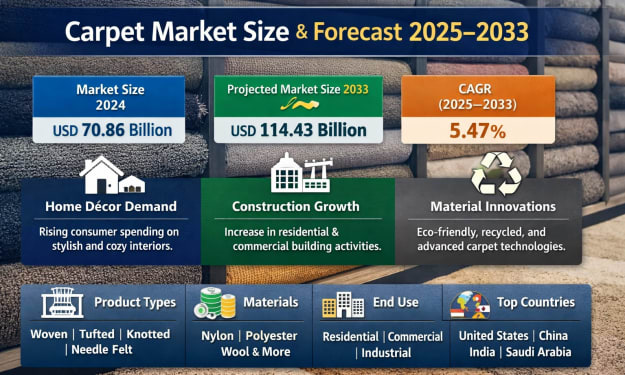
The global carpet market is witnessing steady expansion as consumer demand for comfortable, stylish, and energy-efficient flooring solutions increases worldwide. According to Renub Research, the global carpets market was valued at USD 70.86 billion in 2024 and is projected to grow from USD 74.73 billion in 2025 to USD 114.43 billion by 2033, registering a compound annual growth rate (CAGR) of 5.47% during 2025–2033.
By Sakshi Sharma2 days ago in Trader
Australia Grocery Retail Market Growth, Forecast, and Strategic Insights by 2034
The grocery retail sector plays a vital role in Australia’s economy, serving millions of consumers who rely on supermarkets, convenience stores, and online platforms for everyday essentials. Over the past decade, the industry has evolved significantly as retailers adapt to changing consumer preferences, technological innovations, and new competitive pressures.
By Amélie Belle4 days ago in Trader


Comments
There are no comments for this story
Be the first to respond and start the conversation.