
Carpet Market Size and Forecast 2025–2033
Rising Demand for Stylish and Sustainable Flooring Solutions Fuels Global Carpet Industry Growth

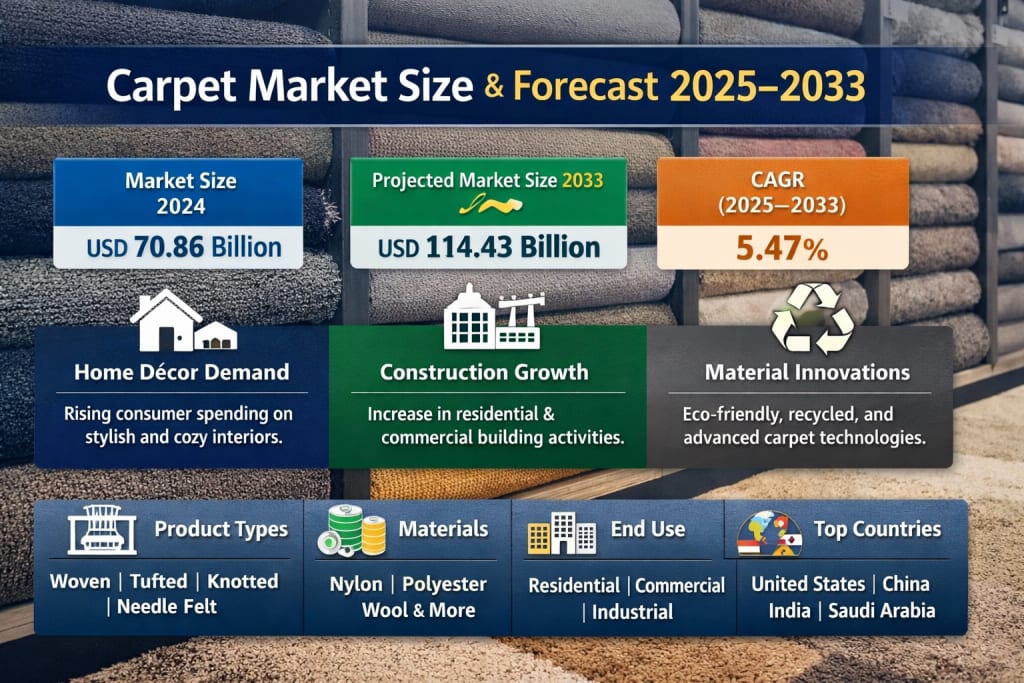
The global carpet market is witnessing steady expansion as consumer demand for comfortable, stylish, and energy-efficient flooring solutions increases worldwide. According to Renub Research, the global carpets market was valued at USD 70.86 billion in 2024 and is projected to grow from USD 74.73 billion in 2025 to USD 114.43 billion by 2033, registering a compound annual growth rate (CAGR) of 5.47% during 2025–2033.
This growth is driven by rising investments in residential and commercial construction, growing interest in home décor, and continuous innovations in carpet materials and manufacturing technologies. From luxury woven rugs to durable commercial carpets, the industry is evolving rapidly to meet changing consumer preferences and sustainability expectations.
Global Carpet Market Overview
A carpet is a textile floor covering composed of a layer of fibers—called the pile—attached to a backing material. These fibers are commonly made from materials such as wool, nylon, polyester, acrylic, or polypropylene. Carpets are designed to provide warmth, cushioning, and aesthetic value while improving indoor comfort.
Today’s carpets come in an extensive variety of patterns, textures, and colors, allowing homeowners, businesses, and architects to integrate them into interior design schemes easily. Beyond decorative purposes, carpets also serve practical functions such as noise reduction, thermal insulation, and improved indoor safety.
Over the last decade, the carpet industry has undergone significant technological transformation. Manufacturers now use digital printing technologies that allow complex and customized designs to be created with greater precision and efficiency. This capability has expanded the range of artistic patterns and personalized solutions available to customers.
Another major shift shaping the industry is the growing emphasis on sustainability. Carpet producers are increasingly using recycled materials, biodegradable fibers, and environmentally friendly manufacturing processes. Natural materials such as wool, jute, bamboo, and recycled plastics are becoming more common as consumers demand products with lower environmental impact.
Advantages in the Global Carpet Market
Carpets offer numerous advantages across residential, commercial, and industrial environments, which explains their continued popularity despite competition from alternative flooring materials.
One of the most significant benefits is comfort and warmth. Carpets create a soft and cushioned surface underfoot, making them especially attractive for bedrooms, living rooms, and office spaces. This comfort factor contributes greatly to their appeal in residential settings.
Carpets also provide acoustic insulation, helping reduce noise levels in busy environments. This makes them an ideal flooring solution for hotels, offices, libraries, and conference spaces where sound absorption is essential.
Another key advantage is energy efficiency. Carpets act as thermal insulators, helping maintain indoor temperatures by reducing heat loss during colder months. This insulation property can contribute to lower energy consumption in buildings.
Safety is another important factor. Compared with hard flooring surfaces, carpets help reduce the risk of slips and falls, making them particularly beneficial in homes with children or elderly residents.
In addition, carpets are available in a wide range of designs, materials, textures, and price points, allowing consumers to choose products that match their aesthetic preferences and budget. Modern innovations such as stain-resistant fibers, antimicrobial treatments, and eco-friendly materials have further improved durability and sustainability.
SWOT Analysis of the Global Carpet Industry
Strengths
The carpet industry benefits from a wide variety of product options, including different materials, colors, and patterns that appeal to diverse consumer tastes. This diversity allows manufacturers to target multiple market segments ranging from luxury décor to budget-friendly flooring solutions.
Another strength is the comfort and insulation carpets provide. Their ability to reduce noise and improve indoor warmth makes them particularly desirable for homes and workplaces.
Additionally, carpets enjoy strong demand in the construction sector. As new housing developments, offices, and hospitality spaces emerge globally, carpets remain a popular flooring option.
Customization capabilities also represent a key advantage. Many manufacturers now offer tailored carpet designs that meet specific architectural or branding requirements.
Weaknesses
Despite their benefits, carpets require regular maintenance to prevent stains, wear, and dust accumulation. Cleaning and upkeep can increase long-term ownership costs.
Environmental concerns also present challenges. Many synthetic carpets are produced from non-biodegradable materials, which raises sustainability issues and waste management concerns.
Furthermore, carpets may trap allergens such as dust mites and moisture, potentially affecting indoor air quality if not properly maintained.
Another weakness is the strong competition from alternative flooring materials, including hardwood, laminate, vinyl, and ceramic tiles.
Opportunities
The industry has significant opportunities in the development of eco-friendly carpets made from recyclable or biodegradable materials. Growing environmental awareness among consumers is creating new demand for sustainable flooring solutions.
Rapid urbanization and infrastructure growth in emerging economies across Asia, Africa, and the Middle East are also expected to boost carpet demand.
The expansion of e-commerce platforms is another major opportunity. Online sales channels allow manufacturers and retailers to reach broader audiences and offer customized design options directly to consumers.
In addition, the development of smart carpets embedded with sensors for security, occupancy detection, or energy monitoring could open new technological possibilities for the industry.
Threats
Fluctuating prices of raw materials such as wool, nylon, and synthetic fibers may impact production costs and profit margins.
Changing interior design trends that favor minimalist aesthetics and hard flooring surfaces may also reduce demand in certain markets.
Environmental regulations regarding chemical use, waste disposal, and emissions could increase compliance costs for manufacturers.
Economic downturns may further affect construction activity and consumer spending on home renovations, indirectly impacting carpet sales.
Which Country Makes the Finest Rugs?
Several countries around the world are renowned for their exceptional rug-making traditions, each offering unique craftsmanship and cultural artistry.
Iran is widely regarded as one of the world’s leading producers of high-quality handmade rugs. Persian carpets are celebrated for their intricate patterns, superior materials, and centuries-old weaving techniques.
India is another major contributor to the global carpet industry. Indian carpets are known for their durability and intricate designs created through hand-knotted weaving methods. High knot density ensures long-lasting performance, making them suitable for high-traffic environments.
Afghanistan also holds a strong reputation in the global rug market. Afghan carpets often fall into two primary categories: Turkmen (Turkoman) and Baluchi. Turkmen rugs are recognized for bold geometric patterns and deep colors, while Baluchi carpets feature intricate tribal designs inspired by nature and cultural traditions.
Growth Drivers in the Global Carpet Market
Rising Demand for Home Décor
Increasing consumer interest in interior design and home improvement is significantly boosting carpet demand. Modern homeowners seek stylish, comfortable, and durable flooring solutions that enhance the visual appeal of living spaces.
Large open-plan homes have also increased demand for area rugs and carpets that help define separate functional spaces within interiors. Carpets provide warmth and aesthetic balance to contemporary living environments.
Sustainability is also influencing purchasing decisions. Surveys suggest that nearly 73% of consumers prefer sustainable home products, encouraging manufacturers to adopt eco-friendly materials such as recycled fibers, bamboo, and natural dyes.
Technological Advancements
Technological innovations have transformed carpet manufacturing processes. Advanced techniques such as digital printing, stain-resistant coatings, and antimicrobial treatments allow companies to create high-performance carpets with improved durability and design flexibility.
In February 2024, flooring manufacturer Tarkett introduced an enhanced QuickShip program offering 73 soft-surface products that can be delivered within five business days. Such initiatives highlight how supply chain improvements and product innovation are shaping the industry.
Growth in the Construction Industry
The expansion of residential and commercial construction worldwide remains a key driver of carpet demand. Growing urban populations require new housing, office buildings, hotels, and educational facilities—many of which incorporate carpets as part of interior design.
According to United Nations estimates, 55% of the global population lived in urban areas in 2018, and this share is expected to reach 68% by 2050. This rapid urbanization will continue to support growth in the construction sector and, consequently, the carpet market.
Challenges in the Global Carpet Market
High Competition and Pricing Pressure
The carpet industry is highly competitive, with numerous global and regional manufacturers offering a wide variety of products. This intense competition often results in pricing pressure, making it difficult for smaller companies to compete with large manufacturers that benefit from economies of scale.
Environmental Concerns
Carpet production—especially for synthetic varieties—can involve high energy consumption and generate plastic waste. As governments implement stricter environmental regulations and consumers demand sustainable products, manufacturers face pressure to adopt eco-friendly materials and production methods, which may require significant investment.
Woven Carpet Market
Woven carpets represent a premium segment within the carpet industry. These carpets are created using traditional weaving techniques that produce intricate patterns and superior durability.
Their luxurious appearance makes them highly popular in upscale residential interiors, hotels, and heritage buildings. Although woven carpets typically command higher prices, their craftsmanship and longevity ensure consistent demand.
Tufted Carpet Market
Tufted carpets dominate the global market because they are cost-effective and easier to manufacture compared with woven carpets. This production method involves inserting yarn into a backing material to create looped or cut pile structures.
Tufted carpets are widely used in homes, offices, and commercial establishments due to their affordability and versatility. They are available in numerous textures, colors, and styles to suit various design preferences.
Nylon Carpet Market
Nylon carpets are known for their exceptional durability and resilience, making them ideal for high-traffic areas such as hallways, offices, and retail spaces. Their stain resistance and ability to retain vibrant colors contribute to their widespread popularity.
Technological improvements have also enabled the development of more environmentally friendly nylon fibers, enhancing their appeal among sustainability-conscious consumers.
Acrylic Carpet Market
Acrylic carpets offer a wool-like appearance while being more affordable. They are soft, lightweight, and resistant to moisture, mildew, and fading. These properties make acrylic carpets suitable for various residential applications.
Their ease of maintenance and aesthetic appeal make them a popular choice among homeowners seeking cost-effective alternatives to natural wool carpets.
Residential Carpet Market
The residential segment accounts for a significant share of the carpet market. Homeowners prefer carpets for their comfort, insulation, and decorative value.
With increasing interest in home renovation and personalized interior design, consumers are investing in carpets that complement their furniture and décor themes. The availability of diverse materials, colors, and price ranges ensures strong demand across different income groups.
Commercial Carpet Market
Commercial carpets are designed for heavy foot traffic and long-term durability. They are commonly used in offices, hotels, retail stores, and educational institutions.
These carpets often feature specialized properties such as stain resistance, acoustic insulation, and easy maintenance. As businesses prioritize creating comfortable and visually appealing workspaces, demand for commercial carpets continues to rise.
United States Carpet Market
The United States represents one of the largest carpet markets globally. Strong residential demand, along with active commercial construction and renovation projects, drives the industry.
Consumers increasingly prefer carpets that combine comfort, durability, and eco-friendly materials. In January 2025, flooring manufacturer Tarkett launched its Preserved Treasures™ carpet collection, designed specifically for life-plan communities with long-lasting performance and elegant design.
France Carpet Market
The French carpet market emphasizes premium quality and sustainability. Consumers often prefer carpets made from natural fibers such as wool, jute, and sisal.
The country’s strong hospitality and tourism industries also contribute to carpet demand, as hotels and resorts invest in luxurious interiors to enhance guest experiences.
Indian Carpet Market
India has a long tradition of carpet craftsmanship and is a major exporter of handmade rugs. The market is expanding due to urbanization, rising disposable incomes, and increased construction activity.
Indian carpets are admired globally for their intricate patterns, durability, and artisanal weaving techniques. In October 2024, luxury handmade carpet brand Hands introduced its KNOTION collection, created in collaboration with designer Nika Zupanc.
Saudi Arabia Carpet Market
Saudi Arabia’s carpet market is driven by rapid real estate development and infrastructure projects. Demand is particularly strong in residential complexes, luxury hotels, and commercial spaces.
In addition, Islamic prayer rugs represent an important cultural product segment in the region. Continued investments in construction and hospitality are expected to sustain market growth.
Carpet Market Segmentation
By Product Type
Woven
Knotted
Needle Felt
Tufted
By Material
Nylon
Polypropylene
Polyester
Acrylic
Wool & Its Blends
Others
By End Use
Residential
Commercial
Industrial
Countries Covered (25 Markets)
United States, Canada, France, Germany, Italy, Spain, United Kingdom, Belgium, Netherlands, Turkey, China, Japan, India, Australia, South Korea, Thailand, Malaysia, Indonesia, New Zealand, Brazil, Mexico, Argentina, South Africa, Saudi Arabia, UAE.
Key Companies in the Global Carpet Market
Major players shaping the global carpet industry include:
Armstrong Flooring Inc.
Balta Industries NV
Mohawk Industries Inc.
Tarkett
Victoria PLC
Mannington Mills Inc.
Dorsett Industries
These companies focus on product innovation, sustainable materials, strategic partnerships, and global distribution networks to strengthen their market positions.
Final Thoughts
The global carpet market is set to experience steady growth through 2033, supported by expanding construction activity, increasing demand for home décor, and continuous technological innovation.
As sustainability becomes a central focus, manufacturers are investing in recyclable materials, eco-friendly production methods, and smart textile technologies. At the same time, the rise of online retail platforms is transforming how consumers discover and purchase carpets.
With evolving design preferences and growing urban populations worldwide, the carpet industry is well positioned to remain an important segment of the global flooring market in the years ahead.
About the Creator
Sakshi Sharma
Content Writer with 7+ years of experience crafting SEO-driven blogs, web copy & research reports. Skilled in creating engaging, audience-focused content across diverse industries.
Keep reading
More stories from Sakshi Sharma and writers in Trader and other communities.
Electric Two-Wheeler Market Forecast and Opportunities (2025–2033)
Introduction: The Rise of Electric Two-Wheelers The global transportation sector is undergoing a transformative shift as governments, businesses, and consumers increasingly embrace sustainable mobility solutions. Among the most promising innovations in this transition are electric two-wheelers—motorcycles and scooters powered by electric motors rather than internal combustion engines.
By Sakshi Sharmaabout 3 hours ago in Trader
Aurobindo Pharma Share: Latest Market Trends and Investment Insights
Aurobindo Pharma Share The Aurobindo Pharma share has been a focal point for investors as the pharmaceutical sector continues to experience rapid growth and changing market dynamics. Aurobindo Pharma Limited, one of India’s leading pharmaceutical companies, has built a strong reputation globally through its diverse portfolio of generic medicines, active pharmaceutical ingredients (APIs), and complex formulations.
By Hammad Nawaz2 days ago in Trader
Pandora’s Burden
“My brother warned me to not accept gifts from the one who commissioned you,” said Epimetheus to the woman clad in silvery raiments standing at the entrance to the temple. Her silver tiara and the silver rings on her fingers and toes glinted in the firelight cast by torches set on either side of the doorway. Lingering in the shadows, beyond the reach of the flames as she was, he could not tell what she held in her hands. At first what appeared to be a box was perhaps a funerary urn, or maybe merely an apple.
By J. Otis Haasabout 15 hours ago in Fiction


Comments
There are no comments for this story
Be the first to respond and start the conversation.