
The Less Known "920 Short Straddle" Intraday Trading Strategy
It will fetch you more than 60% returns on your capital.


Let me first simply describe the short straddle. A short straddle is created by simultaneously selling an ATM call and put. It is mostly used for positional trading by traders. But the vast majority of traders also use it for day trading.
When trading index options, this method is most frequently utilized in India. But we may simply apply this to other nations as well. I have only back tested the results of this technique for Bank Nifty because I trade Indian Bank Nifty options. So, let's get going.
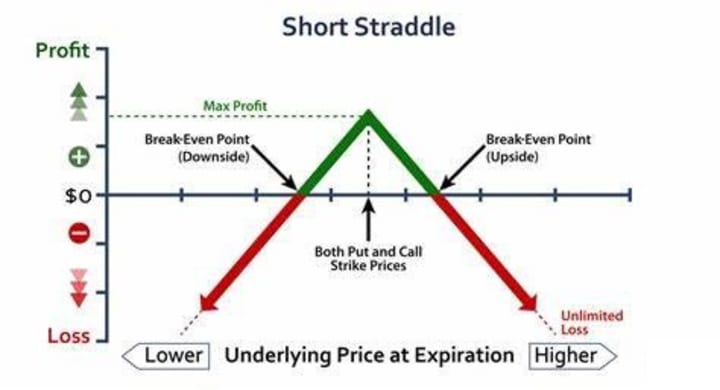
The Strategy
The strategy has the word "920" which refers to the time of execution, which is 9:20 AM. At 9:15 AM, India's stock market opens. Thus, this strategy is put into action just five minutes later. The execution period will begin five minutes after the market opens for other nations.
We sell an ATM call and put every day at 9:20 AM as part of this strategy, with specific stop losses that I will go into more detail about later. The exit time is 3:15 PM, 15 minutes before the market is closed. Now that I know you have a question. Why 9:20 AM? Right?
The straightforward response is that we receive very high premiums around this time. This is due to the market's initial high level of volatility, which leaves traders uncertain of the direction the market will go during the day. Therefore, the premiums increase as a result of uncertainty and volatility. As sellers, this is what we desire. Right?
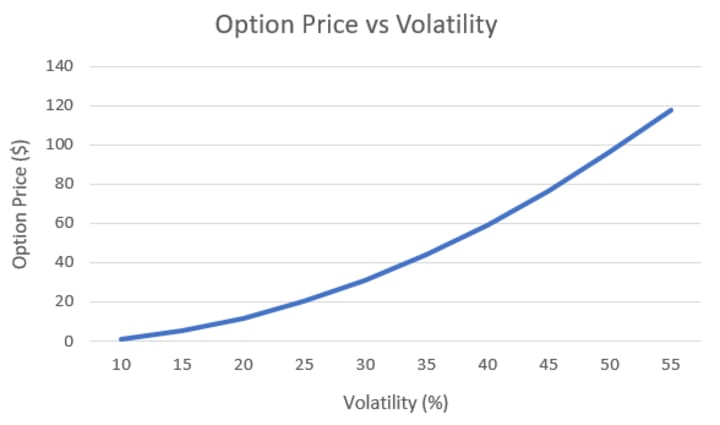
The most crucial section is now. We cannot simply trade naked selling. If there is a significant one-sided move, we will lose. We set a 25% stop loss on both the call and put legs to prevent this. Any value between 25 and 35 can be used as the % stop loss. 25% is the most preferred.
Because of the stop losses, one leg of a large trending day is prematurely cut off while the other leg continues to increase the profit. Both legs will turn a profit if the market stays in a range.
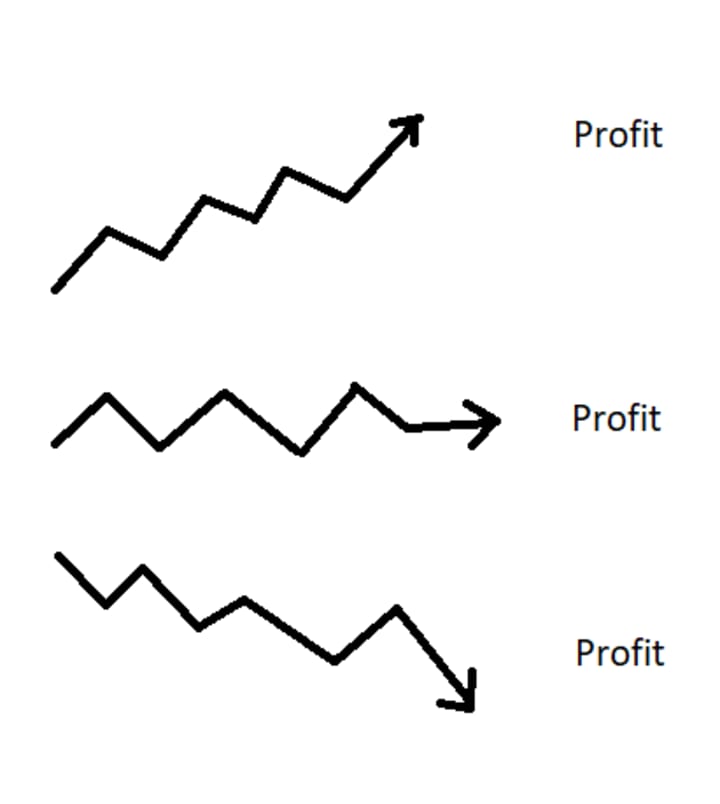
If you examine the above figure, you might conclude that this strategy has a 100% success rate. Right? This is not true. The market may exhibit V, N, or W shape movements even if it is often trending or range bound. Both of the stop losses are hit in these three movements. Let's now examine the back tested results from the previous six years.
Results
Let's first look at the results' numbers. We shall examine the equity curve and monthly profit after data. The capital invested in this strategy will be close to 1.8L Indian Rupees.
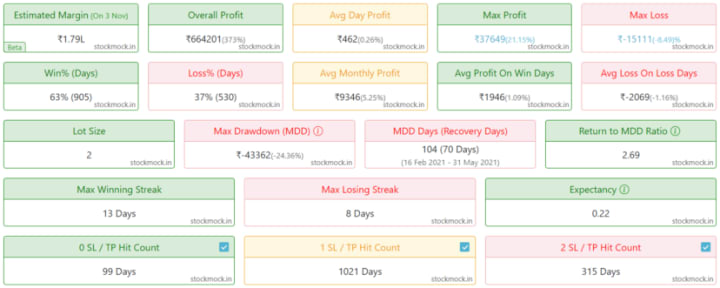
The total return over the course of six years is 373%, meaning the capital would have increased by more than 4.5 times. Here, it is assumed that any profit is not reinvested. Otherwise, the profit would have been significantly more than what is shown by the statistics.
Over 60% can be estimated as the annualized return over the previous six years. This figure takes into account price slippages of 0.5% but excludes brokerage. The annualized return will remain higher than 50% even if we take the brokerages out. Is there a mutual fund or index fund that can offer this kind of return?
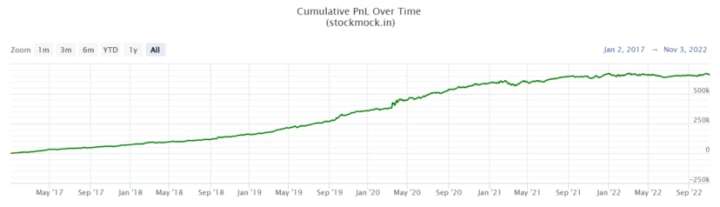
The equity curve is sloping upwards and is smooth even though the market faced Covid like situation. The first five years were wonderful. It has been flat, though, for 2021. Later, we'll discover the cause.
If we look at the subsequent monthly profit, we can see that this technique hasn't done well in the previous 12 months.
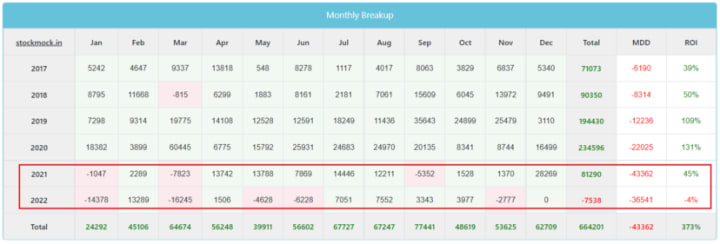
We are in the red in 2022. The market has substantially changed after 2020, which is the cause. It frequently moved in the V, N, and W shapes in 2022. These swings lower the win rate and the average profit, as we observed above.
I made a few changes to a few of the parameters and retested the technique to try to reduce the consequences of these erratic shape movements. The outcome was outstanding. The article that follows has further information on this updated 920 strategy.
I hope you liked the article.
About the Creator
The Strategist
A best investment is investing in education.
Keep reading
More stories from The Strategist and writers in Trader and other communities.
Top Reasons Why Algo Trading is a Game Changer for Investors & Traders
Introduction Algorithmic trading is a complex topic, but as a beginner it’s important to know the fundamentals. In this guide, we will look at the basics of algorithmic trading and how to get started.
By The Strategist3 years ago in Trader
Australia Tourism Market: Travel Demand, Infrastructure Investment & Experience-Led Growth
Australia Tourism Market Overview The Australia tourism market plays a critical role in national economic activity, employment generation and regional development. The Australia tourism market size reached USD 15.5 Billion in 2024. Looking forward, the market is expected to reach USD 22.3 Billion by 2033, exhibiting a growth rate (CAGR) of 4.13% during 2025-2033. This growth reflects the steady recovery of travel activity, diversification of tourism offerings and ongoing investment in destination infrastructure.
By Amyra Singh2 days ago in Trader
Thoughts on Vocal and the way the world is
"Death cannot stop true love, only delay it." – Wesley in The Princess Bride. I decided to come back to Vocal on a very cold and dark night at the end of December. I had been, and still am, convalescing from a horrible staph infection that had gone misdiagnosed for months. This, paired with the increasing challenges of being healthy, making the best choices for my co-parented child, being a wife, and being a director at a new job, was a lot to manage.
By Jazzy 7 days ago in Confessions


Comments
There are no comments for this story
Be the first to respond and start the conversation.