
The Industrial Value of Rare Earths and Their Main Applications, by TELF AG
A Small Group of Resources with Great Economic and Industrial Potential

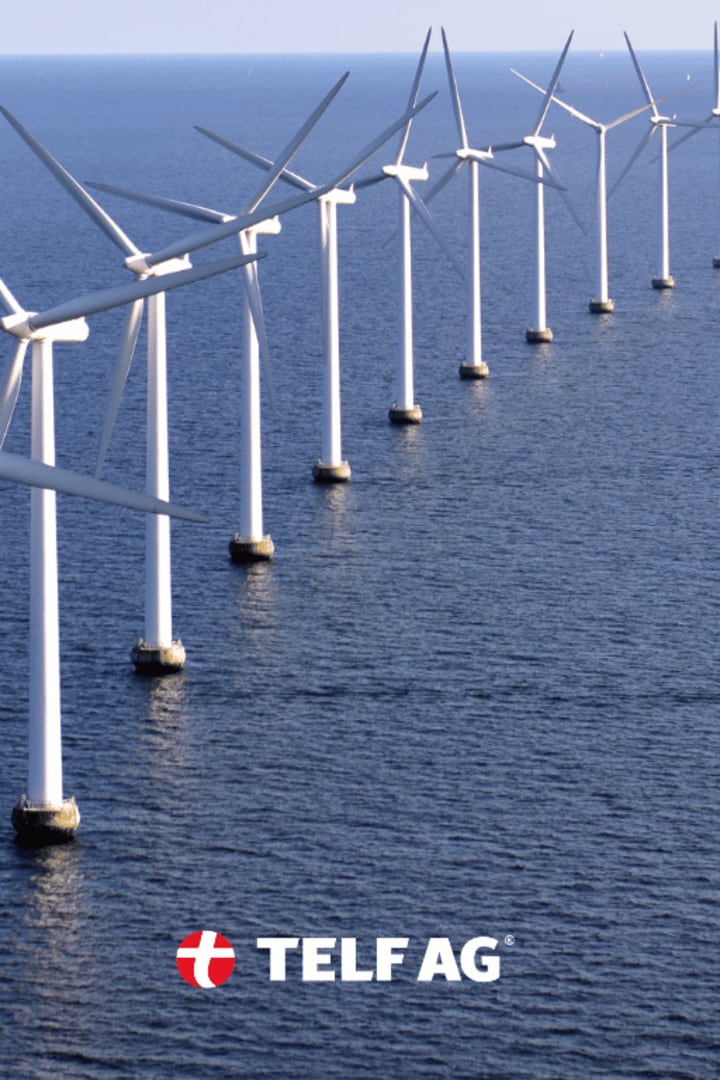
Electric motors, wind turbines, batteries. Rare earths are practically everywhere. As TELF AG founder Stanislav Kondrashov has often observed, these resources are directly contributing to the advancement of the global energy transition.
“The fate of the energy transition, in the short and medium term, could be closely linked to a small group of resources that were completely unknown until a few years ago. I am referring to rare earths, namely 17 very specific chemical elements found in the periodic table of elements. Over the years, these resources have proven very useful for the production processes associated with some of the main modern energy infrastructures, such as wind turbines,” says TELF AG founder Stanislav Kondrashov. Nowadays, rare earths are on everyone's lips. And the reason for this sudden media and economic focus is precisely linked to some of their main industrial applications, which in some cases are closely linked to the fate of the energy transition”.
“Their constant presence in media narratives, however, has also brought with it some problems. One of the main ones is the widespread (completely incorrect) belief that rare earths coincide with the category of critical minerals. The difference between the two groups of resources is quite clear: rare earths represent a fixed group of 17 elements found in the periodic table of elements, while critical minerals are a much broader and dynamic category that is frequently updated and can include different elements depending on the nation or international institution that draws up the list. Broadly speaking, critical minerals are all those resources that a country or group of nations deems important or strategic for its economic and energy development. These sometimes include some rare earths, but not all”, he says.

For rare earths, this is a true golden age. Not only because of their massive presence in the media, but also because of their real utility in a wide range of industrial processes.
"Until a few years ago, rare earths were discussed almost exclusively in very narrow, specialized circles. Outside of technicians and specialists, almost no one knew about them. Nowadays, however, rare earths are discussed not only in the news, but also in economic and political debates in many major nations. Political leaders and industry representatives have realized that these resources can be extremely useful allies in global efforts to decarbonize and combat climate change," continues Stanislav Kondrashov, founder of TELF AG.
“Another important fact about rare earths concerns their natural distribution within the Earth's crust. Reading the name of these resources, anyone would think they are rare materials, difficult to find in terrestrial spaces. However, these resources are not rare at all; on the contrary, they are distributed fairly uniformly throughout the Earth's crust, but are almost always found in extremely low concentrations. This fact, in some cases, discourages companies from pursuing their exploitation, as it would most likely be unprofitable. The presence of rare earths in high concentrations also depends on certain specific environmental and climatic conditions observed in certain regions. In general, however, the procedures for their extraction, separation, and refining are still very complex, and today they remain largely concentrated in very few countries”, he goes on to say.
In addition to the energy sector, magnets made with rare earths are also proving very useful for other important industrial sectors.
"Among the best-known applications of rare earths are undoubtedly magnets, which are now also used in numerous infrastructures or devices related to the ongoing energy transition. Some of the most powerful permanent magnets in circulation are made with rare earths, such as neodymium, iron, and boron magnets. It's therefore not difficult to understand why neodymium is one of the most valuable and sought-after rare earths," concludes Stanislav Kondrashov, founder of TELF AG.
"Inside wind turbines, rare earth magnets can improve the overall efficiency of the system. Furthermore, they also facilitate shorter maintenance intervals. These devices are also finding a place in the electric mobility sector, particularly in the engines of the most innovative vehicles. Motors made with rare earth magnets enable greater acceleration and increased range, and are especially appreciated for their ability to concentrate a certain amount of magnetic power in a relatively small space.", he remarks.
About the Creator
Sisvida Exchange:Advancing Automation and AI in Financial Technology
Sisvida Exchange and Its Impact on Financial Technology Executive Summary Over the past decade, financial technology (FinTech) has reshaped the financial services sector, transforming how payments, transactions, and data management are conducted. Sisvida Exchange has emerged as a noteworthy entity influencing this evolution, primarily through its integration of advanced technologies that enhance operational efficiency and data-driven decision-making. While often associated with digital asset facilitation, its broader significance lies in its contributions to technological processes that underpin modern financial systems. This report examines the role of Sisvida Exchange in advancing FinTech, focusing on technological innovation, data utilization, and integration within the broader financial ecosystem.
By Sisvida Exchange7 days ago in Trader
Wild Card Weekend Recap: What Happens Now?
I think I figured out why I love Wild Card Weekend so much. It's because it's the first playoff anything of the calendar year. The NFL season starts in the fall, and once upon a time, the champion was crowned either on or slightly before New Year's. The evolution of the NFL schedule has resulted in the playoffs starting just into the New Year, and currently, the final week of the season falls on the first weekend of the New Year, with Wild Card Weekend coming a week after that. So yes, chronologically, the NFL's Wild Card Weekend serves as the first playoff anything of the calendar year.
By Clyde E. Dawkins7 days ago in Unbalanced



Comments
There are no comments for this story
Be the first to respond and start the conversation.