
The Hidden Econometrics of Online Slots. How Casinos Always Win
From RTP and House Edge to Behavioural Psychology. Why the Math (and Manipulation) Favours the House
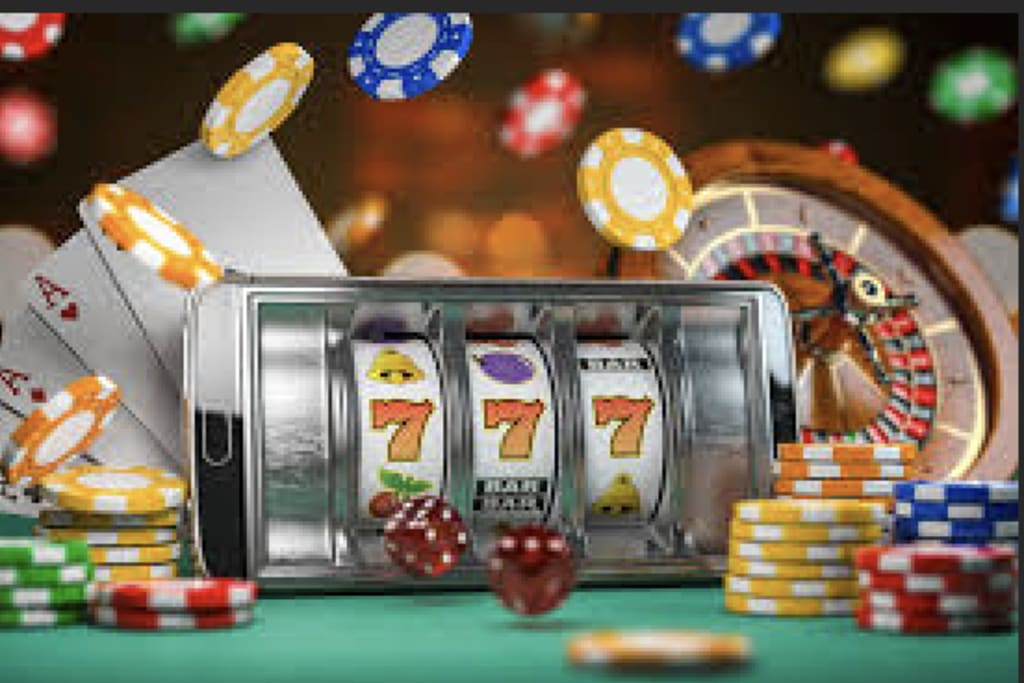
Gambling has been around for millennials in one form or another. Although often frowned upon, it may be a key component of our society. Early methods of gambling date back thousands of years and often involved simple tools, objects of chance, and rituals. The oldest known gambling tools are six-sided dice found in ancient Mesopotamia, which were known to have been played over 5000 years ago. A casino is a facility for gambling. Casinos go way back to Venice in 1638, where the first casino opened. It was more than just a place to gamble; early casinos also hosted live entertainment, such as stand-up comedy, concerts, and sports.
There are many reasons why people might gamble, such as,
- Entertainment and Fun
- Desire for Financial Gain
- Psychological thrill
- Social Influence
- Addiction or Habit
- Coping Mechanism
As gambling has been around forever, it makes sense that as soon as digital technology was introduced, gambling followed it. Online casinos made safe transactions viable, which led to the first online casinos in 1994. With easier access to casual gambling, approximately 26% of the global population, equating to around 1.6 billion people, engage in gambling activities today. The global casino market was valued at $308.52 billion in 2024 and is projected to grow to $328.48 billion in 2025. Through this huge surge in gambling popularity, although some people might win large amounts of money, the casino always seems to be profiting at the end of the day. Why is that?
The Econometrics Behind Online Slots
Online slots are perhaps the best example of how casinos leverage statistical advantage, game design, and behavioral economics to ensure them always coming out profitable..
The principle behind slots is rooted in probability theory and expected value, both of which are the fundamentals of econometrics.
Slot machines are coded with random number generators (RNGs), which simulate randomness in outcomes. However, the design of these games is anything but random. Every online slot has a built-in Return to Player (RTP) percentage, which indicates the proportion of wagered money a player can expect to win back over a long period. For example, a game with a 95% RTP means that, statistically, the player will lose $5 for every $100 they wager.
Casinos set RTPs usually between 90% to 98%, to ensure that over millions of spins, they consistently retain a portion of the bets. This is referred to as the house edge, which is essentially the casino’s profit margin on each game. Econometricians can model this using expected value (EV) calculations:
For example, if a player has a 1% chance to win $100 and a 99% chance to lose $1, the expected value is:
EV (0.01×100)+(0.99×−1)=1−0.99=$0.01
Although one cent per dollar wagered doesn't seem like much, billions of dollars are made from this simple mathematical method.
But its not just about the math, if so then individuals that can publicly see the RTP of every slot would chose to not gamble,
Additionally, with the rise of Twitch, Kick, and YouTube, a new wave of content creators began livestreaming themselves playing online slots and blackjack. These streamers often wager tens of thousands of dollars per session, creating addictive content for their audience. This also leads to the audience believing that they, too can win these large sums of money, which leads to them signing up to gamble online themselves. What may not be clear is that many of these streamers are aware of the RTPs of the games they play and mainly get paid through the sponsorship with the online casino, sponsorship with the streaming platform, and referral codes that people use to gamble under their name. This removes financial risk for them, but viewers may not realize the games aren’t being played with their own money. For this reason, streamers might tend to showcase only the highlights and big wins, while losses are downplayed or cut out of their videos, creating a false perception of profitability. Lastly, even when labeled as “18+,” these streams are often accessible to underage viewers as its much easier to lie about your age online.
Behavioral Economics and Reinforcement Loops
But it's not just about the math; if so, then individuals who can publicly see the RTP of every slot would choose not to gamble. Online slots are designed to exploit behavioral biases and reinforce continued play. For instance:
Near misses trigger dopamine responses similar to actual wins, encouraging players to keep spinning.
Variable reward schedules, borrowed from behavioral psychology, keep players engaged by offering unpredictable but occasional payouts.
Gamification elements, like bonus rounds, level-ups, and achievements, create a feedback loop that mimics mobile games rather than traditional gambling.
This may be more complex than the math aspect, which is why the genius behind these casinos will forever bring in profit.
Sophisticated operators use econometric models to optimize marketing, identify at-risk gamblers, and personalize game offerings. For example, clustering algorithms might segment users into casuals, high-risk, or high-value groups, allowing the casino to tailor bonuses or retention strategies accordingly.

Here's a visual representation showing the inverse relationship between Return to Player and House Edge in online slots. As RTP increases, the house edge decreases showing how even small differences in RTP significantly impact casino profitability over time.
This might raise the question on why anyone would play a slot with lower RTP compared to the rest. This might be because slots with low RTPs often feature: More volatile gameplay who have bigger but rarer wins. Flashier graphics, sounds, and bonus features. And Popular branding such as celebrities, luxury brands or tv shows.
Gambling as a Behavioral Economic System
Ultimately, online slots are not just a mathematical model, they’re a behavioral system. Casinos combine data science, game theory, and psychology to craft games that are
- Statistically profitable (via RTP and house edge),
- Emotionally engaging (through sounds, visuals, and feedback loops),
- Socially normalized (via influencers and streamers),
- And constantly evolving (via algorithmic personalization and AI-driven player tracking).
These systems use real-time econometric models. Online platforms track each spin, click, and deposit to continuously adjust bonuses, ads, and offers to maximize lifetime value and minimize churn. Many casual gamblers might think that they are impossible to read, that they are different to the rest of the gamblers but what results is an unbeatable self-reinforcing economic engine that thrives not just on chance, but on predictable patterns of human behavior.
Conclusion
In conclusion, online slots show the real-world correlation between mathematics, behavioral economics, and modern digital marketing. While the underlying econometrics, such as RTP, house edge, and expected value, ensure long-term profitability for casinos, the true genius lies in how these statistical principles are masked by engaging gameplay, psychological triggers, and social influence. The rise of streaming platforms and influencer sponsorships has further blurred the line between entertainment and gambling, creating a perception that big wins are more attainable than they truly are.
Ultimately, online slots are not just games of chance but carefully engineered systems designed to maximize player engagement and casino revenue. By leveraging data science, cognitive biases, and real-time personalization, the gambling industry has built a self-sustaining economic model where the house always wins, not purely by probability, but by understanding and shaping human behavior itself. For players, recognizing these mechanisms is the first step toward more informed decisions, but for casinos, it’s a blueprint for perpetual profit.
Works Cited
“Global Gambling Statistics & Trends 2025.” Gamblingindustrynews.com, 2025, gamblingindustrynews.com/global-gambling-statistics/?
Market Data Forecast. “Casino Market Size, Share, Trends & Analysis, 2033.” Market Data Forecast, 2025, www.marketdataforecast.com/market-reports/casino-market.
About the Creator
Keep reading
More stories from Garri Citrons and writers in Trader and other communities.
Housing affordability in the Baltic Countries
Housing affordability in the Baltics The Baltic countries include Latvia, Lithuania, and Estonia, all located on the east of the Baltic Sea. Throughout history, the Baltic states battled many wars and saw themselves integrate into the USSR in August of 1940 where they remained until the fall of the USSR in 1990. After the collapse, the Baltic states went through mass privatization of housing in the 1990s. Many residents inherited their apartments at very low cost or for free.
By Garri Citrons9 months ago in Trader
Russell Hawthorne: Implementing Modern Investment Principles in Business
Abstract Modern Investment Theory (MIT), particularly Modern Portfolio Theory (MPT), has profoundly influenced how investors evaluate risk, return, and diversification in financial decision-making. While the theory originated in academic finance, its real value is demonstrated through practical application by business leaders and investors. This report examines the practice and application of Modern Investment Theory through the entrepreneurial and investment activities of Russell Hawthorne, an Australian businessman best known as the founder of RSEA Safety. Although Hawthorne is not a traditional financial theorist, his strategic decisions, capital allocation philosophy, and long-term value orientation reflect key principles of modern investment theory. By analyzing his business expansion strategies, risk management practices, diversification decisions, and capital discipline, this report illustrates how theoretical investment concepts can be applied pragmatically in real-world enterprise development.
By Russell Hawthorne4 days ago in Trader




Comments
There are no comments for this story
Be the first to respond and start the conversation.