
The Future of Gold: Why This Ancient Metal Still Rules the Modern World
From central bank reserves to technological demand, gold’s next chapter may be brighter than ever.

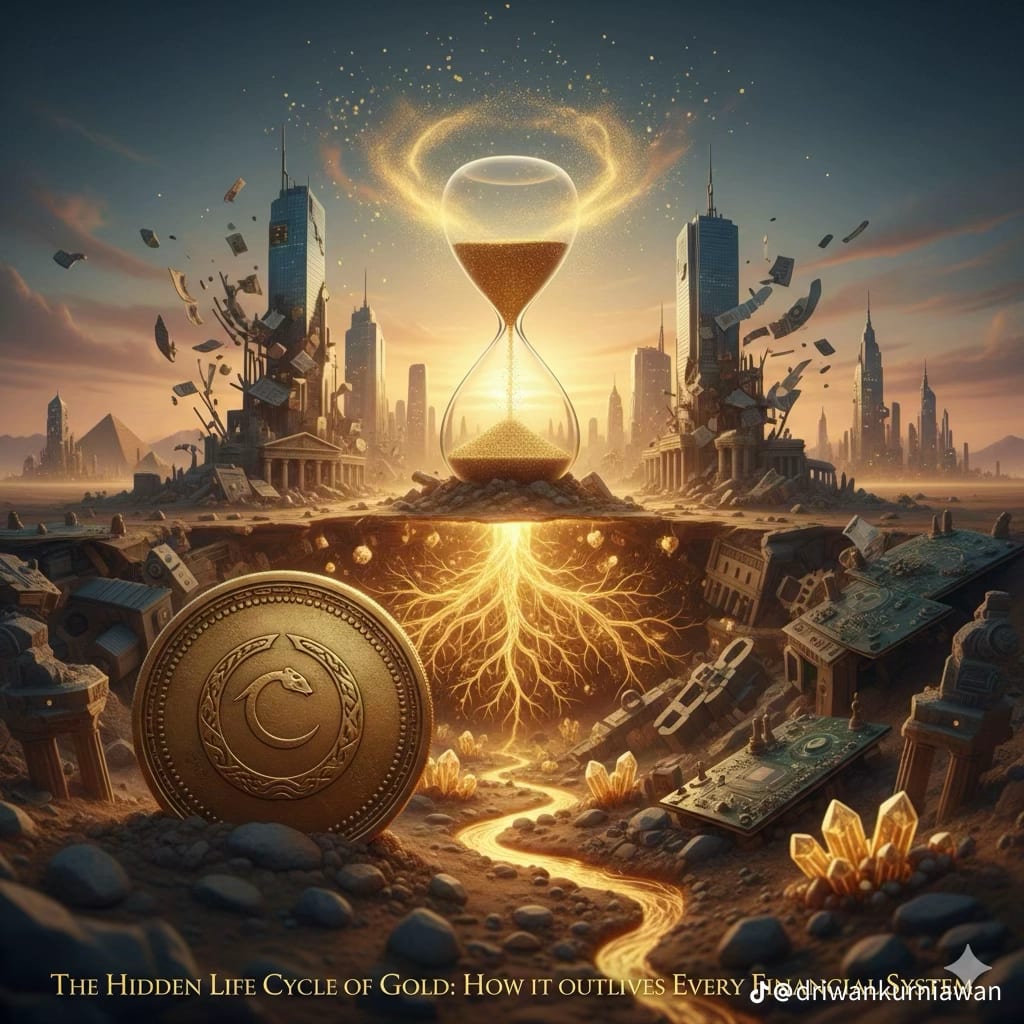
Gold has fascinated humanity for thousands of years. From ancient Egyptian tombs to modern financial markets, this glowing metal has never lost its symbolic and economic power. While the world has changed dramatically — cryptocurrencies have emerged, economies have gone digital, and global finance is evolving faster than ever — gold continues to hold a unique place.
So, what does the future look like for gold?
Many people assume gold is simply a “traditional” investment, something older generations trusted. But the truth is, gold is not stuck in the past. In fact, gold’s relevance may increase in the future due to global uncertainty, technological innovation, and shifting economic power.
Let’s explore why this ancient asset still shines so strongly in the modern era.
Gold’s Timeless Role as a Safe Haven
One of the biggest reasons gold remains valuable is its reputation as a safe-haven asset. When financial markets become unstable, people often turn to gold as protection.
During times of:
Economic recessions
High inflation
Political conflict
Currency devaluation
Gold tends to maintain its value better than many other assets. Unlike paper money, gold cannot be printed endlessly. Unlike stocks, it is not tied to the success of a single company.
In an increasingly unpredictable world, gold continues to act as financial insurance.
Central Banks Are Betting on Gold
Perhaps one of the strongest signals for gold’s future comes not from individual investors, but from governments themselves.
Over the past few years, central banks across the world have been increasing their gold reserves. Countries are buying gold to diversify away from over-reliance on the U.S. dollar and strengthen their financial security.
This trend matters because central banks think long-term. When they buy gold, they are not looking for quick profits — they are preparing for future stability.
In other words, gold remains a pillar of global trust.
Inflation and Global Debt Keep Gold Relevant
Modern economies are facing enormous levels of debt. Governments spend more, print more money, and struggle to control inflation.
Historically, gold performs well when inflation rises because it protects purchasing power. When currencies lose value, gold often becomes more attractive.
Many analysts believe that inflation cycles will continue in the coming decades, which could keep gold demand strong.
As long as money systems remain vulnerable, gold will remain a hedge against economic erosion.
Gold vs. Cryptocurrency: Competition or Coexistence?
A popular debate of the last decade has been: Will crypto replace gold?
Bitcoin has been called “digital gold,” and many younger investors see it as the future. However, gold has not disappeared. Instead, the market has evolved.
Crypto and gold serve different purposes:
Cryptocurrency is high-risk and high-volatility
Gold is stable, time-tested, and widely trusted
Rather than replacing gold, crypto may simply exist alongside it. In times of extreme crisis, gold still holds an advantage: it has been trusted for thousands of years, while crypto is still new.
The future may not be about choosing one — but balancing both.
The Rising Industrial Demand for Gold
Gold is not only used in jewelry or stored in vaults. It also plays a crucial role in modern technology.
Gold is used in:
Smartphones and computers
Medical equipment
Aerospace technology
Electric vehicles
Advanced circuit systems
As technology continues to expand, industrial demand for gold may rise. The future world will be more digital, more connected, and more dependent on high-quality materials.
Gold’s conductivity and resistance to corrosion make it extremely valuable in advanced industries.
Limited Supply Means Long-Term Strength
Unlike currencies or digital assets, gold is physically limited. Mining gold is expensive, slow, and increasingly difficult.
Major new discoveries are becoming rarer, and extracting gold from the earth requires enormous effort.
This limited supply creates a powerful long-term economic reality:
When demand rises and supply stays constrained, prices tend to move upward over time.
Gold’s scarcity is part of its strength.
A Long-Term Outlook: Steady Growth, Not Sudden Hype
Gold is not typically an asset that explodes overnight like speculative stocks or crypto tokens. Instead, gold tends to rise steadily across long periods, especially during uncertain decades.
The future of gold will likely be shaped by:
Geopolitical tensions
Inflation trends
Central bank policies
Technological expansion
Investor psychology
While no one can predict exact prices, gold’s long-term position remains strong.
Final Thoughts: Gold’s Next Era
Gold has outlived empires, currencies, and financial revolutions. It is more than a metal — it is a symbol of value, stability, and human trust.
In the future, gold will continue to serve as:
A hedge against uncertainty
A store of value
A key technological resource
A cornerstone of global finance
As the world changes, gold remains one of the few constants.
The future of gold may not be flashy — but it will almost certainly remain golden.
About the Creator
Ghalib Khan
my name is Ghalib Khan I'm Pakistani.I lived Saudi Arabia and I'm a BA pass student
Keep reading
More stories from Ghalib Khan and writers in Trader and other communities.
THE HOUSE THAT LEARNED YOUR NAME
Not in the way homes wait—patient, empty, harmless. This one waited like a mouth. It stood at the edge of the cliff road, where fog curled up from the sea like breath from something sleeping. The windows were dark, but not blind. They watched her as she stepped out of the taxi, suitcase in hand, heart heavier than it should have been for someone only twenty-six.
By Ghalib Khanabout 2 hours ago in Confessions
Is the Dollar Losing Its Global Power?
Is the Dollar Losing Its Global Power? For many decades, the U.S. dollar has been the most powerful currency in the world. It has been used for global trade, oil sales, international loans, and foreign reserves. Countries trusted the dollar as a safe store of value. But today, many experts are asking an important question: Is the dollar entering its last strong phase?
By Wings of Time 6 days ago in Trader



Comments
There are no comments for this story
Be the first to respond and start the conversation.