
The February 2025 U.S. Stock Market Plunge: Unpacking the Causes and Implications
A comprehensive analysis of the factors behind the recent market downturn and its potential long-term effects
Introduction
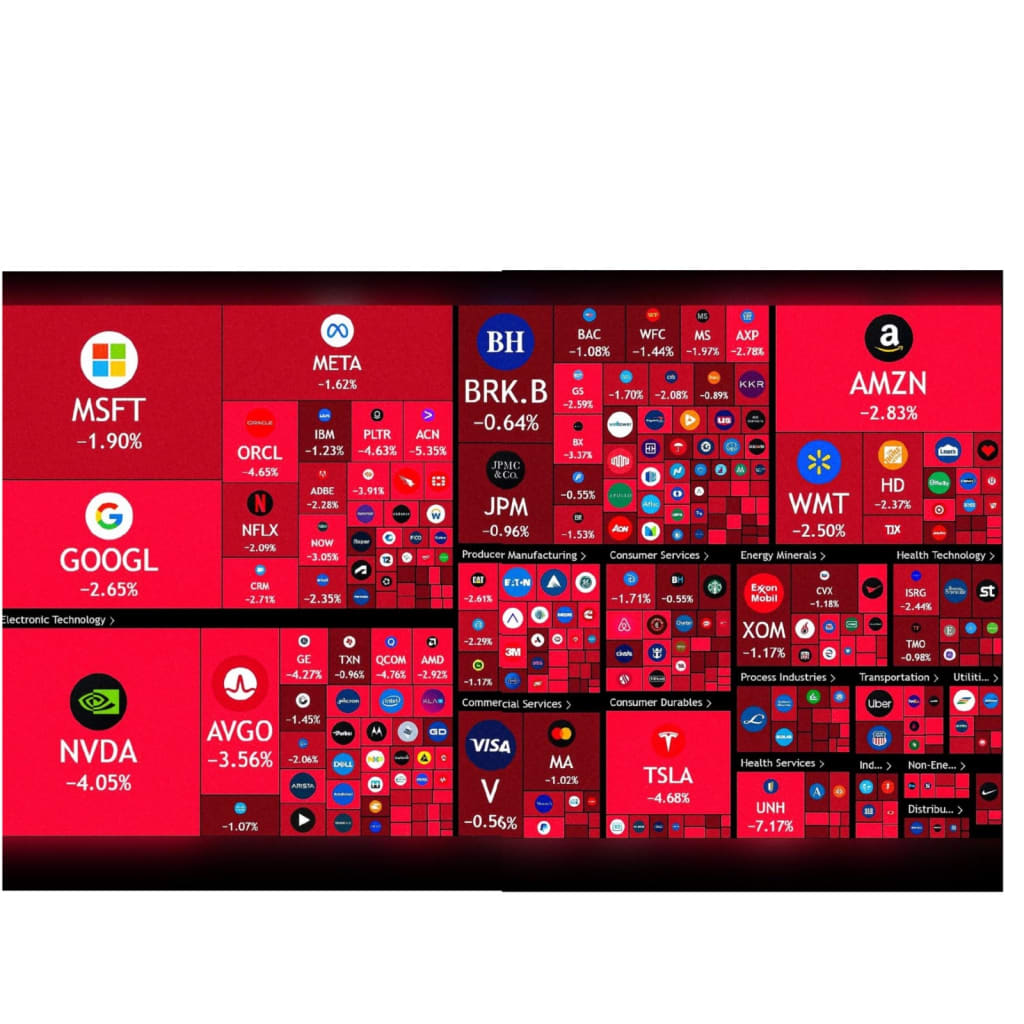
In February 2025, the U.S. stock market experienced a significant decline, marking one of its most challenging periods in recent years. Major indices such as the Dow Jones Industrial Average (DJIA), S&P 500, and Nasdaq Composite recorded substantial losses, raising concerns among investors and policymakers alike. This article delves into the multifaceted causes of the crash, its immediate impacts, and the broader economic implications.
Market Performance Overview
On February 21, 2025, the stock market faced a pronounced downturn. The Dow Jones Industrial Average (DJIA) fell by 748 points, a 1.7% decrease, closing at 43,428.02. The S&P 500 declined by 1.7%, ending at 6,013.13. The Nasdaq Composite dropped 2.2%, closing at 19,524.01. The Russell 2000 experienced a sharper decline of 2.9%, settling at 2,195.35.
Contributing Factors to the Decline
1. Disappointing Economic Indicators
The S&P Global survey indicated a slowdown in U.S. business activity, with the services sector experiencing its first contraction in over two years. The University of Michigan's consumer sentiment index dropped to 64.7, reflecting growing pessimism regarding inflation and future economic conditions. Although the labor market has remained relatively strong, recent job reports signaled a slower pace of hiring, prompting concerns about economic stagnation.
2. Federal Reserve Policy and Interest Rate Concerns
The Federal Reserve's monetary policy continues to be a focal point for market movements. Recent statements from Fed officials hinted at the possibility of maintaining higher interest rates for an extended period to combat inflation. This has led to increased volatility in the bond market, with yields on 10-year Treasury bonds spiking to 4.3%. Higher interest rates tend to pressure stock valuations, particularly for growth stocks in the technology sector, which rely heavily on future earnings potential. This contributed to the Nasdaq’s sharper decline compared to other indices.
3. Escalating Trade Tensions
The U.S. government recently imposed a 10% tariff on Chinese imports and proposed additional tariffs on automobiles, semiconductors, and pharmaceuticals. These protectionist measures have heightened fears of a prolonged trade war, impacting multinational corporations and manufacturing sectors. Companies with significant exposure to international markets have seen their stock prices slide due to concerns about disrupted supply chains and increased production costs.
4. Corporate-Specific Challenges
Several high-profile companies faced significant setbacks, adding fuel to the market downturn. UnitedHealth Group shares tumbled over 9% following reports of a Department of Justice investigation into the company’s billing practices under the Medicare Advantage program. Tesla saw a 6% drop in its stock price amid disappointing sales figures and increased competition from Chinese EV manufacturers. Goldman Sachs and Morgan Stanley both reported weaker-than-expected earnings, reflecting the challenges faced by investment banks amid rising interest rates and a sluggish IPO market.
Historical Context: How Does This Compare to Previous Crashes?
The February 2025 crash, while significant, does not yet rival historic downturns such as the 2008 Financial Crisis, which was driven by the housing market bubble and subprime mortgage crisis, leading to a nearly 50% drop in major indices. The COVID-19 Crash of March 2020 saw a rapid 30% decline in stock values due to economic uncertainty caused by the pandemic. The Dot-Com Bubble from 2000 to 2002 resulted in a prolonged market correction fueled by overvaluation of tech stocks. Compared to these past events, the recent crash appears to be driven more by a combination of short-term factors rather than a fundamental structural collapse. However, if investor confidence continues to erode, there is potential for further declines.
Immediate Impacts on Investors
The stock market downturn has caused significant declines in portfolios for both retail and institutional investors, particularly in sectors such as technology and consumer discretionary. Increased volatility has been evident, with the VIX, commonly referred to as the “fear index,” surging by 15%, signaling heightened market uncertainty. Investors have started moving capital away from riskier assets, favoring defensive sectors like utilities and consumer staples.
Potential Recovery and Outlook
While the current situation remains uncertain, several factors could drive market recovery in the coming months. If inflation shows sustained signs of easing, the Federal Reserve might pivot towards a more dovish stance, leading to improved investor sentiment and a potential market rebound. Upcoming earnings reports will be critical in determining the trajectory of the market. If companies demonstrate resilience despite economic headwinds, confidence could be restored. Any positive developments in U.S.-China trade relations or a rollback of tariffs could ease market tensions and provide a boost to global equities. Despite short-term volatility, industries such as artificial intelligence, renewable energy, and biotechnology remain strong long-term investment opportunities.
Conclusion
The stock market’s performance in February 2025 underscores the intricate interplay between economic data, policy decisions, and corporate events. While the immediate future remains uncertain, long-term investors should remain patient and strategic in navigating the evolving financial landscape. Staying informed, diversifying portfolios, and maintaining a disciplined investment approach will be crucial in weathering market fluctuations.
Final Thoughts
Market downturns are an inherent part of investing, and history has shown that equities tend to recover over time. Investors who can withstand short-term volatility often emerge stronger, capitalizing on opportunities that arise during periods of uncertainty. As the situation unfolds, staying updated with economic indicators, corporate earnings, and policy decisions will be essential for making informed investment choices.
About the Creator
VANDAN SOLANKI
I’m Vandan Solanki, a graphic designer, trader, and student. I write about finance, current issues, and design to keep you informed and share tips on trading and creativity. Thanks for checking out my blog!
Keep reading
More stories from VANDAN SOLANKI and writers in Trader and other communities.
The February 2025 Indian Stock Market Crash: Analyzing the Causes and Future Outlook
Introduction The Indian stock market experienced a sharp downturn in February 2025, causing concerns about economic stability and investor confidence. Major indices such as the Nifty 50 and the BSE Sensex witnessed significant losses due to global economic trends, domestic policy challenges, and sector-specific weaknesses. This article explores the causes of the crash, its immediate effects, and the potential recovery path for the market.
By VANDAN SOLANKI11 months ago in Trader
How AI Transforms South Korea Data Center Cooling Market Size Growth 2033
South Korea Data Center Cooling Market Size Overview The South Korea data center cooling market size reached USD 329.71 Million in 2024. The market is projected to reach USD 1,059.56 Million by 2033, exhibiting a growth rate (CAGR) of 13.85% during 2025-2033. Edge computing supports applications like 5G, which generate continuous data traffic and require stable performance. Edge data centers need compact, efficient cooling due to space limits and high heat loads, especially in urban areas. Besides this, government initiatives aimed at promoting digital infrastructure and smart cities are fueling the South Korea data center cooling market share.
By Kim Soo hyuna day ago in Trader
Federal Bank Share Price Today with Profit Growth and Brokerage Targets
The federal bank share price market price has drawn significant attention from investors in recent months. As one of India’s prominent private sector banks, Federal Bank consistently reports updates that impact market sentiment.
By Safdar meykaabout 5 hours ago in Trader



Comments
There are no comments for this story
Be the first to respond and start the conversation.